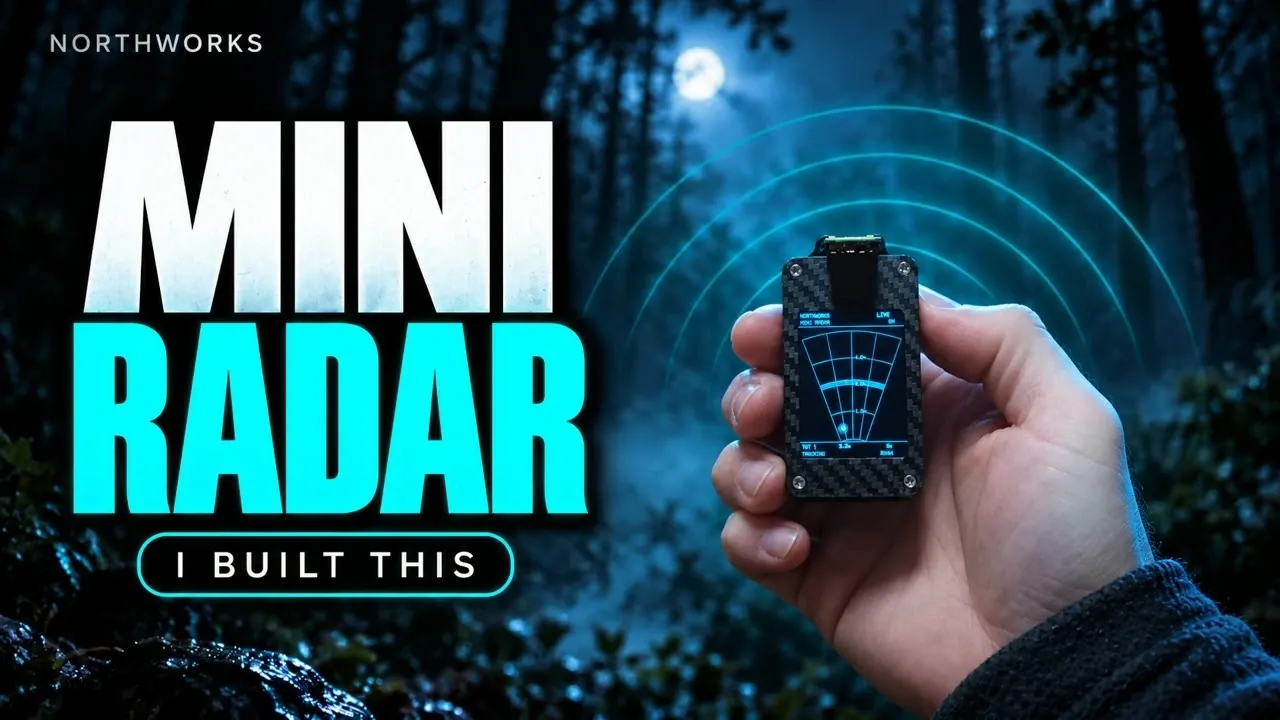
Building a compact radar system that tracks motion in real time may sound complex, but NorthWorks Lab demonstrates how accessible and engaging this project can be. By combining an ESP32-S3 microcontroller with an LD2450 radar module, along with a small display and speaker, this DIY radar offers both functionality and entertainment. The device not only detects movement but also features animated graphics on a screen and auditory alerts for added interactivity. With freely available build files and a straightforward assembly process, this project is designed to be approachable for electronics enthusiasts of all levels.
Dive into this guide to uncover the key steps for assembling the radar system and programming the microcontroller. You’ll gain insight into how the components work together, from processing motion data to rendering visual outputs. Additionally, explore practical tips for customizing the design, whether by enhancing its portability or experimenting with new features. This overview provides all the details you need to bring a touch of science fiction into reality with your own functional radar device.
What Makes This DIY Radar Unique?
TL;DR Key Takeaways :
- The DIY radar system could well have been inspired by the motion scanner from the Aliens movie, although a more csmaller version. Combining creativity and accessible technology to detect motion with real-time animated graphics and sound effects.
- Key components include an ESP32-S3 microcontroller, LD2450 radar module, display screen, speaker, rechargeable battery and minimal wiring, making it compact and portable.
- The system provides interactive features such as visual motion tracking on a display and auditory alerts, enhancing user engagement and functionality.
- The project is beginner-friendly with freely available build files, including detailed schematics and pre-written code, making sure easy assembly and customization opportunities.
- Applications range from educational tools and science fiction-inspired gadgets to experimental platforms for testing new ideas, offering both practical and creative possibilities.
This radar system stands out for its compact design and interactive features, offering a blend of functionality and entertainment. Here’s what sets it apart:
- Real-Time Animated Graphics: A small display screen provides a visual representation of detected motion, mimicking the look of futuristic radar devices seen in movies.
- Auditory Alerts: The system emits sound effects whenever motion is detected, adding an engaging layer of interactivity.
- Portability: Powered by a rechargeable battery, the device is lightweight and easy to carry, making it practical for various uses.
Whether you’re a hobbyist exploring new technologies or a fan of science fiction, this project offers a hands-on way to delve into motion detection and microcontroller programming.
Essential Components for the Build
Creating this radar system requires a handful of components, all of which are readily available and easy to source. Here’s what you’ll need:
- ESP32-S3 Microcontroller: The core of the system, responsible for processing data and managing communication between components.
- LD2450 Radar Module: Detects motion and provides the necessary data for tracking objects within its range.
- Display Screen: Renders animated radar graphics, offering a clear and engaging visual output.
- Speaker: Produces sound effects to alert you to detected motion, enhancing the user experience.
- Rechargeable Battery: Ensures the device is portable and convenient to use without being tethered to a power source.
- Minimal Wiring: Simplifies the assembly process, making it accessible even for beginners.
These components work seamlessly together to create a functional radar system that is both practical and fun to use.

Explore further guides and articles from our vast library that you may find relevant to your interests in ESP32.
- $5 ESP32-S3 Super Mini Packs Wi-Fi and Bluetooth
- The $4 ESP32 S3 Super Mini Packs a 240 MHz Dual-Core Chip
- How an $8 ESP32 S3 Microcontroller Runs a 28.9M Parameter Local LLM
- 5 ESP32 Projects Worth Building in 2026: Such as an Apple HomeKit Controller
- $4 ESP32 Module Brings Wi-Fi and Bluetooth to IoT Projects
- Replacing Security Cameras with Three $10 ESP32S3 Wi-Fi Boards
- ESP32-S3 Super Mini Costs $5 and Packs Wi-Fi and Bluetooth
- ESP32-S3 Super Mini Brings 240 MHz Dual-Core Power For $4
- ESP32 S31 Devkit Hands-on: 320 MHz RISC-V Chip Adds Wi-Fi 6
- Build a DIY Open-Source Flipper Zero Using a ESP32-DIV
How the Radar System Operates
The radar system uses the capabilities of the LD2450 radar module and the ESP32-S3 microcontroller to detect and track motion in real time. Here’s a breakdown of how it works:
- The LD2450 radar module detects movement within its range and sends the data to the ESP32-S3 microcontroller.
- The microcontroller processes the data and translates it into animated graphics displayed on the screen.
- When motion is detected, the system triggers the speaker to emit sound effects, providing an auditory alert.
- The entire setup is powered by a rechargeable battery, making sure portability and ease of use.
This integration of components allows the radar to deliver real-time feedback in a compact and user-friendly format.
Design and Assembly: Straightforward and Accessible
The design of this radar system prioritizes simplicity and compactness, making it an ideal project for both beginners and experienced makers. The assembly process involves minimal wiring, with just three connections required to link the radar module, display screen and speaker to the ESP32-S3 board. The freely available build files include:
- Detailed schematics for wiring the components correctly.
- Pre-written code for programming the microcontroller, saving you time and effort.
This straightforward approach ensures that anyone can replicate the project with ease. Additionally, the flexibility of the design allows for customization, allowing you to modify the radar system to suit your specific needs or experiment with new features.
Applications and Creative Possibilities
This DIY radar project is not only a fun and engaging activity but also a practical tool with a variety of potential applications. Here are some ways you can use and expand upon this project:
- Educational Tool: Learn about motion detection, radar technology and microcontroller programming in a hands-on way.
- Science Fiction Gadget: Create a functional device inspired by the motion scanners seen in movies, blending nostalgia with modern technology.
- Experimental Platform: Use the radar as a foundation for testing new ideas, such as integrating additional sensors or enhancing its range and accuracy.
The project draws inspiration from the Aliens movie, offering a unique blend of cinematic nostalgia and innovative technology. It’s a perfect example of how creativity and accessible tools can come together to produce something both innovative and practical.
Why Build This Radar?
Constructing a tiny radar system is an excellent way to explore the capabilities of modern microcontrollers and radar modules. By combining an ESP32-S3 board, an LD2450 radar module and other accessible components, you can create a portable device that offers real-time motion detection, animated graphics and sound effects. The straightforward assembly process and freely available build files make this project an ideal choice for DIY enthusiasts looking to expand their skills or dive into the world of electronics. Whether you’re inspired by science fiction or simply curious about motion detection technology, this project provides a rewarding and educational experience.
Media Credit: NorthWorks Lab
Disclosure: Some of our articles include affiliate links. If you buy something through one of these links, Geeky Gadgets may earn an affiliate commission. Learn about our Disclosure Policy.
