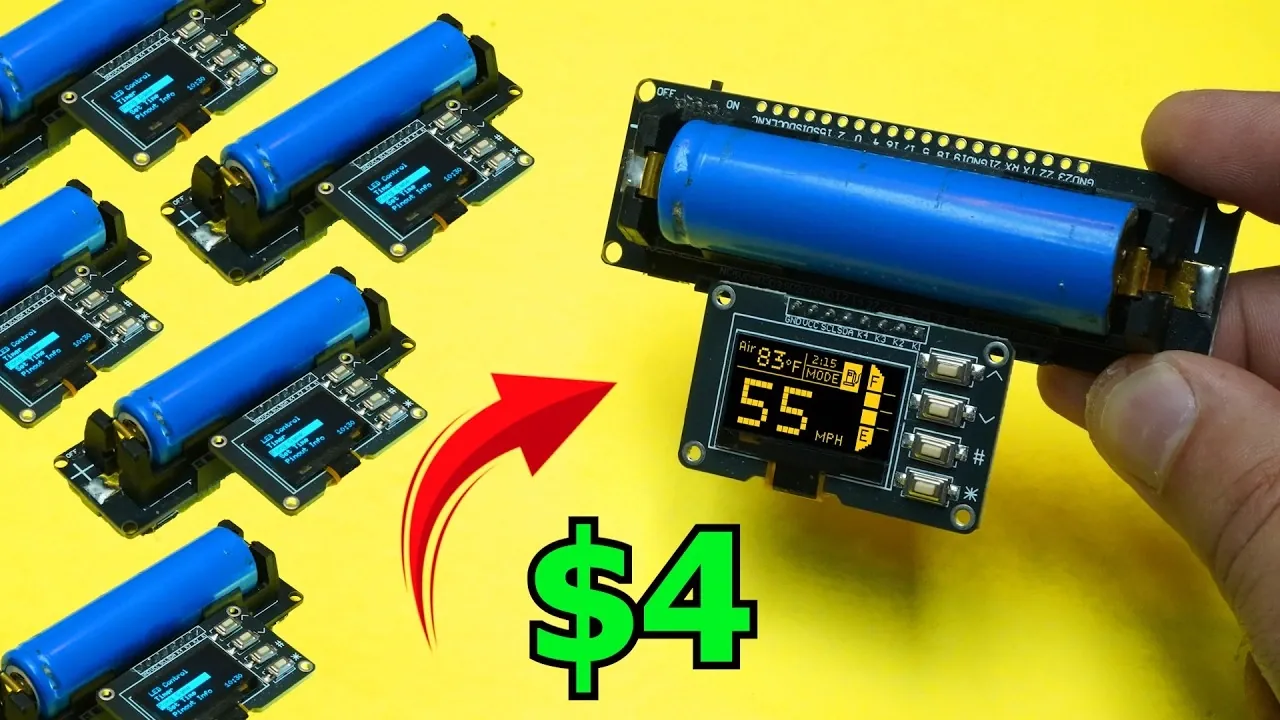
The ESP32 module, priced at just $4, has become a favorite among electronics enthusiasts for its balance of affordability and functionality. With features like built-in Wi-Fi and Bluetooth, a USB interface for easy programming and support for rechargeable batteries, it’s well-suited for a variety of projects. Hacktuber explores how this compact development board can simplify tasks such as creating wireless sensor networks or building portable devices, showcasing its potential as a versatile platform for both beginners and seasoned developers.
In this feature, you’ll gain insight into how the ESP32’s capabilities translate into real-world applications. Discover how its programmable LEDs can enhance debugging or add creative flair to your designs and learn about its role in IoT projects like smart home automation or wearable electronics. Whether you’re looking to prototype a robotics system or set up outdoor environmental sensors, this guide offers practical takeaways to help you make the most of this accessible and feature-rich module.
Why the ESP32 Stands Out
TL;DR Key Takeaways :
- The ESP32 development board is a versatile, affordable and powerful tool with built-in Wi-Fi and Bluetooth, making it ideal for IoT and electronics projects.
- Key features include rechargeable battery support, programmable LEDs, USB connectivity and boot/reset buttons, enhancing usability and functionality.
- It excels in applications such as IoT devices, smart home automation, robotics, wireless sensor networks and wearable electronics.
- Multiple variants, like the ESP32 C3 Mini and ESP8266, cater to diverse project needs, offering flexibility in complexity and budget.
- Its portability, compact design and low cost (around $4-$5) make it accessible to hobbyists, students and professionals for a wide range of DIY and commercial projects.
The ESP32 is designed to cater to a variety of project needs, offering features that enhance usability and functionality. At its core, the module includes:
- Built-in Wi-Fi and Bluetooth: These features enable seamless wireless communication, a critical component for IoT applications and smart devices.
- Rechargeable Battery Support: The inclusion of a 18650 battery holder and integrated charging circuit makes it perfect for portable and energy-efficient projects.
- Programmable LEDs: These provide visual feedback, which is invaluable for debugging or creating creative light displays.
- USB Interface: Simplifies programming and data transfer by allowing direct connectivity with PCs.
- Boot/Reset Buttons: These buttons assist easy debugging and system resets, streamlining the development process.
These features collectively make the ESP32 a user-friendly and versatile platform, suitable for both simple and advanced electronics projects. Its ability to integrate seamlessly with other components and systems ensures that it remains a preferred choice for developers.
Applications: Where the ESP32 Shines
The ESP32’s versatility allows it to excel across a wide range of applications, making it a valuable tool in various fields. Some of its most common uses include:
- IoT Projects: Develop smart devices such as temperature monitors, security systems, or connected appliances that communicate wirelessly.
- Smart Home Automation: Control home systems like lights, thermostats and security cameras remotely, enhancing convenience and efficiency.
- Robotics: Manage sensors, motors and wireless communication in robotic systems, allowing advanced functionalities.
- Wireless Sensor Networks: Build interconnected networks for data collection, environmental monitoring, or industrial applications.
- Wearable Electronics: Create compact, battery-powered devices with real-time connectivity for health monitoring or fitness tracking.
The ESP32’s ability to handle wireless communication and integrate with various sensors makes it a cornerstone for modern electronics projects. Its adaptability ensures that it can meet the demands of both personal and professional applications.
Here are additional guides from our expansive article library that you may find useful on ESP32.
- How an $8 ESP32 S3 Microcontroller Runs a 28.9M Parameter Local LLM
- Optimize ESP32 Battery Life Using 10 Lesser-Known Features
- Build a Sonos Rival with the $30 AUD Louder ESP32 Board
- Arduino Nano ESP32 handheld console with round color display
- T-Display AMOLED Touch ESP32 board binary converter project
- Super Tiny RP2040/ESP32 Board Display for IoT and DIY Projects
- Tiny Holo Cubic display features a 1.3-inch TFT IPS and ESP32 microcontroller
- LilyGo T Watch Keyboard C3 mini computer kit
- These Hidden Apple Maps Settings Will Completely Upgrade Your CarPlay
- Track Room Occupancy Without Cameras Using ESP32 Wi-Fi Drops
Variants to Match Your Needs
The ESP32 family includes several variants, each tailored to specific requirements, making sure that developers can find the perfect fit for their projects. Notable options include:
- ESP32 C3 Mini: A compact version with optional OLED screens (64×32 or 128×64 pixels) for displaying real-time data. This variant is ideal for applications like health monitors or portable gaming devices.
- ESP8266: The predecessor to the ESP32, offering basic functionality at an even lower cost. It is well-suited for simpler IoT and DIY projects where advanced features are not required.
These variants provide flexibility, allowing users to choose a model that aligns with their project’s complexity, budget and specific needs.
Inspiring DIY Projects
The ESP32’s flexibility and affordability open the door to countless DIY possibilities. Here are a few examples of projects that showcase its potential:
- Custom Light Displays: Use programmable LEDs to create unique light patterns for decorative purposes or functional indicators.
- Timers and Counters: Build adjustable timers for tasks such as cooking, exercise routines, or industrial processes.
- Simple Games: Program games like Pong or Flappy Bird to run on the module, demonstrating its computational capabilities and versatility.
These projects highlight the ESP32’s ability to handle both practical and recreational tasks, making it a favorite among hobbyists and developers alike.
Portability: A Key Advantage
One of the most compelling features of the ESP32 is its portability. The inclusion of a rechargeable 18650 battery holder and charging circuit allows users to power their projects without being tethered to a wall outlet. This makes it particularly well-suited for:
- Wearable devices that require mobility and compact design.
- Outdoor sensors for environmental monitoring, such as weather stations or wildlife trackers.
- Portable gadgets where flexibility and energy efficiency are essential.
Its compact design, combined with its power efficiency, ensures that the ESP32 remains a practical choice for on-the-go applications, allowing developers to bring their ideas to life in any environment.
Affordable and Accessible
Despite its extensive capabilities, the ESP32 remains highly affordable, typically priced between $4 and $5. This low cost makes it accessible to a wide audience, including:
- Hobbyists exploring electronics and programming for the first time.
- Students working on academic projects or learning about IoT and embedded systems.
- Professionals developing prototypes or small-scale solutions for commercial applications.
With various configurations available, the ESP32 ensures that users can find a model that fits their specific needs without exceeding their budget. Its affordability, combined with its powerful features, makes it a valuable addition to any electronics toolkit.
A Small Investment with Big Potential
The ESP32 development board is a versatile and cost-effective solution for DIY electronics and IoT projects. Its combination of built-in Wi-Fi, Bluetooth, rechargeable battery support and additional features like programmable LEDs and USB connectivity makes it a powerful tool for developers. Whether you’re building a smart home system, experimenting with robotics, or creating wearable electronics, the ESP32 provides the tools to bring your ideas to life. At just $4, it offers an unmatched balance of affordability and functionality, making sure that it remains a go-to choice for hobbyists, students and professionals alike.
Media Credit: Hacktuber
Disclosure: Some of our articles include affiliate links. If you buy something through one of these links, Geeky Gadgets may earn an affiliate commission. Learn about our Disclosure Policy.
