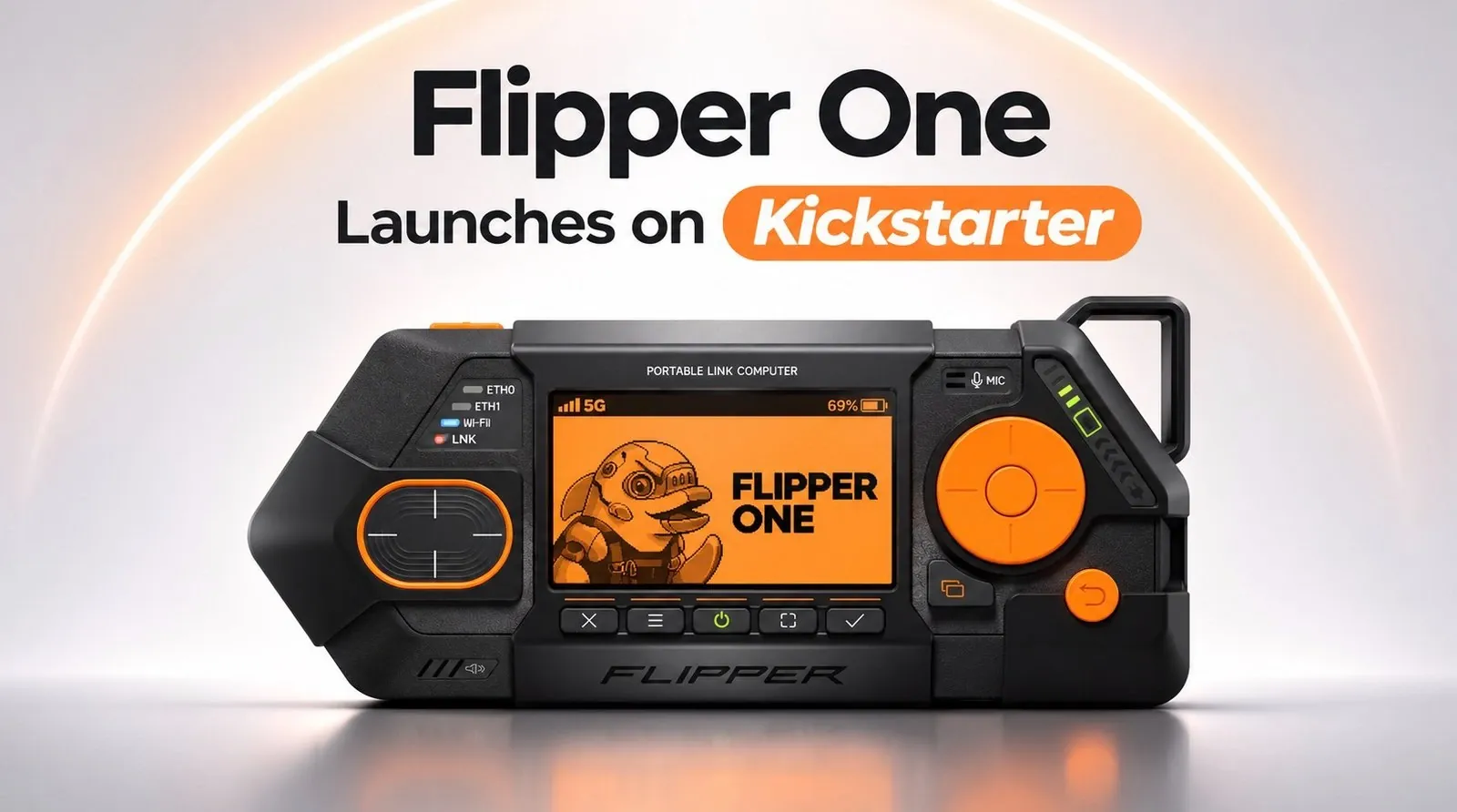
The team behind Flipper Zero has launched Flipper One on Kickstarter, a portable Linux computer built for setting up, routing and analyzing networks without a laptop alongside it. It has two Gigabit Ethernet ports, Wi-Fi 6E and its own screen and controls, and it runs open source Linux firmware.
You can route traffic across up to five connections at once, scan a network for hosts, open ports and outdated services, and plug in a 4K monitor over a single USB-C cable that also charges the device. Optional modules add 5G cellular data, off-grid LoRa messaging or radio reception, so you can add only the radios you need.
Specially priced early bird pledges for the Flipper One Linux Multi-tool started at $379 but unfortunately, all those pledges have already gone. The current pledge price is $399 (about £303, depending on exchange rates), approximately 25% below the expected $550 retail price. That pledge gets you 1 x Flipper One Kickstarter Special. The Kickstarter campaign runs until December 17 2026 and, at the time of writing, has project has already raised a staggering $11,800,000 from 22,212 backers against a goal of about $299,000.
Key Specifications :
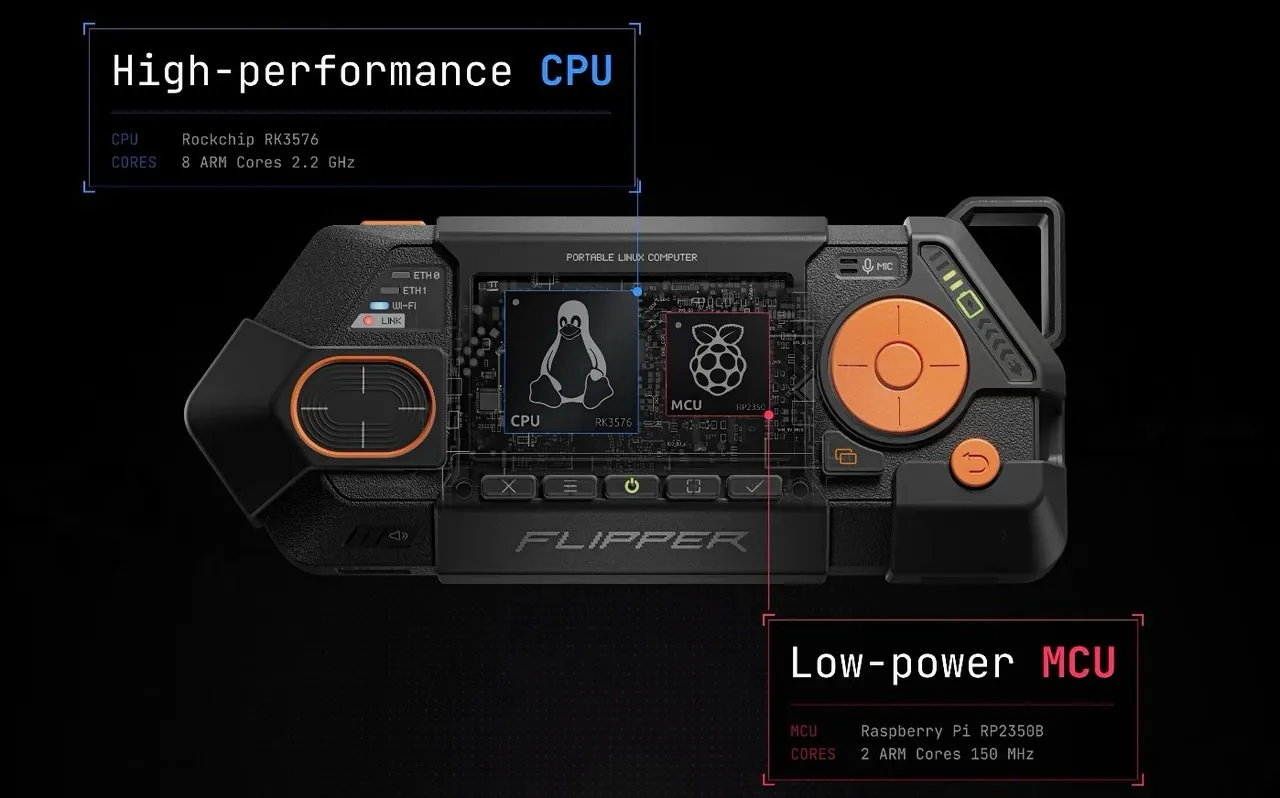
- Processors: Raspberry Pi RP2350 MCU for LCD, buttons, power and boot; Rockchip RK3576 CPU for Linux, apps and peripherals.
- Software and storage: Open source Linux firmware with mainline kernel support; built-in UFS storage; optional SD card.
- Networking: 2× Gigabit Ethernet WAN/LAN ports at 1 Gbps each; Wi-Fi 6E on 2.4/5/6 GHz with MT7921AUN chipset and monitor mode; up to 5 simultaneous uplinks.
- USB and display: USB-C1 with 5–20 V Power Delivery, device emulation at up to 5 Gbps and DisplayPort Alt Mode at 4K@120Hz; USB-A, USB-C and full-size HDMI ports.
- Expansion: M.2 (NGFF) with PCI Express, USB, SATA, SIM, Serial Audio, UART and I2C; GPIO with 2.54 mm pin headers, 3.3V and 5V power and USB 2.0.
- 5G module: Quectel RM520 modem with download speeds of up to 1 Gbps; built-in eSIM or physical Nano SIM (4FF); SMA female connectors and four compact antennas.
- Radio modules: LoRa supports MeshCore, Meshtastic and Reticulum; SDR receives analog and digital signals, including Sub-GHz digital signals; SDR technical specifications are not yet finalized.
From Flipper Zero to a Linux Computer
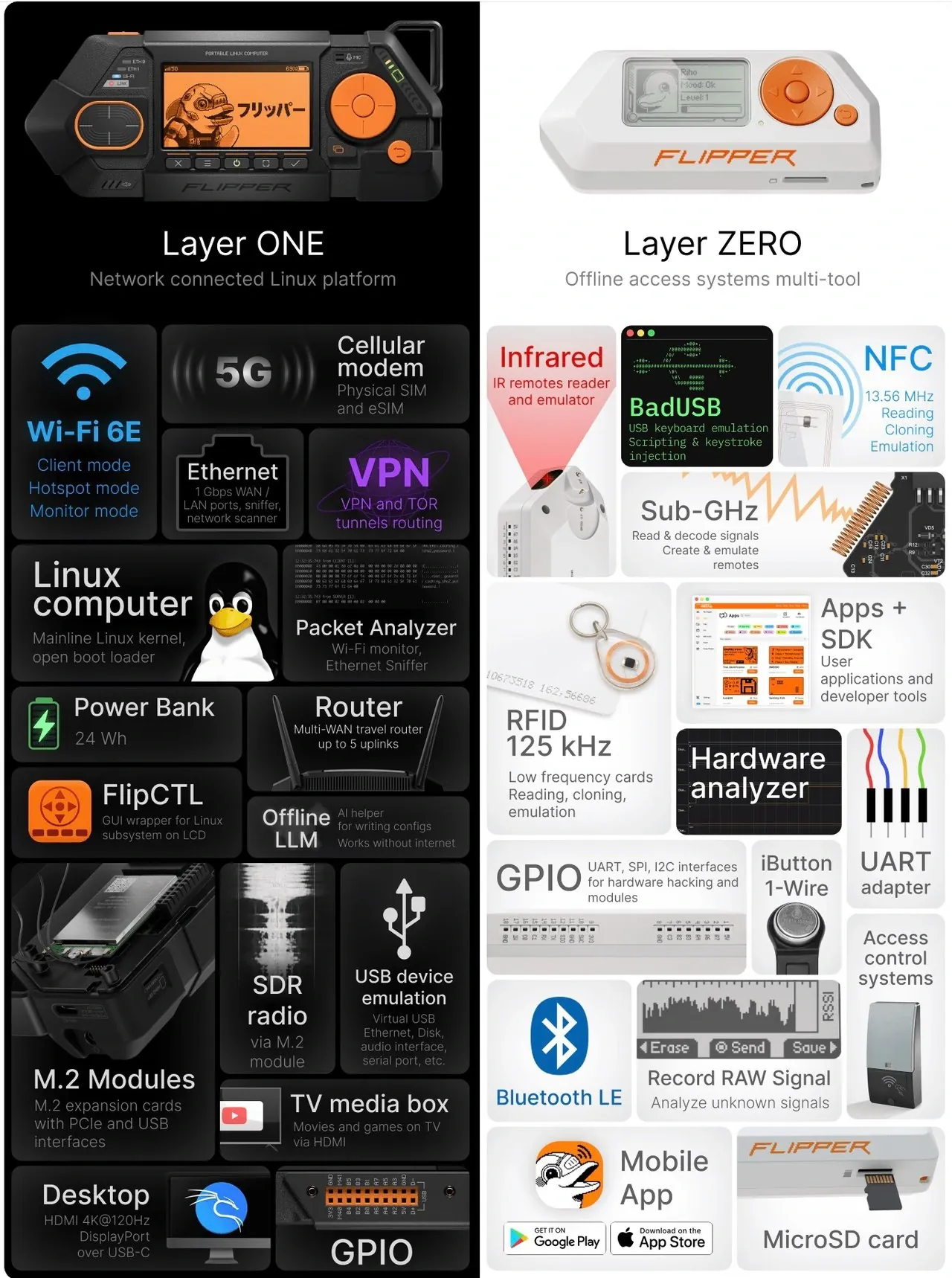
Flipper One builds on the functionality of Flipper Zero, the microcontroller-based device for offline access-control protocols. Although the new device does a different job, it is a full Linux computer for IP networks, and it does not replace Flipper Zero.
Even though the project is still in development, att its Kickstarter launch on November 17, 2026. The development team say the design is on its third hardware revision, with the architecture confirmed, all major subsystems working and about 90% of the technical specifications finalized. Flipper One runs open source Linux firmware with a mainline kernel and no proprietary binaries in the boot process, developed in partnership with Collabora.
Flipper One: A Computer You Can Use on Its Own
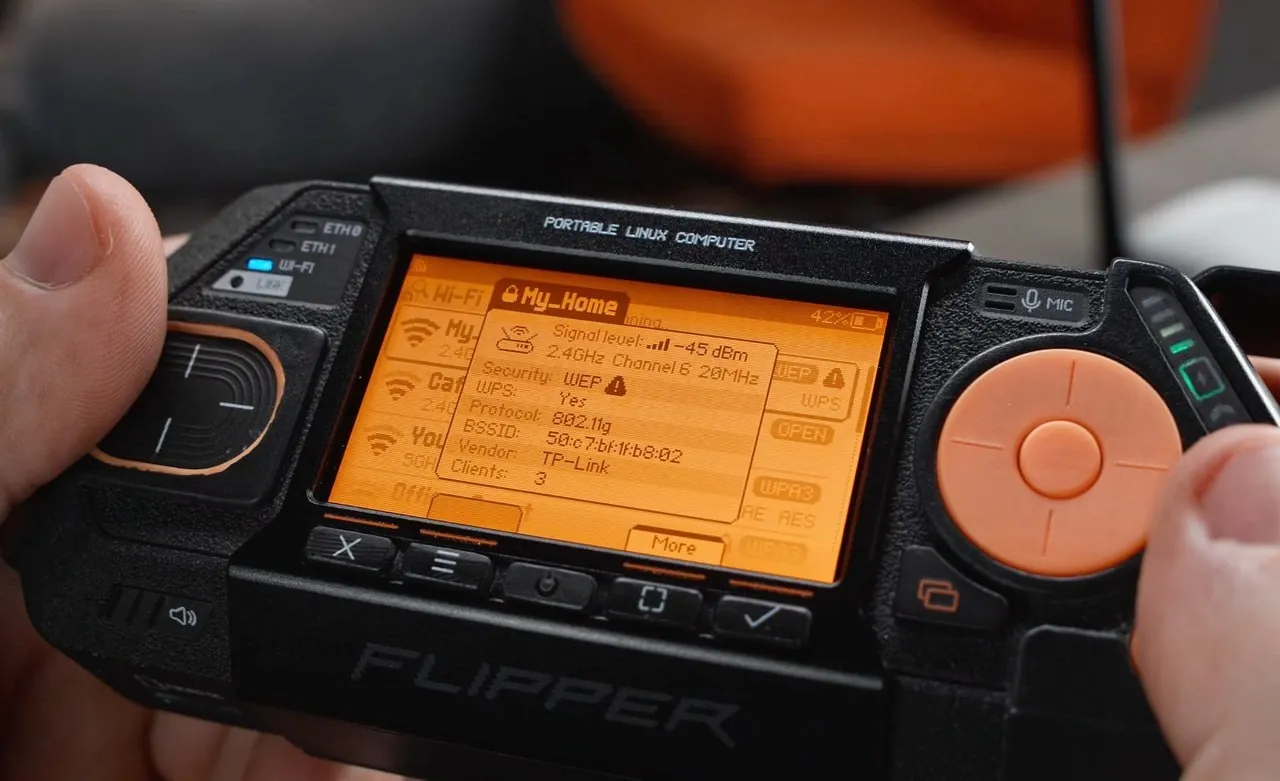
You can run several apps at once and control Flipper One from its own screen and buttons, with no second computer needed.
- Two Processors: A Raspberry Pi RP2350 looks after the screen, buttons, power and start-up, while a Rockchip RK3576 runs Linux and your apps. The screen and controls keep working when Linux is off or restarting, and you can recover the system without another computer.
- Controls: An App Switcher button moves between running apps, with a touchpad and D-pad for navigation and four buttons below the screen that each app can define.
- One-Cable Laptop Link: Connect a laptop to the USB-C1 port for console access and charging over one cable. The port supports 5–20 V Power Delivery, so it can charge Flipper One or power the laptop.
- External Display: USB-C1 drives a monitor at 4K@120Hz, and you can use the monitor’s USB hub for a keyboard and mouse while the same cable charges the device.
- Storage: Built-in UFS storage holds the operating system and your data. An optional SD card adds space for data or extra OS profiles.
- Ports and Audio: The top has USB-A, USB-C and full-size HDMI ports. The 3.5 mm jack works with wired iPhone headsets, and you can disable the built-in microphone at hardware level.
The Flipper One Linux Multi-tool campaign is under way, with crowd funding currently active on Kickstarter. If the campaign proceeds as planned, worldwide shipping is expected around July 2027. For full pledge tiers, stretch goals and delivery updates, check out the crowd-funding campaign details.
Routing and Network Analysis
Networking is the job Flipper One is built around. You can use it as a gateway, a multi-hotspot bridge, an inline Ethernet sniffer or a USB Wi-Fi and Ethernet adapter for a PC or phone. The router handles up to 5 uplinks at the same time, with failover, load balancing, firewall rules and VPN tunnels. Two independent Gigabit Ethernet ports each run at 1 Gbps, while Wi-Fi 6E covers the 2.4, 5 and 6 GHz bands, supports monitor mode and can work as a client and a hotspot at once.
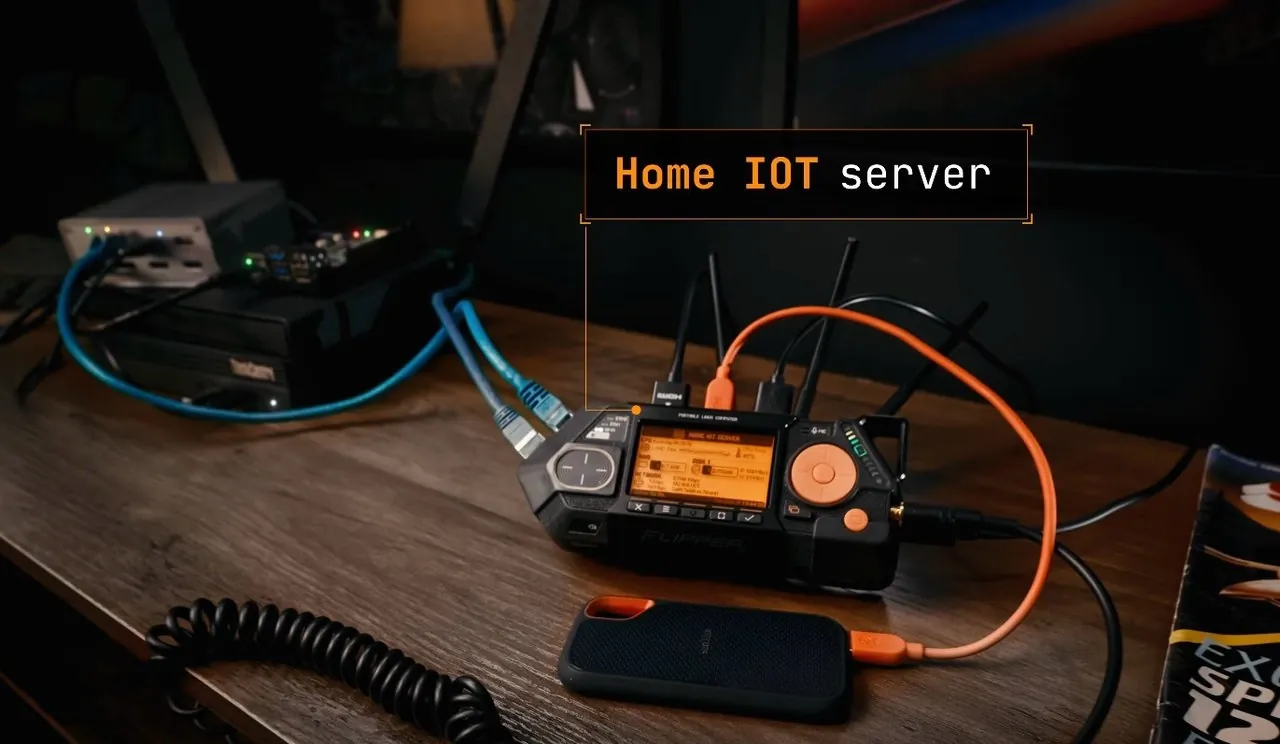
Built-in apps let you discover hosts, scan ports and services, map a network, detect attacks and misconfigurations, spot vulnerable or outdated services and export reports.
5G, LoRa and SDR Modules
Three optional modules let you add the radio you need.
- 5G Cellular Module: Get online over mobile networks with a Quectel RM520 modem and, according to the team, download speeds of up to 1 Gbps. The module replaces the back plate and comes with four compact antennas, with connectors for larger external ones.
- LoRa Module: Send messages where there is no mobile coverage, using MeshCore, Meshtastic or Reticulum. Its built-in app works without a phone or computer, and the module can also run as a standalone node or repeater.
- SDR Module: Receive analog and digital radio signals, including amateur radio, broadcasts and aircraft communications. The team says its specifications are not yet finalized.
For cellular data you can use the built-in eSIM, which comes with a Flipper SIM data plan that is still in development, or disable it and use your own physical SIM.
Room to Expand
You can build Flipper One out further. The internal M.2 slot takes cellular and satellite modems, AI accelerators, SSDs and, via adapters, Wi-Fi cards. For your own electronics, a GPIO connector uses standard 2.54 mm pin headers and supplies 3.3V and 5V power.
The team has published 3D models and drawings of the mounting system, along with the schematics and pinout, so you can design and print your own modules and mounts.
Flipper One vs Flipper Zero
Who Flipper One Suits
Flipper One suits you if you set up, test or troubleshoot networks and want one portable device for the job, or if you want a small Linux computer to build your own projects on. Add the 5G module if you need a connection away from Wi-Fi, the LoRa module for off-grid messaging, or the SDR module for listening to radio signals. If you want the offline access-control features of Flipper Zero, that remains a separate device.
Flipper One is a portable Linux computer for routing and analyzing networks, and you can add cellular data, off-grid messaging or radio reception with its optional modules. As with any crowdfunding project, it has still to be delivered, and the team says some hardware details are still being finalized.
Flipper One: Questions and Answers
Do you need another computer to use it?
No. Flipper One has its own screen and controls, and you can recover the operating system without another computer.
Do you need an SD card?
No. Built-in UFS storage holds the operating system and your data; an SD card is optional.
Can you use your own SIM?
Yes. You can disable the built-in eSIM and use a physical Nano SIM with a compatible cellular modem, such as the 5G module.
Can you connect a monitor, keyboard and mouse?
Yes. USB-C1 outputs 4K@120Hz and can connect peripherals through a monitor’s USB hub while charging the device.
Where does the campaign ship and are taxes included?
It ships to the United States, Canada, United Kingdom, Australia, all 27 EU countries, Switzerland, Norway, Singapore and Hong Kong, but not to other countries or to US freight forwarders. Shipping and taxes are not included in the pledge; the team says it ships from local warehouses and pays import duties.
For a complete list of all available early bird specials, stretch goals, extra media and functionality overview for the Linux Multi-tool, jump over to the official Flipper One crowd funding campaign page by following the link below.
Source : Kickstarter
Disclaimer: Participating in crowd funding campaigns such as those found on Kickstarter and Indiegogo, involves inherent risks. While many projects successfully meet their goals, others may fail to deliver due to numerous challenges. Always conduct thorough research and exercise caution when pledging your hard-earned money.
Disclosure: Some of our articles include affiliate links. If you buy something through one of these links, Geeky Gadgets may earn an affiliate commission. Learn about our Disclosure Policy.
