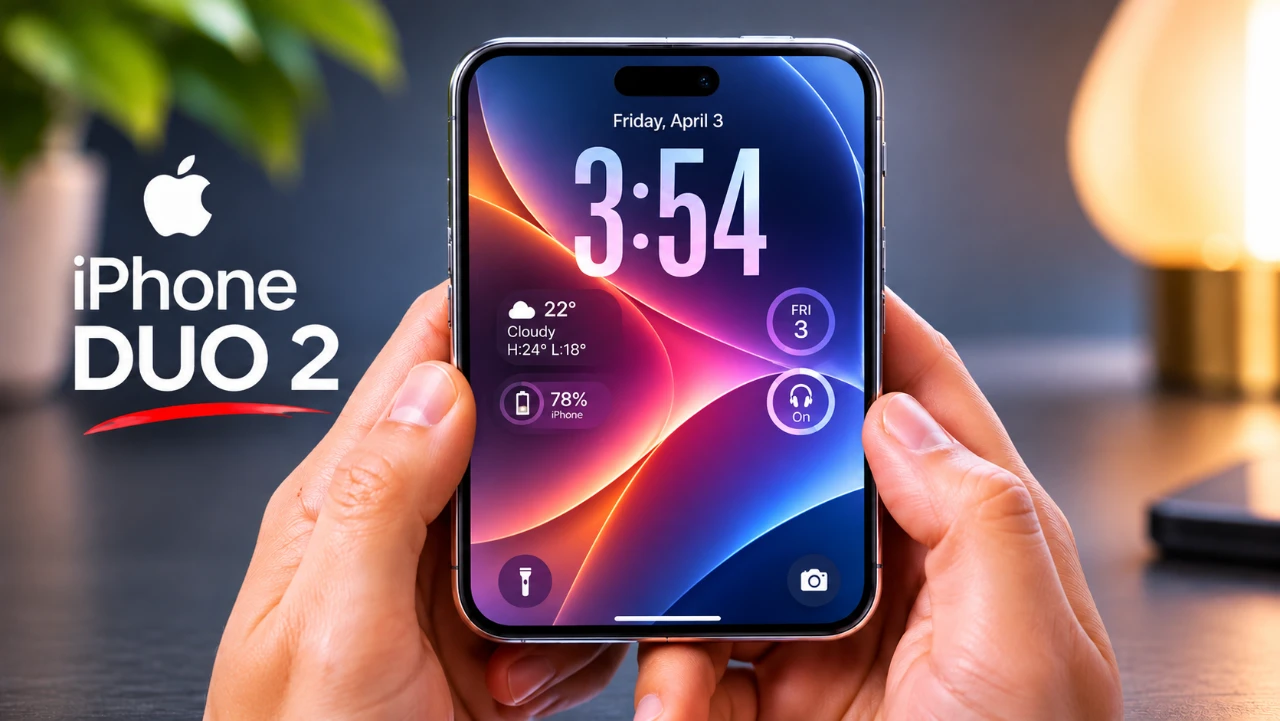
Apple is reportedly preparing to advance its foldable smartphone lineup with the highly anticipated release of the iPhone Duo 2. Building on the foundation laid by the original iPhone Duo, this next-generation device is expected to introduce notable improvements in design, usability and functionality. While Apple’s progress in foldable technology is encouraging, certain features may still require further refinement, potentially delaying their inclusion until future iterations. The iPhone Duo 2 represents Apple’s commitment to addressing user feedback and refining its approach to foldable devices.
TL;DR Key Takeaways :
- Face ID Integration Hurdles: Apple is actively testing under-display Face ID prototypes for the outer cover screen, though tight hardware design deadlines mean it could slip to the Duo 3.
- Thinner and Lighter Chassis: Engineering efforts target reducing the physical footprint compared to the first-generation model.
- Action Button Addition: Leaks point toward the incorporation of a programmable Action Button for faster shortcut execution.
- Expanded Lineup Aspirations: Long-term development roadmaps hint at potential variants like a larger Duo Max and a more accessible Duo SE.
Face ID Integration: Enhancing Biometric Authentication
One of the most eagerly awaited upgrades for the iPhone Duo 2 is the integration of Face ID, Apple’s signature biometric authentication system. Reports suggest that Apple is testing prototypes that incorporate Face ID, with initial implementation likely focused on the smaller cover display rather than the larger inner screen. This partial integration could streamline everyday tasks such as unlocking the device or authorizing payments, offering a more seamless experience compared to the original model’s reliance on side-button Touch ID. However, technical challenges in fitting the hardware components into a remarkably thin chassis may limit the scope of this feature, with full implementation potentially postponed until the iPhone Duo 3. By taking this incremental approach, Apple aims to ensure the reliability and effectiveness of its biometric solutions.
Action Button: Empowering Customization
Another potential enhancement for the iPhone Duo 2 is the introduction of an Action Button, a feature already present in several of Apple’s flagship devices. This customizable button could allow users to assign shortcuts for various tasks, such as launching specific apps, activating the camera, or toggling silent mode. By incorporating this feature, Apple seeks to provide users with greater control over their device interactions, enhancing the overall user experience. The Action Button’s versatility aligns with Apple’s broader goal of making its devices more intuitive and adaptable to individual preferences.
Refining the User Experience: Addressing Core Concerns
The original iPhone Duo faced criticism for certain design choices, particularly the reliance on side-mounted Touch ID sensors. By introducing Face ID on the cover screen, Apple could resolve this friction point, offering a more intuitive and seamless unlocking workflow. This adjustment reflects Apple’s dedication to refining usability in its foldable lineup. Additionally, the company is reportedly exploring ways to make the iPhone Duo 2 lighter and more portable, addressing consumer feedback regarding the device’s weight and bulk. These refinements highlight Apple’s focus on balancing futuristic hardware innovation with daily practicality.

Expanding the Foldable Lineup: A Vision for the Future
Apple’s ambitions for foldable devices extend well beyond the immediate scope of the iPhone Duo 2. The company is reportedly exploring a diverse range of form factors and configurations to cater to varying user preferences. These potential concepts under discussion include:
- iPhone Duo Max: A larger variant tailored for users who prioritize expansive screen space and heavy multitasking capabilities.
- Alternative Form Factors: Exploratory concepts such as clamshell or pocket-friendly designs aimed at maximizing portability.
- Accessible Tiering: Consideration of lower-cost options down the line to make foldable technology available to a broader consumer base.
In addition to hardware variations, Apple is investigating advanced camera integrations—such as a dedicated telephoto module—to bolster the zoom and portrait capabilities of future foldables.
Development Challenges: Balancing Innovation with Quality
Despite its ambitious roadmap, Apple faces tight internal design deadlines and rigorous engineering constraints for the iPhone Duo 2. The company’s strict quality standards mean that features still undergoing prototyping or stress testing can be deferred if they fail to meet production thresholds. While a fall 2027 release window is targeted for the device (internally codenamed V78), hardware feature locks must happen swiftly. This cautious execution prioritizes long-term product reliability over rushed market entries.
Shaping the Future of Foldable Technology
The iPhone Duo 2 represents a pivotal step in Apple’s journey to refine and expand its foldable smartphone ecosystem. By targeting core pain points like biometric authentication, chassis weight, and layout customization, Apple is working to create a more polished, user-friendly device. While developmental hurdles remain, Apple’s long-term vision signals a commitment to solidifying its presence in the foldable market segment.
Here are more detailed guides and articles that you may find helpful on iPhone Duo.
- Early iPhone Duo 2 Leaks Reveal Major Hardware Upgrades
- iPhone Duo: Key Details Apple Barely Mentioned on Stage
- Apple’s iPhone Duo 2 Just Leaked: Everything Changing With the Next Foldable
- iPhone Duo Buyer’s Guide: How to Choose Without Regrets
- iPhone Duo vs. Galaxy Z Fold 8: Did Apple Just Catch Samsung?
- iPhone Duo: 5 Features That Make It Worth the Price
Source: Demon’s Tech
Disclosure: Some of our articles include affiliate links. If you buy something through one of these links, Geeky Gadgets may earn an affiliate commission. Learn about our Disclosure Policy.
