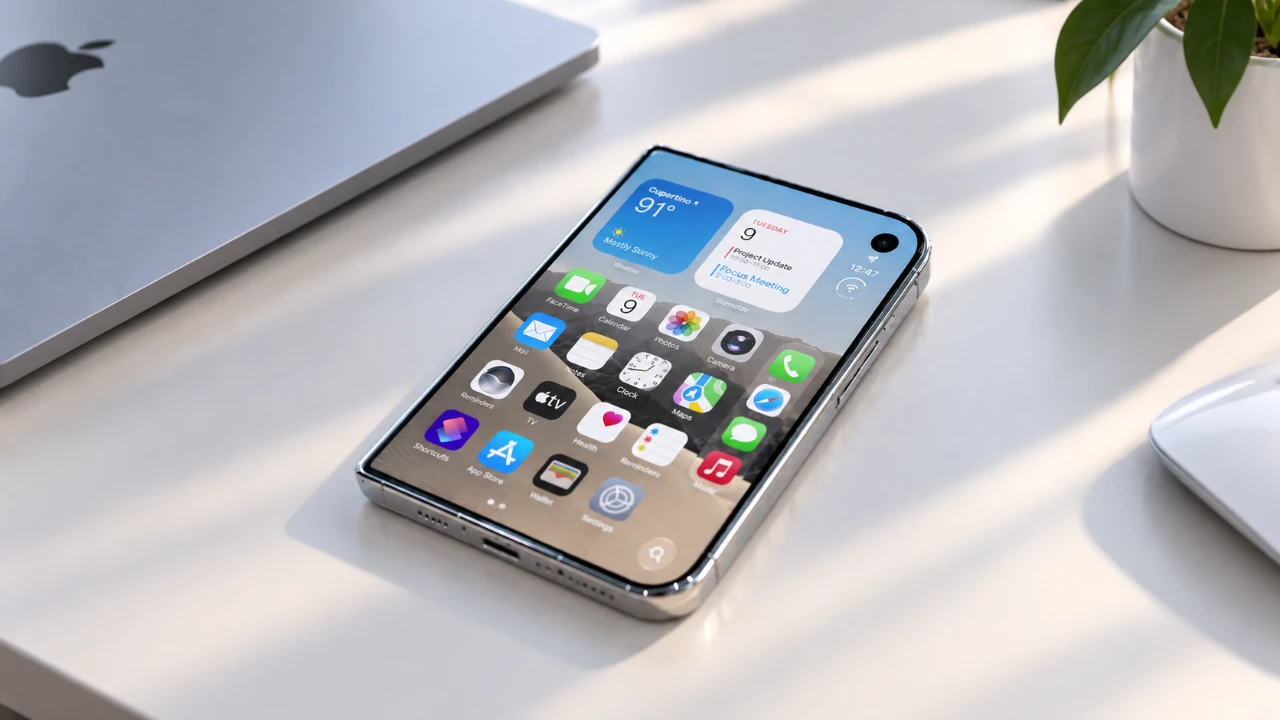
Apple has officially entered the foldable phone market with the iPhone Duo, marking a significant milestone seven years after Samsung pioneered the category with its Galaxy Z Fold series. This delayed entry has allowed Apple to refine key aspects of foldable technology, but Samsung’s Galaxy Z Fold 8 remains a formidable competitor. This comparison video from Miror Pro provides more insights into the critical differences between these two devices, focusing on durability, stylus support, camera technology, display features, multitasking, audio, battery life, wireless charging, and pricing.

Durability: Apple Sets a New Benchmark
Apple has established a new standard for foldable phone durability with the iPhone Duo, which features an IP68 rating. This certification ensures robust protection against both dust and water, offering users greater confidence in the device’s long-term reliability. In contrast, Samsung’s Galaxy Z Fold 8 achieves only an IP48 rating, which provides water resistance but lacks dust protection. For users who prioritize durability, Apple’s approach offers a clear advantage, particularly for those who use their devices in varied environments.
Stylus Support: A Surprising Shift
The iPhone Duo supports the Apple Pencil on both its inner and outer displays, catering to professionals and creatives who rely on precision input for tasks such as sketching, annotating, or note-taking. This feature enhances the device’s appeal for productivity-focused users. Meanwhile, Samsung has made the unexpected decision to remove S Pen support from the Galaxy Z Fold 8, despite its inclusion in earlier models. This omission could be a deciding factor for users who value stylus functionality, as Apple’s integration offers a more versatile and seamless experience.
Camera Technology: Apple’s Under-Display Innovation
Apple has introduced an under-display camera (UDC) on the iPhone Duo’s inner screen, eliminating notches or cutouts for a truly uninterrupted viewing experience. This innovation enhances the aesthetic appeal and usability of the device, particularly for media consumption and video calls. On the other hand, Samsung has opted to remove the UDC feature that was present in earlier models like the Galaxy Z Fold 3. This decision places Apple ahead in terms of camera integration, appealing to users who prioritize both functionality and design.
Display Features: Reducing Glare, Enhancing Usability
The iPhone Duo’s display incorporates a matte nano-texture finish, which reduces glare and creates a paper-like appearance. This feature is particularly beneficial for activities such as reading, sketching, or working in brightly lit environments. In comparison, Samsung’s Galaxy Z Fold 8 employs an anti-reflective coating, which, while effective, is less advanced than Apple’s approach. For users who prioritize display quality and usability, the iPhone Duo offers a more refined and practical solution.
Multitasking: Flex Mode Redefined
Apple has redefined multitasking with the iPhone Duo, offering split-screen functionality across both displays. This feature transforms the device into a productivity powerhouse, allowing users to run multiple apps simultaneously with ease. While Samsung’s Galaxy Z Fold 8 also includes a Flex mode, this feature is limited to the Ultra model, potentially narrowing its appeal. For users who rely on multitasking capabilities for work or personal use, Apple’s implementation provides a more versatile and user-friendly experience.
Audio Experience: Optimized Speaker Placement
Apple has reimagined the audio experience on the iPhone Duo by positioning stereo speakers on opposite halves of the device. This design ensures consistent and immersive sound quality, whether the phone is open or closed. In contrast, Samsung’s Galaxy Z Fold 8 places both speakers on the cover display half, which may result in less balanced audio when the device is unfolded. For audiophiles or users who frequently consume media, Apple’s design offers a more satisfying auditory experience.
Battery Life: Longer Usage, Greater Convenience
Battery performance is another area where Apple takes the lead. The iPhone Duo delivers up to 31 hours of video playback, compared to the Galaxy Z Fold 8’s 26 hours. This extended battery life is a significant advantage for users who rely heavily on their devices throughout the day, whether for work, entertainment, or communication. For those seeking a device that can keep up with demanding usage patterns, the iPhone Duo stands out as the more reliable option.
Wireless Charging: Faster and More Flexible
The iPhone Duo supports both MagSafe and Qi2 wireless charging, with speeds of up to 25W. This dual compatibility offers users greater flexibility and convenience, allowing for faster and more efficient charging. In comparison, the Galaxy Z Fold 8 supports Qi2 wireless charging at a maximum of 20W, but only when paired with a magnetic case. Apple’s implementation provides a more seamless and versatile charging experience, appealing to users who prioritize convenience and efficiency in their daily routines.
Pricing: Innovation vs Accessibility
Pricing remains one of the most significant factors influencing consumer decisions. In the U.S., the iPhone Duo is priced at $2,000, slightly higher than the Galaxy Z Fold 8’s $1,900. However, the disparity becomes more pronounced in international markets. For example, in the UK, the iPhone Duo costs £3,154, nearly double the £1,840 price of the Galaxy Z Fold 8. This substantial price gap may deter potential buyers, particularly in regions where affordability plays a larger role in purchasing decisions. While Apple’s device offers several innovative features, its higher price point raises questions about its overall value compared to Samsung’s more accessible offering.
Balancing Features and Priorities
The iPhone Duo introduces several advancements over the Galaxy Z Fold 8, including superior durability, stylus support and innovative display features. However, its higher price, especially in international markets, may limit its appeal to a narrower audience. Samsung’s Galaxy Z Fold 8, while lacking in certain areas, remains a strong contender due to its more accessible price point and established presence in the foldable market. Ultimately, the choice between these two devices will depend on individual priorities. Whether you value innovation or a more budget-friendly option, both devices offer compelling features tailored to different needs.
Learn more about Galaxy Z Fold 8 with other articles and guides we have written below.
- Samsung’s Foldable Masterpiece: Galaxy Z Fold 8 Ultra Leaks
- Samsung Galaxy Z Fold 8 Size Comparison: Wide vs Ultra Models
- Will the Samsung Galaxy Z Fold 8 Wide Fit In Your Pocket?
- Samsung’s Galaxy Z Fold 8 Ultra Is Finally the Leap We’ve Been Waiting For
- Why the Samsung Galaxy Z Fold 8 Ultra is Breaking the Internet
- Why the Galaxy Z Fold 8 Wide Makes Every Other Foldable Look Outdated
Source & Image Credit: Miror Pro
Disclosure: Some of our articles include affiliate links. If you buy something through one of these links, Geeky Gadgets may earn an affiliate commission. Learn about our Disclosure Policy.
