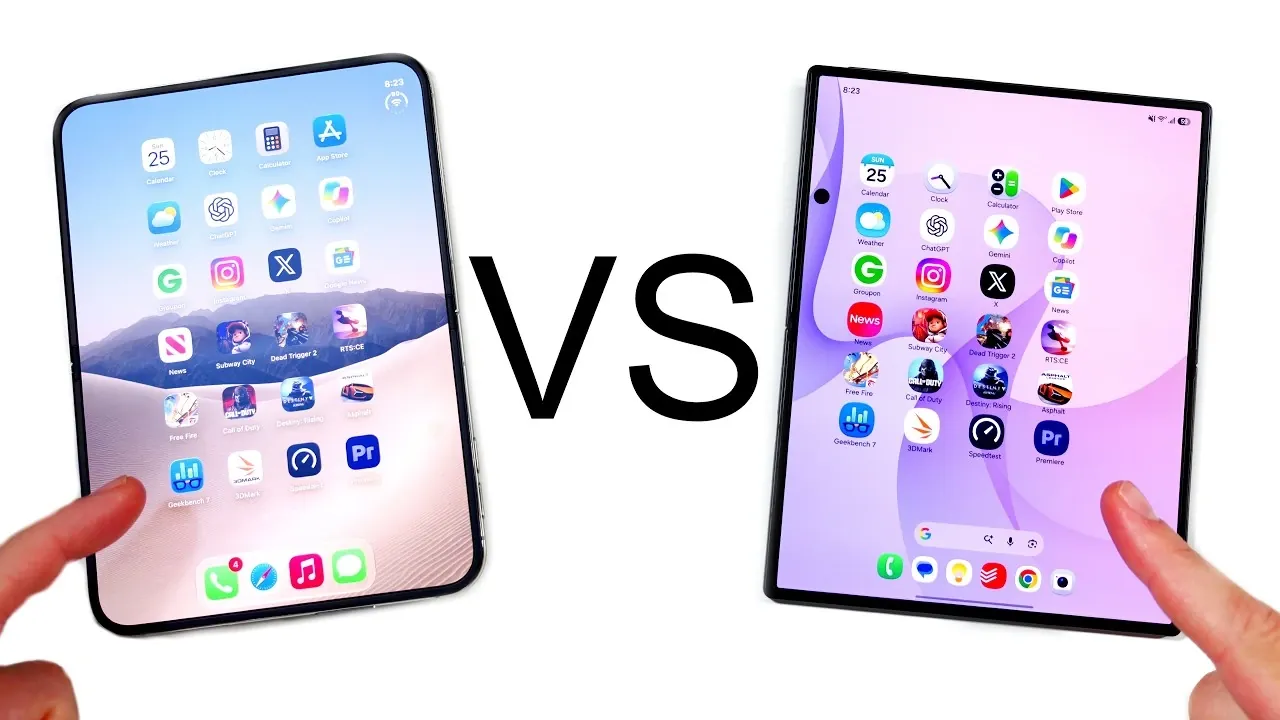
The competition between Apple’s iPhone Duo and Samsung’s Galaxy Z Fold 8 marks a pivotal moment in the evolution of foldable smartphones. Apple’s entry into the foldable market introduces advanced hardware and innovative design, while Samsung uses its years of experience to deliver a refined and reliable product. This comparison provides more insights into the design, performance, usability, and overall user experience of these devices, offering insights for readers interested in the latest advancements in mobile technology. The video below from Nick Ackerman tests the speed of the two folables side by side.

Design and Build: Contrasting Approaches
Apple and Samsung have adopted distinct design philosophies for their foldable devices, catering to different user preferences and priorities.
- iPhone Duo: Apple’s foldable features a matte display that reduces glare and fingerprints, enhancing visibility and usability. Its wider and shorter form factor is designed for ergonomic handling, particularly when unfolded, making it ideal for productivity tasks and multitasking.
- Galaxy Z Fold 8: Samsung’s device opts for a glossy display that delivers vivid and vibrant visuals, though it is more reflective. Its taller, symmetrical design ensures a seamless transition between folded and unfolded modes, appealing to users who prioritize aesthetics and continuity.
Both devices incorporate biometric authentication, but their implementations differ significantly:
- The iPhone Duo features a larger Touch ID button, offering precise authentication but operating at a slightly slower pace.
- The Galaxy Z Fold 8 includes a faster fingerprint scanner and an advanced face unlock system, which performs reliably even in low-light conditions.
These design choices reflect the brands’ differing priorities, with Apple focusing on usability and Samsung emphasizing visual appeal and seamless transitions.
Performance: Hardware vs Optimization
The performance of the iPhone Duo and Galaxy Z Fold 8 highlights the balance between innovative hardware and software optimization.
- iPhone Duo: Equipped with a 2nm chipset, Apple’s foldable offers exceptional computational power and energy efficiency. However, as a first-generation foldable, it experiences occasional software bugs and choppy animations, which can detract from the overall user experience. These issues are expected to improve with future software updates.
- Galaxy Z Fold 8: Powered by a 3nm chipset, Samsung’s device may be slightly less advanced on paper, but its superior software optimization ensures smoother animations and a more responsive interface. This gives it an edge in delivering a polished and reliable performance.
While the iPhone Duo showcases Apple’s hardware innovation, the Galaxy Z Fold 8 demonstrates the importance of software refinement in achieving a seamless user experience.
App Optimization: A Key Differentiator
Foldable smartphones require apps that adapt seamlessly to their unique form factors and this is an area where Samsung’s experience gives it a clear advantage.
- Galaxy Z Fold 8: Samsung’s long-standing collaboration with app developers has resulted in excellent app optimization. Most apps support multitasking, split-screen functionality and adaptive layouts, providing a cohesive and user-friendly experience.
- iPhone Duo: Apple’s foldable struggles with app compatibility, as many applications appear stretched or poorly formatted on its foldable display. This limits usability for early adopters, though improvements are likely as Apple refines its software ecosystem and works with developers to optimize apps.
Samsung’s head start in foldable technology is evident here, as the Galaxy Z Fold 8 offers a more mature and versatile app experience compared to the iPhone Duo’s early-stage software.
Gaming and Graphics: Power vs Experience
For gaming enthusiasts, the iPhone Duo and Galaxy Z Fold 8 offer distinct strengths and weaknesses, depending on what you prioritize.
- iPhone Duo: Its advanced 2nm chipset delivers outstanding performance in benchmarks and graphically demanding games. However, the lack of optimization for foldable displays in many titles diminishes the overall gaming experience, with unrefined user interfaces detracting from immersion.
- Galaxy Z Fold 8: While slightly less powerful in raw performance, its glossy display and optimized app support create a more enjoyable gaming experience. Games run smoothly and the vibrant visuals enhance immersion, making it the better choice for gamers seeking immediate satisfaction.
The iPhone Duo’s hardware potential is undeniable, but the Galaxy Z Fold 8’s focus on delivering a polished gaming experience makes it more appealing for casual and dedicated gamers alike.
Thermals and Efficiency: Staying Cool Under Pressure
Thermal performance plays a crucial role in determining how well a device handles intensive tasks and the iPhone Duo and Galaxy Z Fold 8 take different approaches.
- iPhone Duo: Thanks to its 2nm chipset, Apple’s foldable operates cooler during demanding tasks, maintaining consistent performance without overheating. This makes it a strong contender for prolonged use in resource-intensive scenarios.
- Galaxy Z Fold 8: While efficient, Samsung’s device tends to run warmer under heavy workloads. Despite this, its thermal performance does not significantly impact usability or comfort during everyday tasks.
Both devices manage thermals effectively, but the iPhone Duo’s cooler operation gives it an edge for users who frequently engage in demanding activities.
User Experience: Maturity vs Innovation
When it comes to overall user experience, the Galaxy Z Fold 8 emerges as the more polished and reliable option, while the iPhone Duo offers a glimpse into the future of foldable technology.
- Galaxy Z Fold 8: Years of refinement are evident in its seamless multitasking features, optimized apps and reliable software. It is ideal for users who prioritize stability, ease of use and a mature foldable experience.
- iPhone Duo: Apple’s first-generation foldable feels like a work in progress. Its advanced hardware and innovative design are offset by software limitations and app compatibility issues. For early adopters, it offers an exciting opportunity to explore the cutting edge of foldable technology, but it requires patience as Apple addresses these shortcomings through updates.
The Galaxy Z Fold 8’s maturity makes it the better choice for most users, while the iPhone Duo appeals to those who value innovation and are willing to navigate its early-stage quirks.
Choosing the Right Foldable
The iPhone Duo and Galaxy Z Fold 8 represent two distinct approaches to foldable smartphones, each with unique strengths and weaknesses.
- Galaxy Z Fold 8: A mature and refined device, it delivers a superior overall experience. Its optimized software, app support and polished design make it the ideal choice for users seeking reliability and functionality.
- iPhone Duo: A bold entry into the foldable market, it showcases Apple’s potential to innovate. Its advanced chipset and unique design appeal to tech enthusiasts and early adopters willing to navigate its early-stage quirks. With future updates, it could rival or surpass Samsung’s offering.
Ultimately, your decision will depend on whether you prioritize a polished, ready-to-use device or are excited to explore the cutting edge of Apple’s foldable technology.
Take a look at other insightful guides from our broad collection that might capture your interest in Galaxy Z Fold 8.
- Samsung’s Foldable Masterpiece: Galaxy Z Fold 8 Ultra Leaks
- Samsung Galaxy Z Fold 8 Ultra: All the Upgrades That Make It a True ‘Ultra’
- Galaxy Z Fold 8 Retro Gaming and Emulation Performance Tested
- Samsung Galaxy Z Fold 8 Setup Guide: Essential Settings
- iPhone Duo vs. Z Fold 8: Did Apple Just Beat Samsung at Its Own Game?
- Top Samsung Z Fold 8 Tricks and Hidden Features Explained
Source & Image Credit: Nick Ackerman
Disclosure: Some of our articles include affiliate links. If you buy something through one of these links, Geeky Gadgets may earn an affiliate commission. Learn about our Disclosure Policy.
