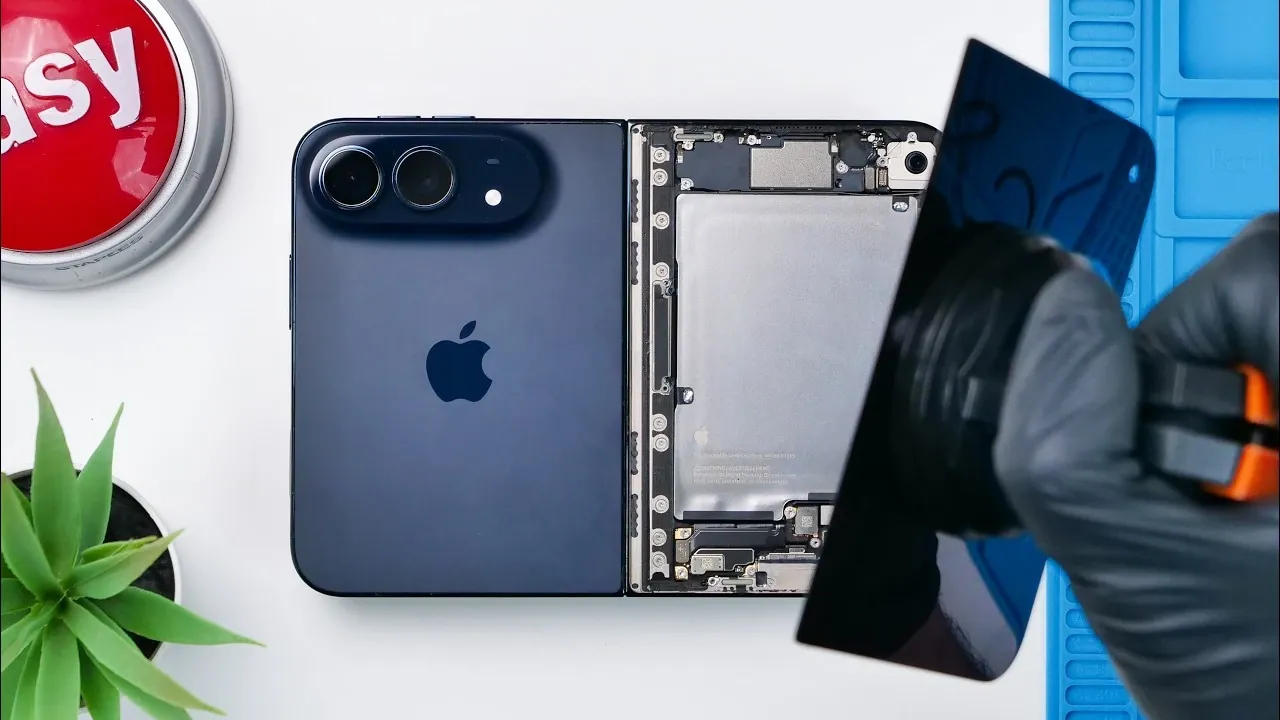
Apple’s debut foldable phone, the iPhone Duo, has captured widespread attention with its sleek design and advanced features. However, a closer examination reveals several critical aspects that may influence your decision to proceed with a pre-order. From structural vulnerabilities to repair challenges, this detailed analysis provides everything you need to consider before committing to this new device. The video below from Phone Repair Guru gives us a look inside the iPhone Duo.

Design and Build: Innovation Meets Vulnerability
The iPhone Duo showcases Apple’s distinctive approach to foldable technology, blending elegance with functionality. Its premium design includes repositioned volume buttons and the reintroduction of Touch ID, now integrated into the power button for added convenience. A nano-textured screen protector enhances scratch resistance, while the outer shell exudes sophistication with its polished finish. However, the inner foldable display presents a visible crease, raising concerns about long-term durability.
While the foldable form factor is undeniably innovative, it introduces structural weaknesses absent in traditional iPhones. The hinge mechanism, though robust, remains a potential point of failure, particularly for users who frequently open and close the device. These vulnerabilities highlight the trade-offs between innovative design and practical durability.
Display and Durability: A Mixed Bag
The iPhone Duo features a dual-display setup, with the outer screen protected by Ceramic Shield 2, offering improved resistance to drops and scratches. Its 120 Hz adaptive refresh rate ensures smooth scrolling and responsiveness, while brightness levels of up to 3000 nits deliver excellent outdoor visibility. For users who prioritize display quality, the outer screen is a standout feature.
However, the inner foldable display tells a different story. Despite its vibrant colors and immersive viewing experience, it is significantly more fragile. The foldable screen is prone to damage from pressure or accidental impacts and repairs are both complex and costly. While a protective frame provides some reinforcement, it does little to alleviate concerns about the screen’s long-term reliability. For users accustomed to Apple’s traditionally durable devices, this fragility may be a significant drawback.
Battery and Internal Components: A Step Forward
The iPhone Duo introduces a dual-battery system, with capacities of 2,962 mAh and 1,921 mAh, designed to ensure partial functionality even if one battery fails. This innovative approach enhances reliability and provides peace of mind for users concerned about battery longevity. Additionally, the device includes a modular charging port, simplifying replacements and improving overall repairability compared to previous models.
To address heat management, Apple has incorporated a vapor chamber for efficient thermal dissipation. This ensures consistent performance during demanding tasks, such as gaming or video editing. These thoughtful internal design choices represent a step forward in reliability and efficiency, even as external durability remains a concern.
Camera System: Solid, But Not Spectacular
The iPhone Duo’s camera system includes a 48 MP main camera and an ultrawide lens, delivering solid performance for everyday photography. Images are sharp and detailed, with accurate color reproduction under most lighting conditions. However, the under-display 4 MP front camera falls short, producing lower-quality selfies compared to Apple’s Pro models. This limitation may disappoint users who frequently rely on front-facing cameras for video calls or social media content.
While the rear cameras are capable, they lack the advanced features and refinements found in higher-end iPhones. For photography enthusiasts, the Duo’s camera system may feel underwhelming, particularly given its premium price point.
Repairability: A Major Drawback
Repairability is one of the iPhone Duo’s most significant challenges. The inner foldable display is particularly difficult to service, requiring specialized tools and expertise to avoid further damage. This complexity translates to higher repair costs, making accidental damage a costly inconvenience for users.
On the positive side, modular components such as the charging port and stereo speakers are easier to replace, reflecting Apple’s efforts to improve certain aspects of repairability. However, critical components like Touch ID and the hinge mechanism remain difficult and expensive to fix. For users who prioritize long-term maintenance and affordability, these repairability issues may outweigh the device’s innovative features.
Performance and Hardware: Power Meets Efficiency
Equipped with the A20 Pro chip and 12 GB of RAM, the iPhone Duo delivers exceptional performance. Its compact motherboard design optimizes internal space, while the strategic placement of RAM beside the chip enhances thermal efficiency. These innovations ensure the device remains fast and responsive, even during resource-intensive tasks such as video editing or multitasking.
Despite its impressive hardware, the practical challenges of the foldable design, such as fragility and repair difficulties, may overshadow these technical achievements for many users. While the Duo excels in performance, its overall value is diminished by the compromises inherent in its design.
Key Criticisms and Limitations
The iPhone Duo’s ambitious design comes with several notable drawbacks:
- The absence of Face ID, replaced by Touch ID, may disappoint users who value the convenience of facial recognition.
- The camera quality, while adequate, falls short of the high standards set by Apple’s Pro models.
- Repair costs are prohibitively high, particularly for the fragile inner display and hinge mechanism.
- The foldable form factor, while innovative, offers limited practicality for everyday use and introduces durability concerns.
These limitations make the iPhone Duo a less compelling option for the average consumer, especially when compared to more traditional iPhone models that offer greater reliability and ease of use.
Final Thoughts: Is the iPhone Duo Worth It?
The iPhone Duo represents Apple’s bold entry into the foldable phone market, combining innovative features with a premium design. Its dual-battery system, advanced performance, and sleek aesthetics make it an attractive choice for early adopters and tech enthusiasts. However, the device’s repair difficulties, high costs and functional compromises raise questions about its practicality for everyday users.
For those intrigued by foldable technology and willing to navigate its challenges, the iPhone Duo offers a glimpse into the future of smartphones. However, for the average consumer seeking reliability, durability, and value, more traditional iPhone models may remain the better choice. Carefully weigh the iPhone Duo’s unique features against its significant limitations to determine whether it aligns with your needs and expectations.
Take a look at other insightful guides from our broad collection that might capture your interest in iPhone Duo.
- Early iPhone Duo 2 Leaks Reveal Major Hardware Upgrades
- iPhone Duo: Key Details Apple Barely Mentioned on Stage
- Apple’s iPhone Duo 2 Just Leaked: Everything Changing With the Next Foldable
- iPhone Duo Buyer’s Guide: How to Choose Without Regrets
- iPhone Duo vs. Galaxy Z Fold 8: Did Apple Just Catch Samsung?
- iPhone Duo: 5 Features That Make It Worth the Price
Source & Image Credit: Phone Repair Guru
Disclosure: Some of our articles include affiliate links. If you buy something through one of these links, Geeky Gadgets may earn an affiliate commission. Learn about our Disclosure Policy.
