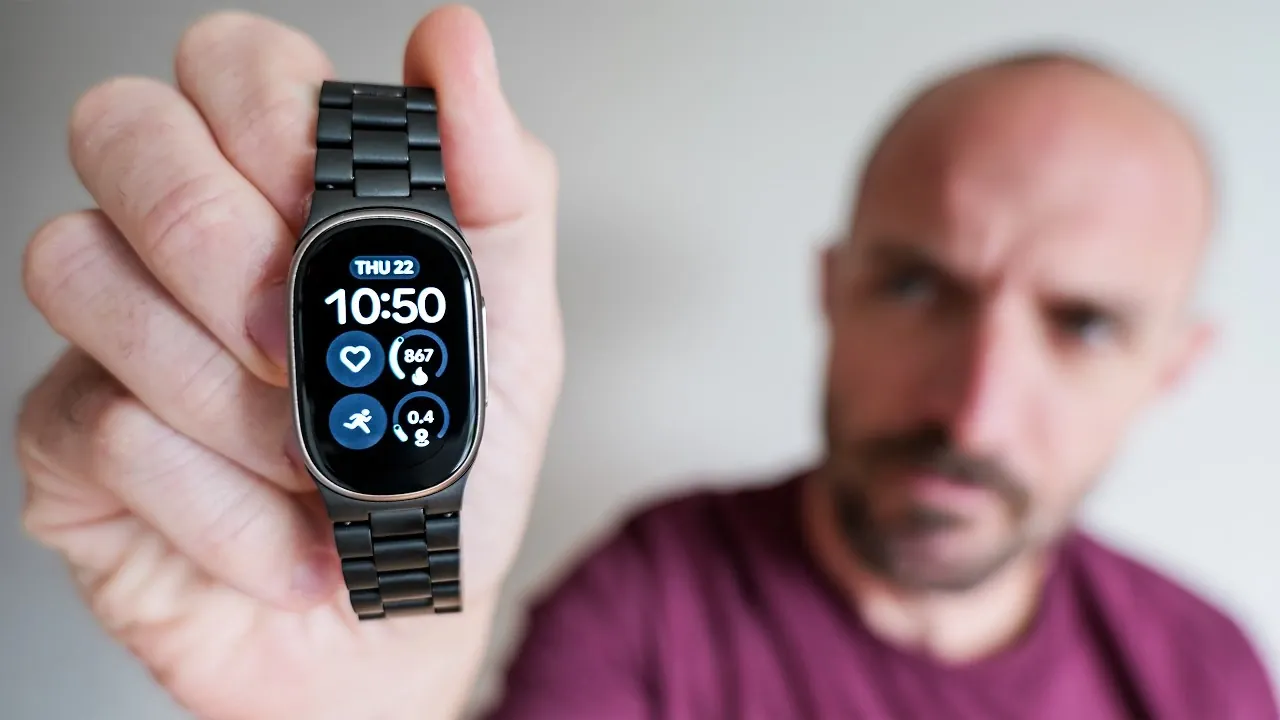
The Google Fitbit Edge is a lightweight fitness tracker designed to combine style with functionality, but it makes some puzzling choices that may impact its versatility. Weighing just 17.7 grams, it features a 1.34-inch AMOLED display with a peak brightness of 1,400 nits, making sure readability in various lighting conditions. However, as highlighted by Chase the Summit, the absence of features like NFC for payments and a built-in speaker limits its utility beyond fitness tracking. Additionally, restrictions such as disabled media controls during workouts and limited customization for workout data fields may disappoint users who prioritize adaptability.
Explore this review to understand how the Fitbit Edge handles health tracking, GPS performance and battery life. Gain insight into its integration with Google Health, its seven-day battery life and its challenges, such as inconsistent GPS accuracy and the lack of elevation tracking for outdoor activities. This analysis will provide clarity on whether the Fitbit Edge meets your expectations for a fitness-focused wearable.
Key Features at a Glance
- The Fitbit Edge is a hybrid fitness tracker priced at $179, featuring a lightweight design (17.7 grams) and a vibrant 1.34-inch AMOLED display with 1,400 nits peak brightness.
- It offers essential health and fitness tracking, including steps, sleep, heart rate, skin temperature and built-in GPS with dynamic mode for battery conservation.
- Key features include Google Maps integration for turn-by-turn navigation, water resistance (5 ATM), and up to seven days of battery life with casual use.
- Limitations include the absence of NFC, speaker, microphone, elevation metrics for hiking and limited customization for workout data fields.
- Best suited for casual fitness enthusiasts prioritizing style, simplicity and Google Health integration, but less ideal for advanced users or endurance athletes seeking robust features.
- Lightweight design at just 17.7 grams (without the band)
- 1.34-inch AMOLED display with 1,400 nits peak brightness
- Tracks steps, sleep, heart rate and skin temperature
- Built-in GPS with dynamic mode for battery conservation
- Google Maps integration for turn-by-turn navigation
- Water resistance rated at 5 ATM
- Battery life of up to seven days with casual use
Design and Build: Compact and Customizable
The Fitbit Edge is designed with portability and style in mind. Its compact frame, measuring 39mm in height, combines a metal bezel with a plastic back, offering a premium yet lightweight feel. Weighing just 17.7 grams, it is comfortable for all-day wear, making it suitable for both casual users and fitness enthusiasts. The device is rated water-resistant up to 5 ATM and is dustproof, making sure durability for everyday use and light outdoor activities.
Customizable bands allow users to personalize the device, with options to switch between various styles and colors to match individual preferences. Despite its small size, the Edge maintains a modern, minimalist aesthetic that appeals to those who value simplicity and elegance.

Gain further expertise in Google Fitbit Edge by checking out these recommendations.
- Fitbit Edge vs Fitbit Air: Trades Lightweight Design for GPS
- Leaked Fitbit Edge Bridges Fitbit Charge 6 and Pixel Watch
- Fitbit Edge Replaces the Charge 6 with a 46% Larger Display
- Google Fitbit Edge Launches October 27 For $179.99
- Fitbit Edge Beats Fitbit Charge 6 with 46% Larger OLED Display
- Always-on Display Drops Fitbit Edge Battery Life to 2 Days
- Fitbit Edge Beats Google Fitbit Air with Built-in GPS and an ECG
- Likely Google Fitbit Charge 7 Leak Reveals GNSS Tracking
Display: Vibrant but Power-Hungry
The 1.34-inch AMOLED display is a standout feature of the Fitbit Edge. With vivid colors and a peak brightness of 1,400 nits, the screen performs well in both indoor and outdoor environments, making sure visibility even in direct sunlight. The always-on display option enhances convenience, allowing users to glance at the time or metrics without activating the screen manually. However, this feature significantly impacts battery life, making it less practical for users who prioritize longevity.
Gesture-based activation works reliably, allowing users to wake the screen with a flick of the wrist. However, the default screen timeout is notably short, which can be frustrating during workouts or when checking metrics. Fortunately, this setting can be adjusted to improve usability.
Features and Functionality: A Mixed Bag
The Fitbit Edge offers a solid range of fitness tracking features, including step counting, sleep monitoring, heart rate tracking and skin temperature measurement. Its built-in GPS includes a dynamic mode that prioritizes your phone’s GPS to conserve battery life. Google Maps integration adds turn-by-turn navigation, a particularly useful feature for outdoor activities such as running or cycling.
However, the device has some notable omissions that limit its versatility:
- No NFC for contactless payments
- No speaker or microphone, restricting smartwatch functionality
- Media controls are disabled during workouts, which may frustrate users
These limitations make the Fitbit Edge less competitive compared to other devices in its price range, especially for users seeking a more comprehensive smartwatch experience.
User Interface: Simple but Lacking Depth
The user interface of the Fitbit Edge is straightforward and intuitive. Customizable tiles and watch faces allow users to tailor the device to their preferences. A physical button is included, but its functionality feels underutilized, offering limited shortcuts or advanced features. For example, users cannot assign complex actions or access detailed settings through the button, which reduces its practicality.
Customization options for workout data fields are also minimal, which could disappoint users who prefer detailed metrics during exercise. While the interface is easy to navigate, it lacks the depth and flexibility found in competing devices, making it less appealing for advanced users.
Performance: Reliable but Not Perfect
The Fitbit Edge delivers reliable performance for casual fitness tracking. Heart rate monitoring is generally accurate but may falter in cold conditions or during high-intensity activities. The built-in GPS performs adequately for everyday use but struggles with precision in challenging environments such as dense urban areas or wooded trails. Additionally, while the device includes an altimeter, it does not provide elevation metrics during hiking, which limits its appeal for outdoor enthusiasts.
Battery Life: A Strong Point
Battery life is one of the Fitbit Edge’s strengths. With casual activity tracking and the always-on display turned off, the device can last up to seven days on a single charge. The dynamic GPS mode further conserves battery by relying on your phone’s GPS when available. However, using the internal GPS exclusively drains the battery faster, with an estimated consumption of 11-12% per hour during continuous tracking. This makes it less suitable for long-distance activities like marathon training or extended hikes.
Limitations: Where the Edge Falls Short
Despite its sleek design and useful features, the Fitbit Edge has several drawbacks that may deter potential buyers:
- No elevation metrics for hiking activities
- Limited customization for workout data fields
- Media controls disabled during workouts
- Absence of advanced smartwatch features like NFC, a speaker, or a microphone
These limitations make the device less appealing for serious athletes or users seeking a more robust smartwatch experience. While it excels in style and simplicity, it lacks the advanced functionality required by more demanding users.
Who Should Buy the Fitbit Edge?
The Fitbit Edge is best suited for casual fitness enthusiasts who value style, simplicity and seamless integration with the Google Health ecosystem. It is an attractive option for users already invested in Google’s services or those looking for a lightweight device for basic fitness tracking. Its sleek design and vibrant display make it a good choice for everyday wear.
However, the Fitbit Edge may not meet the needs of endurance athletes or users requiring advanced GPS accuracy, detailed metrics and greater customization. Those seeking a more comprehensive smartwatch experience may need to explore other options in the same price range.
Final Thoughts: A Stylish Tracker with Room for Improvement
The Google Fitbit Edge delivers on style and ease of use, offering a vibrant AMOLED display, lightweight design and solid battery life. Its integration with Google Health makes it a convenient choice for casual users. However, its quirks, such as limited customization, lack of advanced features and certain performance inconsistencies, may deter those seeking a more versatile or feature-rich device.
At $179, the Fitbit Edge is a reasonable choice for users who prioritize simplicity and aesthetics over advanced functionality. While it is a capable fitness tracker for everyday use, it leaves room for improvement in meeting the needs of more demanding users.
Media Credit: Chase the Summit
Disclosure: Some of our articles include affiliate links. If you buy something through one of these links, Geeky Gadgets may earn an affiliate commission. Learn about our Disclosure Policy.
