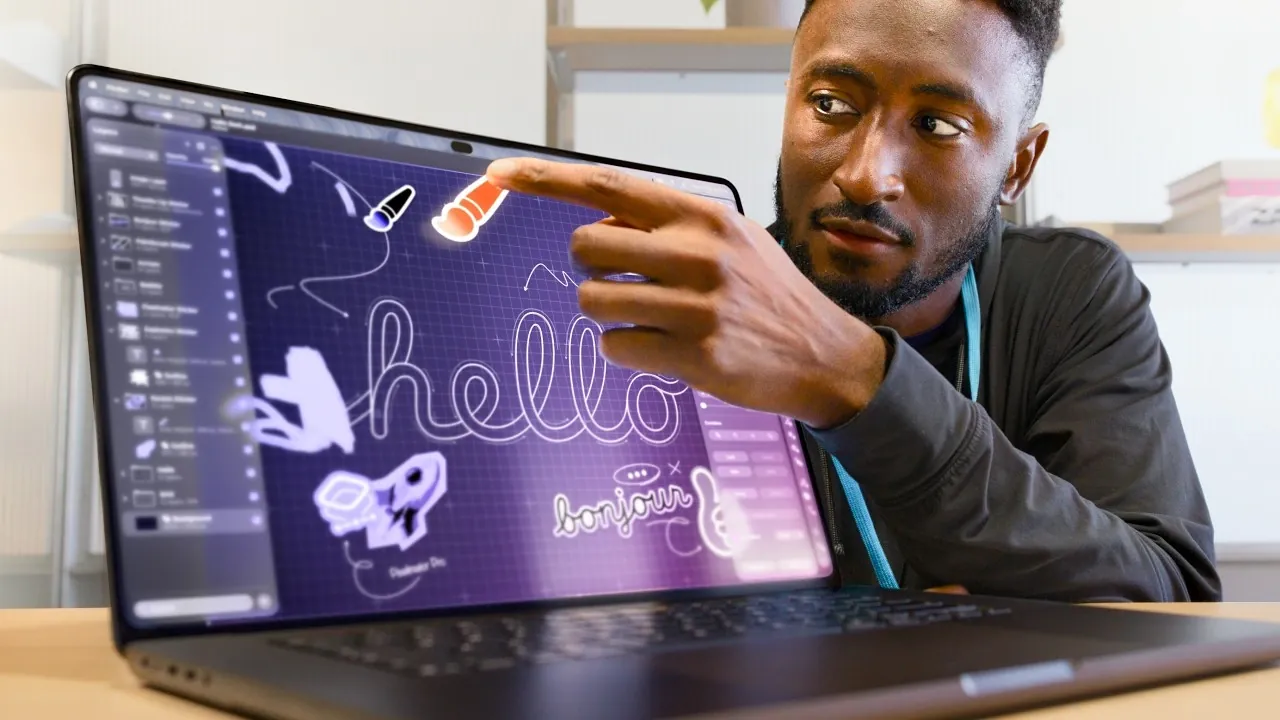
Apple has officially unveiled its latest MacBook Pro, showcasing two major advancements: an OLED display and a touchscreen. These updates signal a notable shift in Apple’s design philosophy, particularly with the long-anticipated addition of a touchscreen. While the touchscreen has garnered attention, the OLED display stands out as the defining feature, delivering exceptional visual quality while contributing to a lighter, more portable design. Below is a detailed video from Marques Brownlee of what this new MacBook Pro brings to the table.

Touchscreen: A Long-Awaited Feature with Targeted Appeal
For the first time, Apple has integrated a touchscreen into the MacBook Pro, a feature that has been requested by users for years. The touchscreen is highly responsive and supports multi-touch gestures such as swiping, zooming, and scrolling. This functionality is particularly beneficial for tasks like iOS app development, where direct interaction with the screen can streamline workflows and improve efficiency.
However, the touchscreen’s practicality for traditional Mac workflows, such as video editing or coding, remains a topic of debate. It does not support the Apple Pencil, which limits its appeal for creative professionals who rely on precision tools for tasks like drawing or intricate design work. Additionally, ergonomic concerns arise with prolonged use, as reaching for the screen repeatedly can be less comfortable compared to using a trackpad or mouse. For many users, the touchscreen feels like a complementary feature rather than a fantastic addition, catering to niche use cases rather than broad adoption.
OLED Display: Redefining Visual Standards
The OLED display is the true highlight of the new MacBook Pro, offering a substantial leap in visual quality. With a contrast ratio of 10 million:1, the display delivers deep blacks, vibrant colors and reduced blooming, making it ideal for visually demanding tasks such as photo editing, video production, and graphic design.
Apple provides two finish options for the display:
- A glossy finish for maximum color vibrancy, perfect for users prioritizing vivid visuals.
- A matte nano-texture option designed to minimize glare, ideal for professionals working in bright environments.
Beyond its stunning visuals, the OLED display contributes to improved portability. The 14-inch model now weighs just 3 pounds, while the 16-inch version is nearly a pound lighter than its predecessor. This combination of exceptional display quality and enhanced portability makes the OLED display a compelling reason for users to consider upgrading.
Design Refinements: Subtle Yet Impactful
Apple has introduced several design updates that enhance both the aesthetics and usability of the MacBook Pro. These refinements include:
- Thinner bezels around the display, creating a more immersive viewing experience.
- Slightly curved display corners, adding a modern touch to the overall design.
- The return of the iconic glowing Apple logo, now featuring adjustable brightness for a customizable appearance.
These updates, while subtle, contribute to a device that feels fresh yet familiar, maintaining Apple’s signature balance between innovation and tradition. The result is a MacBook Pro that looks and feels premium, while staying true to the design language that users have come to expect.
Performance and Features: Power Meets Practicality
Under the hood, the new MacBook Pro is powered by Apple’s M5 Pro and M5 Max chips, delivering top-tier performance for demanding tasks such as 3D rendering, software development, and video editing. These chips ensure that the MacBook Pro remains one of the most powerful laptops available, capable of handling even the most resource-intensive workflows.
Additional features include:
- Touch ID for quick and secure biometric authentication.
- Improved speakers with deeper bass, offering an enhanced audio experience for media consumption and professional audio editing.
- The replacement of the notch with the Dynamic Island, an interactive UI element that adapts to your activities, providing a more seamless user experience.
However, some users may be disappointed by the absence of Face ID, a feature that many expected to accompany the Dynamic Island. On a positive note, Apple has retained the existing ports, including USB-C and an SD card slot, making sure compatibility with a wide range of peripherals. This decision reflects a practical approach, catering to professionals who rely on diverse connectivity options.
Touchscreen: A Feature with Specific Use Cases
While the touchscreen is a welcome addition, it comes with certain limitations. The lack of Apple Pencil support restricts its utility for tasks like drawing, detailed note-taking, or precision-based design work. Additionally, its ergonomic drawbacks make it less suitable for extended use in traditional laptop workflows, such as typing-intensive tasks or prolonged editing sessions.
That said, the touchscreen excels in specific scenarios. For example, iOS app developers can benefit from direct interaction with the screen, which can enhance productivity and streamline testing processes. For the majority of users, however, the touchscreen is likely to remain a secondary feature, appreciated in certain contexts but not a primary reason to upgrade.
A Thoughtful Evolution of the MacBook Pro
The latest MacBook Pro represents a balanced evolution of Apple’s flagship laptop. The OLED display, with its stunning visuals and lighter design, is the standout feature, offering a compelling reason for users to upgrade. The touchscreen, while a noteworthy addition, feels more like a niche feature tailored to specific use cases rather than a universal enhancement.
By refining existing technologies and introducing carefully considered updates, Apple continues to strike a balance between innovation and familiarity. The MacBook Pro remains a powerful, versatile tool, now enhanced with improved visuals and interactivity to meet the diverse needs of its users. Whether you’re a creative professional, developer, or general user, this latest iteration offers meaningful improvements while staying true to the essence of what makes a MacBook Pro unique.
Here are more guides from our previous articles and guides related to MacBook Pro that you may find helpful.
- Apple’s M6 MacBook Pro Leaks Reveal a Surprising Strategy Shift
- The OLED MacBook Pro Is Finally Confirmed for October—And It Changes Everything
- What to Expect From Apple’s Rumored M6 MacBook Pro Drop This Month
- Leaked OLED MacBook Pro Marks Apple’s Biggest Mac Shift in Years
- Apple Officially Confirms New Macs Are Arriving Next Week
- Leaked M6 MacBook Pro: Apple’s Biggest Silicon Leap in Years
Source & Image Credit: Marques Brownlee
Disclosure: Some of our articles include affiliate links. If you buy something through one of these links, Geeky Gadgets may earn an affiliate commission. Learn about our Disclosure Policy.
