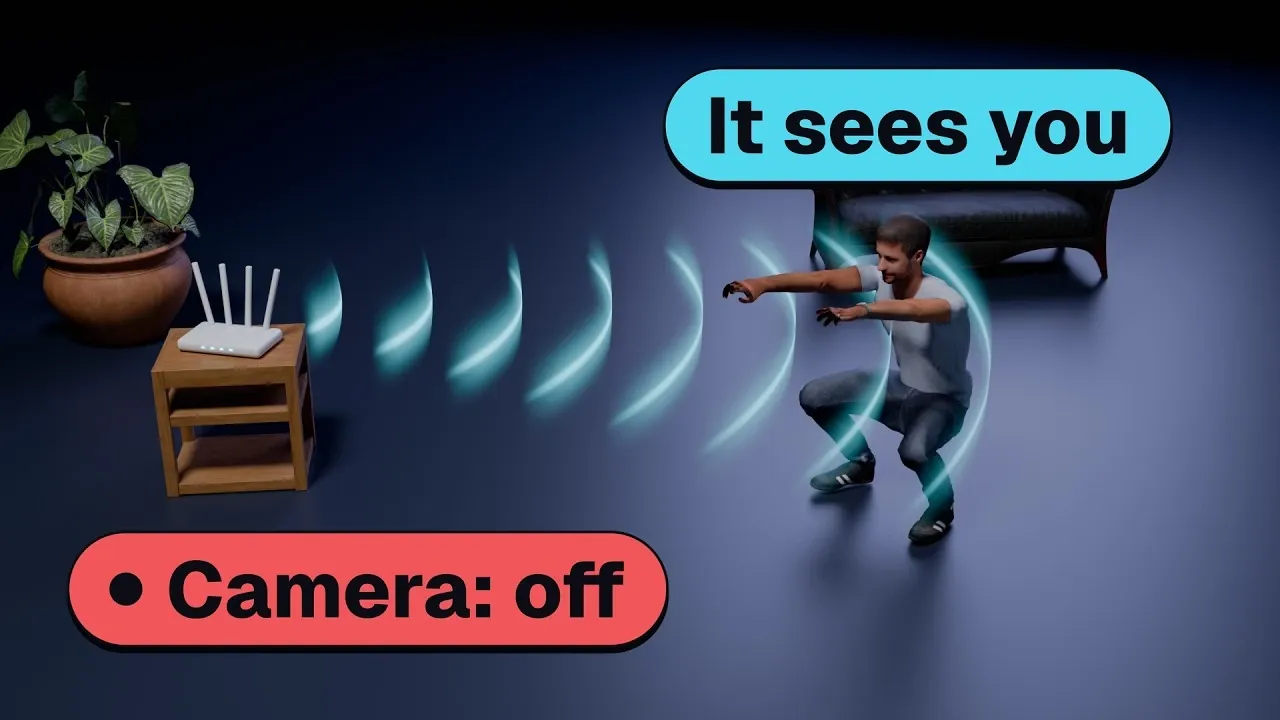
Wi-Fi sensing uses existing wireless networks to detect motion, presence and activities by analyzing changes in Wi-Fi signals, specifically through Channel State Information (CSI). According to Better Stack, this approach provides a non-intrusive alternative to traditional surveillance methods. For instance, using affordable hardware like ESP32S3 boards and open source frameworks such as RuView, a setup with three strategically placed boards can monitor signal fluctuations to infer actions like sitting or standing, all without the need for cameras.
Explore the practical steps involved in creating a Wi-Fi sensing system, including hardware configuration and AI model training. Learn how to integrate pose detection labels to enhance system accuracy and compare its effectiveness in scenarios like tracking room occupancy or identifying rapid movements. This explainer also examines the privacy considerations tied to Wi-Fi sensing, offering guidance on implementing it responsibly.
Understanding ESP32 Wi-Fi Sensing
TL;DR Key Takeaways :
- Wi-Fi sensing transforms wireless networks into tools for detecting human presence, movement and activities by analyzing subtle changes in Wi-Fi signals, offering a non-intrusive alternative to traditional surveillance systems.
- Using affordable hardware like ESP32S3 boards and open source projects such as RuView, individuals can experiment with Wi-Fi sensing at home, allowing motion detection and pose analysis through AI training.
- Wi-Fi sensing systems demonstrate high accuracy for room occupancy detection (96%) but face challenges with small or rapid motions, highlighting the need for careful calibration and environmental adaptation.
- The technology raises significant privacy and security concerns, as Wi-Fi signals can penetrate walls, potentially allowing unauthorized surveillance, necessitating robust safeguards and ethical regulations.
- Applications include home security, elderly care and smart environments, but challenges like signal interference, retraining for new environments and data quality must be addressed for broader adoption.
Wi-Fi sensing operates by analyzing how wireless signals interact with their environment. As Wi-Fi signals travel through a space, they bounce off objects and people, creating measurable changes in signal strength and frequency. These changes, known as Channel State Information (CSI), can be studied to infer movements, positions and even specific activities. Unlike cameras, Wi-Fi sensing does not rely on visual input, making it a discreet and innovative solution for motion detection.
This technology uses the omnipresence of Wi-Fi networks, turning everyday wireless signals into a powerful tool for environmental awareness. By interpreting the variations in CSI, Wi-Fi sensing can detect whether a person is sitting, standing, or moving, all without the need for invasive equipment. Its reliance on existing infrastructure and relatively simple hardware makes it an accessible and cost-effective option for exploring advanced sensing capabilities.
Building a Wi-Fi Sensing System
Creating a Wi-Fi sensing system is more accessible than it might initially seem, thanks to open source projects like RuView. This initiative combines artificial intelligence (AI) with Wi-Fi data to enable pose detection and motion analysis. Using affordable hardware, such as ESP32S3 boards costing approximately $10 each, you can experiment with this technology in your own space.
The process involves several key steps:
- Hardware Setup: Place three ESP32S3 boards strategically in a room to monitor Wi-Fi signals. These boards act as both transmitters and receivers, capturing the CSI data required for analysis.
- Data Collection: Pair Wi-Fi data with pose detection labels generated by a webcam. This step helps train the AI models to recognize how specific movements, such as sitting or standing, affect the Wi-Fi signals.
- AI Training: Use the collected data to train the system, allowing it to identify patterns and correlate them with human activities.
While the setup requires some technical expertise, RuView’s open source nature simplifies the process, making it accessible to enthusiasts and researchers. This hands-on approach demonstrates how relatively inexpensive hardware can be used to explore innovative sensing technologies.
Uncover more insights about ESP32 in previous articles we have written.
- $5 ESP32-S3 Super Mini Packs Wi-Fi and Bluetooth
- How an $8 ESP32 S3 Microcontroller Runs a 28.9M Parameter Local LLM
- 5 ESP32 Projects Worth Building in 2026: Such as an Apple HomeKit Controller
- $4 ESP32 Module Brings Wi-Fi and Bluetooth to IoT Projects
- ESP32-S3 Super Mini Costs $5 and Packs Wi-Fi and Bluetooth
- ESP32-S3 Super Mini Brings 240 MHz Dual-Core Power For $4
- ESP32 S31 Devkit Hands-on: 320 MHz RISC-V Chip Adds Wi-Fi 6
- $4 ESP32-S3 Super Mini Packs a 0.96-Inch IPS TFT Screen
- Build a DIY Open-Source Flipper Zero Using a ESP32-DIV
- WaveShare ESP32-C5 Offers 32MB Flash and Sensors For $20
Evaluating Performance and Accuracy
The performance of Wi-Fi sensing systems is promising, though not without limitations. In practical tests, the system demonstrated varying levels of accuracy depending on the type of movement being detected:
- Room Occupancy Detection: Achieved an impressive 96% accuracy, making it highly reliable for determining whether a space is occupied.
- Basic Movements: Detected actions like sitting, standing and squatting with a 79.5% accuracy rate.
- Small or Rapid Motions: Struggled with faster movements, such as waving, where accuracy dropped to 13%.
These results highlight both the potential and the challenges of Wi-Fi sensing. Factors such as room layout, signal interference and the quality of training data significantly impact performance. To achieve consistent and reliable results, systems must be carefully calibrated and adapted to their specific environments.
Privacy and Security Implications
The capabilities of Wi-Fi sensing introduce serious privacy and security concerns. Since Wi-Fi signals can penetrate walls, these systems have the potential to monitor activity in adjacent rooms or even neighboring properties. This raises the risk of unauthorized surveillance, whether by malicious actors or overly intrusive implementations.
The upcoming 802.11bf Wi-Fi standard, expected to integrate sensing capabilities into standard routers, could further amplify these concerns. While this advancement may enhance the accessibility and accuracy of Wi-Fi sensing, it also increases the potential for misuse. Addressing these risks will require robust safeguards, including encryption, user consent protocols and clear regulations to prevent unethical applications.
Applications and Challenges
Wi-Fi sensing has a wide range of potential applications, particularly in areas where non-intrusive motion detection is valuable:
- Home Security: Monitor occupancy and detect unauthorized movements without relying on cameras, offering a discreet alternative for safeguarding homes.
- Elderly Care: Enable fall detection and activity monitoring, creating safer environments for vulnerable individuals.
- Smart Environments: Enhance automation systems by providing real-time data on human presence and activity.
Despite its promise, Wi-Fi sensing faces several challenges that must be addressed to ensure its broader adoption:
- Environmental Adaptation: Systems often require retraining when moved to new locations or used by different individuals, limiting scalability.
- Signal Interference: Performance can be affected by physical obstructions, competing wireless signals and other environmental factors.
- Data Quality: The accuracy of the system depends heavily on the quality of the training data and the precision of the hardware setup.
Overcoming these obstacles will be essential to unlocking the full potential of Wi-Fi sensing and making sure its reliability in diverse applications.
Balancing Innovation with Ethical Responsibility
Wi-Fi sensing represents a significant advancement at the intersection of wireless communication and artificial intelligence. By transforming Wi-Fi signals into tools for motion detection, this technology offers exciting possibilities for fields such as home security, healthcare and smart environments. Its ability to operate discreetly and without visual input sets it apart from traditional surveillance methods, making it a compelling option for non-intrusive monitoring.
However, the same capabilities that make Wi-Fi sensing innovative also introduce significant privacy and security risks. As the technology becomes more integrated into everyday devices, it is crucial to establish clear ethical guidelines and robust safeguards to prevent misuse. By understanding its strengths and limitations, you can explore Wi-Fi sensing responsibly, using its benefits while protecting privacy and security in your environment.
Media Credit: Better Stack
Disclosure: Some of our articles include affiliate links. If you buy something through one of these links, Geeky Gadgets may earn an affiliate commission. Learn about our Disclosure Policy.
