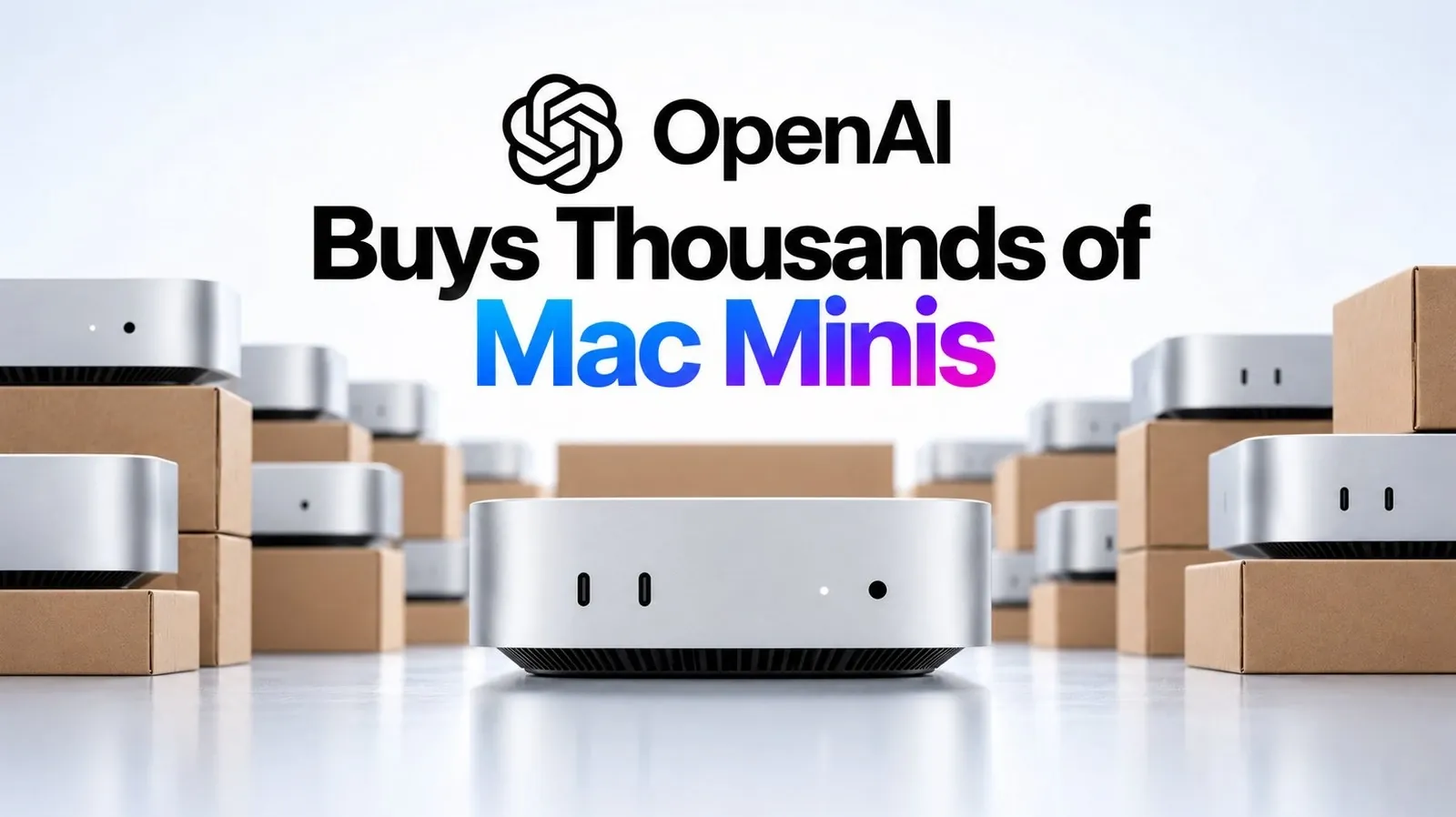
OpenAI’s decision to purchase tens of thousands of Mac Minis and Mac Studios marks a pivotal shift in how AI organizations approach hardware acquisition. As Ash explains, this move was driven by the need to train AI agents in environments that closely replicate human-computer interactions, such as typing and navigating software interfaces. Unlike other operating systems, macOS provides the stability and uniformity required for these tasks, while Apple’s licensing policies necessitate the use of physical Macs. By opting to buy these devices outright, OpenAI not only adheres to these licensing constraints but also avoids the recurring costs associated with renting hardware, a choice that could have otherwise cost millions monthly.
Dive into this guide to explore the broader implications of OpenAI’s hardware strategy. You’ll gain insight into how Apple’s unified memory architecture and high memory bandwidth enhance AI training, why the organization prioritized long-term cost efficiency and how this purchase has impacted the market for consumer-grade devices. Whether you’re curious about AI hardware trends or considering your own procurement strategies, this breakdown offers valuable takeaways for navigating the evolving intersection of AI and technology.
Why OpenAI Chose Macs
TL;DR Key Takeaways :
- OpenAI has purchased tens of thousands of Mac Minis and Mac Studios to train AI agents in realistic human-computer interaction tasks, using macOS for its stability and consistency.
- Buying Macs outright instead of renting them saved OpenAI significant costs, with a one-time $18 million investment replacing an estimated $18 million monthly rental expense.
- The bulk purchase of Macs has impacted the market, causing price increases and longer shipping times for high-memory configurations due to heightened demand.
- Apple hardware is favored for its Unified Memory Architecture (UMA), high memory bandwidth and seamless macOS integration, making it ideal for AI training and development.
- While alternatives like Nvidia RTX Spark laptops exist, macOS’s unique licensing and hardware integration make Apple devices the preferred choice for specific AI training scenarios.
OpenAI’s decision to invest heavily in Macs stems from the need to create realistic and controlled environments for training AI agents. These agents are designed to replicate human behavior when interacting with computers, requiring a stable and consistent operating system. macOS provides such an environment, offering a uniform platform that simplifies the process of simulating human-computer interactions.
Apple’s licensing policies, which restrict macOS to Apple hardware, further necessitate the use of physical Macs for these training tasks. Unlike other operating systems, macOS offers a level of stability and predictability that is critical for developing AI agents capable of navigating complex software interfaces. This combination of hardware and software integration makes Apple devices uniquely suited for OpenAI’s objectives.
Cost Efficiency: Buying vs Renting
The financial implications of OpenAI’s decision to purchase Macs outright are significant. Renting Macs through cloud providers, such as Amazon Web Services, could have cost the organization approximately $18 million per month for a fleet of 20,000 devices. In contrast, purchasing the same number of Macs required a one-time investment of around $18 million. This approach not only eliminates recurring rental costs but also provides OpenAI with long-term access to the hardware, making sure greater control over its resources.
This cost-effective strategy reflects a broader trend in the AI industry, where organizations are increasingly seeking ways to optimize expenses while meeting the growing demand for computational power. By choosing to buy rather than rent, OpenAI has set a precedent for balancing financial prudence with technological advancement.

Deep dive into the latest in OpenAI by exploring our other resources and articles.
- Meet the Codex Micro: OpenAI’s Physical Keyboard for Coders $230
- OpenAI Introduces GPT-5.7 Astra and Ambitious ChatGPT 6 Doug
- OpenAI Astra ChatGPT 6 Reportedly Uses Multi-Agent Task Delegation
- OpenAI Plans to Release Astra AGI System by the End Of 2026
- Meet OpenAI Bell ChatGPT 7: the Model That Replaces GPT-6 Astra
- ChatGPT 6 Astra Reportedly Generates 3D Games from a Single Prompt
- OpenAI ChatGPT 6 Astra Reportedly Packs 10 Trillion Parameters
- Always-on OpenAI O Agent May Fully Automate Your Emails
- OpenAI Astra Solves 10 Unresolved Quantum Complexity Problems
- OpenAI’s GPT-6.1 Sol Matches Astra Capabilities at Dev Day 2026
Market Impact of OpenAI’s Purchase
The ripple effects of OpenAI’s bulk purchase of Macs have been felt across the market. The sudden surge in demand for devices like the Mac Mini has led to noticeable price increases, with the base price rising from $599 to $899 in 2023. Additionally, shipping times for high-memory configurations have lengthened, as manufacturers struggle to keep up with the heightened demand.
These market shifts highlight the influence of AI-driven hardware needs on both consumer and enterprise sectors. For individual buyers, the increased costs and longer wait times present challenges, while for businesses, the scarcity of high-performance devices underscores the importance of strategic planning in hardware procurement.
Why Apple Hardware Stands Out
Apple’s hardware offers several distinct advantages that make it particularly well-suited for AI training and development. These features include:
- Unified Memory Architecture (UMA): This design enables the CPU and GPU to share memory, facilitating efficient processing of AI models.
- High Memory Bandwidth: Macs are capable of handling complex workloads with speed and precision, a critical factor for AI applications.
- macOS Stability: The operating system provides a reliable and consistent environment, essential for training AI agents effectively.
These attributes, combined with Apple’s seamless hardware-software integration, make Macs an attractive option for organizations aiming to push the boundaries of AI research and development.
Recommendations for AI Hardware Buyers
For those exploring hardware options for AI-related tasks, understanding your specific requirements is crucial. Here are some recommendations based on different needs:
- Entry-Level Needs: The Mac Mini is a cost-effective choice for smaller-scale AI applications or basic training tasks.
- Mid-Range Applications: The Mac Studio with 128 GB of memory offers a balance of affordability and performance, making it suitable for more demanding AI workloads.
- High-End Requirements: For large-scale AI projects requiring extensive computational resources, the Mac Studio Ultra provides top-tier performance.
Selecting the right hardware depends on the complexity of your workload and your budget, making sure you achieve optimal results without unnecessary expenditure.
Alternatives to Apple Hardware
While Apple hardware is a dominant choice in this niche, alternative solutions are available for those seeking flexibility or cost savings. Nvidia’s RTX Spark laptops and other Windows-based systems are gaining traction for AI workloads, offering competitive performance and broader compatibility with various software ecosystems.
However, these alternatives lack the unique licensing and hardware integration of macOS, which are critical for specific AI training scenarios. For organizations that prioritize macOS environments, Apple remains the preferred option. Nonetheless, exploring alternatives can be beneficial for users with diverse requirements or those operating outside the Apple ecosystem.
Looking Ahead: Challenges and Trends
The growing demand for AI hardware is expected to intensify challenges related to supply chain constraints and rising memory costs. High-memory configurations, essential for advanced AI tasks, are already in limited supply, leading to longer wait times and increased prices.
Organizations like OpenAI will need to adopt proactive strategies to secure the necessary hardware for their AI initiatives. For buyers, staying informed about market trends and planning purchases strategically will be key to navigating these challenges effectively. As the AI industry continues to evolve, the interplay between hardware innovation and market dynamics will shape the future of AI development.
Media Credit: Ash
Disclosure: Some of our articles include affiliate links. If you buy something through one of these links, Geeky Gadgets may earn an affiliate commission. Learn about our Disclosure Policy.
