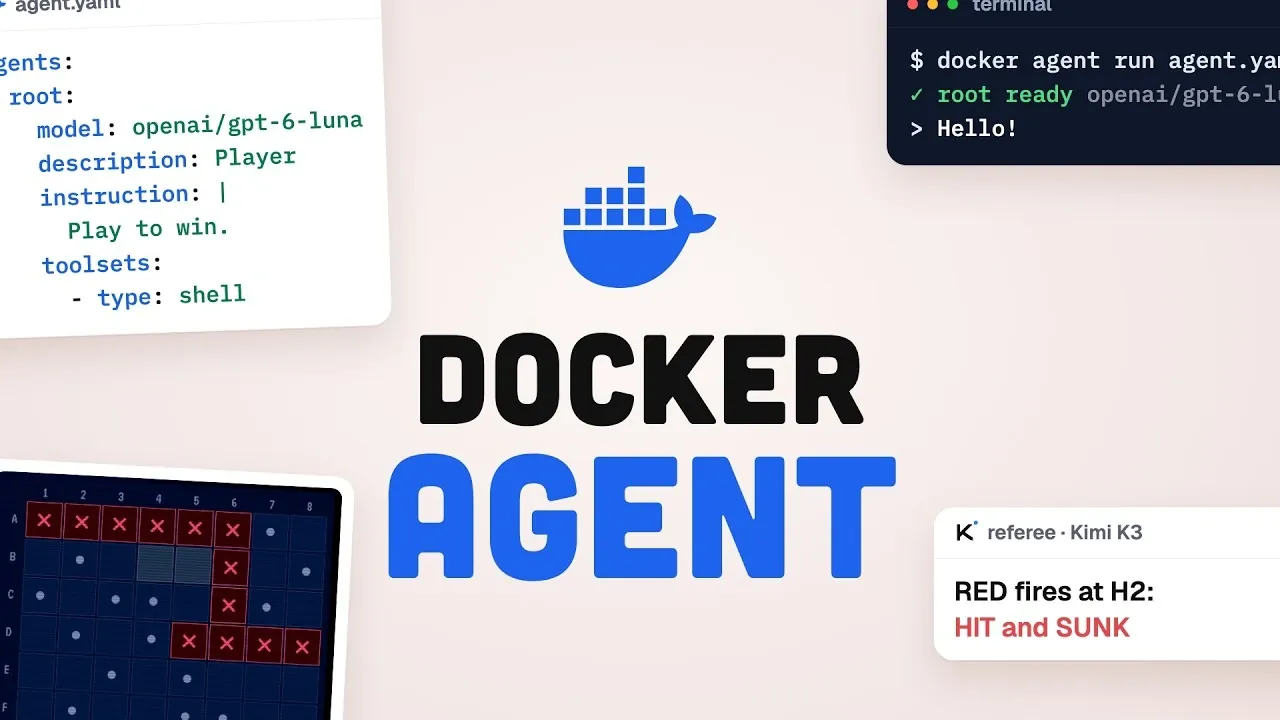
AI developers and systems architects often face challenges when building interconnected AI agents, particularly when managing infrastructure and repetitive coding tasks. Docker Agent, as highlighted by Better Stack, offers a streamlined solution by allowing the creation, deployment and communication of AI agents through YAML-based configuration files. By supporting the Agent-to-Agent (A2A) communication protocol, Docker Agent allows multiple agents to collaborate seamlessly, whether they are deployed as standalone services or part of a larger system. This approach not only simplifies workflows but also reduces the reliance on boilerplate Python code, making it easier to focus on solving complex problems.
Dive into this overview to explore how Docker Agent enhances AI development through practical features and use cases. Gain insight into its compatibility with leading AI models like OpenAI and Anthropic, its ability to deploy agents as HTTP APIs or MCP servers and its application in scenarios such as multi-agent workflows and collaborative debugging. Whether you’re scaling AI projects or integrating agents into existing systems, this breakdown offers actionable guidance to help you use Docker Agent effectively.
What is Docker Agent?
TL;DR Key Takeaways :
- Docker Agent simplifies AI agent development by using YAML-based configurations, eliminating repetitive Python boilerplate code and allowing faster, modular and scalable workflows.
- It supports seamless integration of AI agents as standalone services or interconnected systems via HTTP APIs, MCP servers, or the Agent-to-Agent (A2A) communication protocol.
- Compatible with a wide range of AI models (e.g., OpenAI, Anthropic, Gemini) and tools (e.g., file access, shell commands), Docker Agent is versatile for various workflows and environments.
- Practical use cases include debugging, multi-agent workflows and gaming applications, showcasing its ability to solve real-world problems across industries.
- Easy to install and use, Docker Agent is pre-installed on Docker Desktop (v4.63+), supports Homebrew installation and promotes collaboration through OCI registries for sharing agents.
Docker Agent is a specialized tool tailored for building and running AI agents, functioning similarly to the `docker run` command but specifically optimized for AI workloads. It allows you to define agents in YAML files, specifying their models, instructions and tools. These agents can operate as standalone services or as interconnected systems, allowing seamless communication between multiple agents.
By abstracting much of the complexity involved in traditional AI development, Docker Agent provides a configuration-driven approach that simplifies the process of deploying AI solutions. This makes it an ideal choice for developers and organizations looking to scale their AI capabilities efficiently.
Key Features of Docker Agent
Docker Agent offers a range of features that make it a powerful and versatile tool for AI development. These features are designed to enhance productivity, collaboration and integration:
- YAML-Based Configuration: Define agents using YAML files, which simplifies version control, updates and sharing configurations across teams.
- Agent Distribution: Share agents through Docker Hub or other OCI registries, promoting collaboration and reuse of pre-built agents.
- Service Integration: Deploy agents as HTTP APIs, MCP servers, or A2A servers, allowing seamless integration with existing systems and inter-agent communication.
These features allow developers to focus on the core functionality of their agents while reducing the time spent on repetitive tasks. The ability to integrate agents into existing workflows further enhances their utility across different domains.
Here is a selection of other guides from our extensive library of content you may find of interest on Docker.
- Build the Ultimate Homelab with These Essential Docker Applications
- 18 Weird and Wonderful Ways to Use Docker
- Why Apple Just Built a Native Linux Environment for macOS
- Docker’s New Fees Got You Down? Here’s Why Podman Is the Perfect Solution
- Docker Sandboxes Isolate AI Agents from Your Host System
- Agent Zero : 100% Locally PC-hosted Personal AI Assistant All Inside Docker
- New Docker Desktop for Mac supports Apple M1 Silicon
- Dockage a new way to manage Docker containers
- How to build an AI open source NVR security system
- Build Your Own Local Private AI Search Engine in Just 10 Minutes
Supported Models and Tools
Docker Agent is compatible with a wide range of AI models and tools, offering flexibility for various workflows and use cases. This compatibility ensures that developers can tailor their agents to meet specific project requirements:
- AI Models: Supports OpenAI, Anthropic, Gemini, Open Router and local models via Docker Model Runner, providing options for both cloud-based and on-premises solutions.
- Built-in Tools: Includes support for file access, shell commands and custom MCP servers, allowing agents to perform advanced tasks and interact with external systems.
This broad compatibility makes Docker Agent suitable for a variety of applications, from research and development to production environments. Whether you are working with innovative AI models or integrating legacy systems, Docker Agent provides the tools you need.
Practical Use Cases
Docker Agent’s versatility makes it applicable to a wide range of scenarios. Its ability to handle dynamic and collaborative tasks is particularly valuable in the following use cases:
- Debugging and Troubleshooting: Deploy a log analyst agent to collaborate with an on-call assistant agent, diagnosing and resolving system issues by sharing insights and delegating tasks via the A2A protocol.
- Multi-Agent Workflows: Coordinate complex workflows by delegating tasks to specialized sub-agents. For instance, a project management agent can assign scheduling tasks to a dedicated scheduling agent, improving efficiency and task management.
- Gaming Applications: Implement multi-agent strategies in gaming scenarios, such as a battleship game where agents communicate and strategize using the A2A protocol to enhance gameplay and decision-making.
These examples highlight how Docker Agent can be used to solve real-world problems across different industries, from IT operations to entertainment.
Why Choose Docker Agent?
Docker Agent offers several advantages that make it a compelling choice for AI development. These benefits are designed to address common challenges faced by developers and teams:
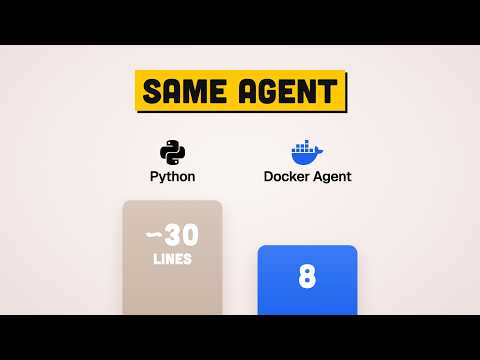
- Faster Development: By reducing the need for boilerplate code, Docker Agent allows you to focus on the core logic of your agents, accelerating the development process.
- Modular Collaboration: Sharing agents via OCI registries encourages modular development and fosters collaboration across teams, allowing efficient reuse of existing components.
- Seamless Integration: With support for HTTP APIs, MCP servers and A2A communication, Docker Agent integrates smoothly into existing systems and workflows, reducing the complexity of deployment.
These advantages make Docker Agent an efficient and practical alternative to traditional Python-based setups, particularly for teams aiming to scale their AI projects while maintaining flexibility and control.
Getting Started with Docker Agent
Installing and using Docker Agent is straightforward, with multiple options available to suit different environments. This accessibility ensures that developers can quickly adopt the tool and begin building AI agents:
- Pre-installed on Docker Desktop: Docker Agent is included in Docker Desktop version 4.63 or newer, making it readily accessible for most users without additional setup.
- Homebrew Installation: For other environments, Docker Agent can be installed via Homebrew, making sure compatibility across various operating systems and development setups.
Once installed, you can define agents in YAML files and deploy them using simple commands. For example, you can run an agent as an HTTP API or configure it to communicate with other agents using the A2A protocol. This ease of use makes Docker Agent an excellent choice for both beginners and experienced developers.
The Value of Docker Agent in AI Development
Docker Agent is reshaping the way AI agents are developed and managed. By offering a configuration-driven approach, it simplifies the development process, enhances collaboration and supports modular workflows. Whether you are building a single agent or orchestrating a network of interconnected agents, Docker Agent provides the tools and flexibility you need to succeed.
With its compatibility with leading AI models, built-in tools and seamless integration capabilities, Docker Agent is a valuable addition to any AI developer’s toolkit. Its focus on efficiency, scalability and collaboration makes it an essential resource for teams looking to innovate and excel in the rapidly evolving field of artificial intelligence.
Media Credit: Better Stack
Disclosure: Some of our articles include affiliate links. If you buy something through one of these links, Geeky Gadgets may earn an affiliate commission. Learn about our Disclosure Policy.
