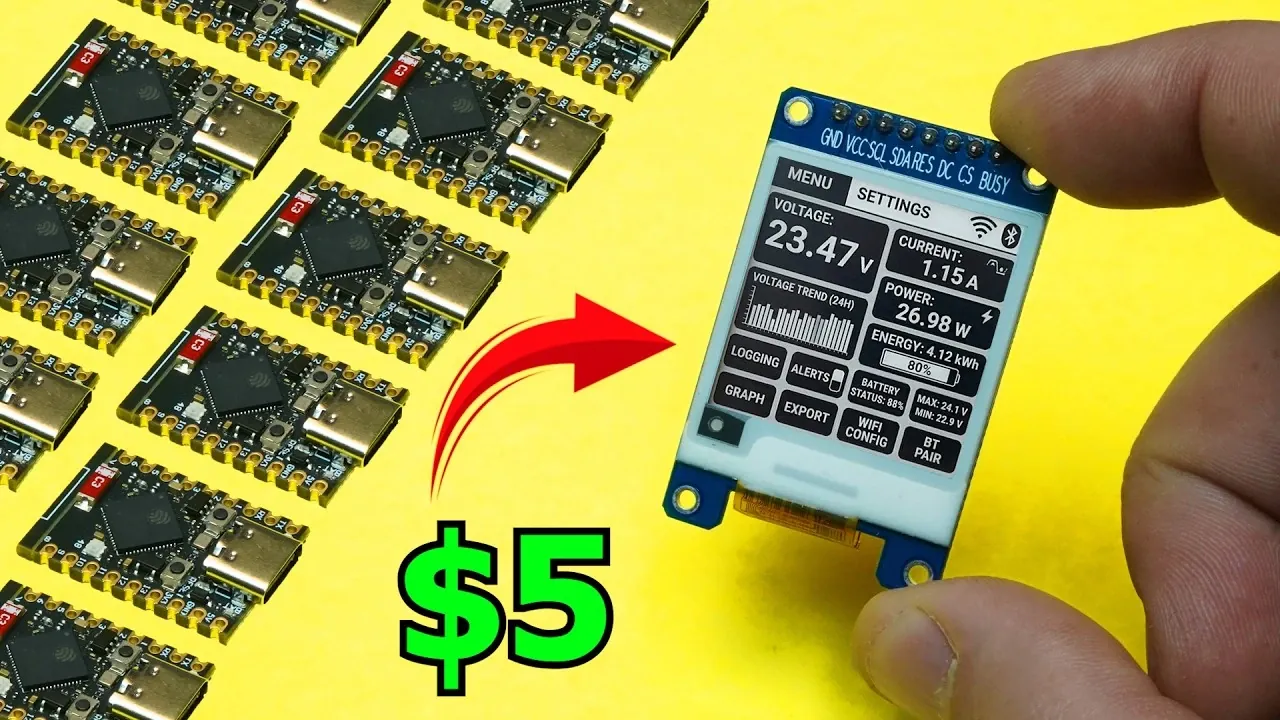
The ESP32-S3 Super Mini is a compact development board priced at just $5, offering a balance of cost and functionality. According to Hacktuber, it features a dual-core 240 MHz processor, 4MB flash memory, built-in Wi-Fi and Bluetooth and 34 GPIO pins for connecting peripherals like sensors and displays. Its modular design includes a 1.14-inch TFT screen protected by plexiglass, making it suitable for projects such as IoT devices and portable systems.
Explore how the ESP32-S3 Super Mini integrates with popular development environments like Arduino IDE and supports dual-display setups with e-paper and TFT screens. Gain insight into its ability to manage resource-intensive tasks and how these capabilities can be applied to practical projects, including prototyping weather stations or building Wi-Fi-enabled message boards.
ESP32-S3
TL;DR Key Takeaways :
- The ESP32-S3 Super Mini is an affordable, powerful development board priced at $5, featuring a dual-core 240 MHz processor, 4MB flash memory and 520KB SRAM for efficient performance.
- It offers seamless wireless connectivity with built-in Wi-Fi and Bluetooth, along with 34 GPIO pins and multiple SPI interfaces for versatile peripheral integration.
- The board includes a 1.14-inch TFT screen with vibrant visuals, protected by plexiglass and supports additional display options like e-paper for low-power applications.
- Its modular design allows easy attachment of sensors, displays and peripherals, making it ideal for DIY projects, IoT devices and interactive systems.
- Compatible with Arduino IDE and PlatformIO, the board is beginner-friendly and offers significant upgrades over the ESP8266, including better performance, connectivity and display support.
The ESP32-S3 Super Mini is packed with features that make it stand out in the competitive world of development boards. Its small form factor belies its impressive capabilities, which include:
- Processor: A dual-core 240 MHz processor ensures fast and efficient performance, even for demanding tasks.
- Memory: Equipped with 4MB flash memory and 520KB SRAM, it can handle complex applications with ease.
- Connectivity: Built-in Wi-Fi and Bluetooth provide seamless wireless integration for IoT and smart devices.
- GPIO Pins: 34 GPIO pins and multiple SPI interfaces enable versatile peripheral support for sensors, displays and more.
- Display: A 1.14-inch TFT screen delivers vibrant visuals, protected by durable plexiglass for everyday use.
- Power Options: Supports battery and speaker connections, making it suitable for portable and audio-based projects.
- Interface: A USB Type-C connector ensures easy interfacing with computers and peripherals.
This combination of features makes the ESP32-S3 Super Mini a versatile platform for a wide range of applications, from IoT devices to interactive DIY projects.
Hardware Highlights
The hardware of the ESP32-S3 Super Mini is designed to deliver both performance and versatility. Its dual-core processor ensures smooth operation, even for resource-intensive tasks, while the 4MB flash memory and 520KB SRAM provide ample storage for code and data. The board’s 34 GPIO pins and multiple SPI interfaces allow for extensive peripheral integration, allowing seamless connections to sensors, displays and other modules.
The 1.14-inch TFT screen is a standout feature, offering vivid colors and smooth animations. Protected by plexiglass, it is built to withstand regular use. Additionally, programmable buttons and LEDs enhance the board’s interactivity, allowing users to customize inputs and outputs for specific projects. These hardware highlights make the ESP32-S3 Super Mini a reliable and adaptable tool for developers.

Discover other guides from our vast content that could be of interest on ESP32 projects.
- How an $8 ESP32 S3 Microcontroller Runs a 28.9M Parameter Local LLM
- $4 ESP32 Module Brings Wi-Fi and Bluetooth to IoT Projects
- ESP32-S3 Automation System Packs 16 Relays for Smart Homes
- Build a DIY Open-Source Flipper Zero Using a ESP32-DIV
- $5 ESP32 S3 Board Packs a 240 MHz Dual-Core Chip
- Optimize ESP32 Battery Life Using 10 Lesser-Known Features
- Build a Sonos Rival with the $30 AUD Louder ESP32 Board
- Arduino Nano ESP32 handheld console with round color display
- T-Display AMOLED Touch ESP32 board binary converter project
- Super Tiny RP2040/ESP32 Board Display for IoT and DIY Projects
Modular Design for DIY Enthusiasts
The ESP32-S3 Super Mini’s modular design makes it particularly appealing to DIY enthusiasts. Its pin headers allow for easy attachment of various sensors and components, allowing users to create sophisticated systems with minimal effort. This modularity opens up a world of possibilities for experimentation and customization. Some compatible modules include:
- Environmental Sensors: Modules like the AHT20 and BM280 for measuring temperature, humidity, pressure and altitude.
- Displays: E-paper and TFT screens for visual output, catering to different project requirements.
- Peripherals: Programmable buttons, LEDs and other add-ons to enhance functionality and interactivity.
This flexibility allows developers to tailor the board to their specific needs, whether for prototyping or creating finished products.
Inspiring Project Ideas
The ESP32-S3 Super Mini is a versatile platform that inspires creativity. Here are a few project ideas to demonstrate its potential:
- Wi-Fi Message Board: Use the board’s Wi-Fi capabilities to create a message board that displays text sent from a connected device. This is ideal for home automation or office communication.
- Weather Station: Pair the board with environmental sensors to display real-time data on temperature, humidity and pressure. An e-paper display can be used for low power consumption and clear readability.
- Mini Games: Use the TFT screen and processing power to develop simple games, such as a Flappy Bird clone, showcasing the board’s graphics capabilities.
These examples highlight the board’s potential for both practical and entertaining applications, making it a valuable tool for developers and hobbyists alike.
Display Options: E-Paper vs TFT
The ESP32-S3 Super Mini supports two types of displays, each suited for different use cases. This dual-display compatibility ensures that the board can meet a wide range of visual requirements:
- E-Paper Display: With a 200×200 pixel resolution, e-paper is ideal for applications requiring low power consumption and high readability, such as notifications or weather stations. Its partial refresh capability ensures efficient updates without excessive energy use.
- TFT Screen: The 1.14-inch TFT display offers vibrant colors and smooth animations, making it perfect for visually rich applications like games, dashboards, or interactive interfaces.
This flexibility in display options enhances the board’s adaptability, allowing developers to choose the best display for their specific project needs.
Getting Started with Programming
Programming the ESP32-S3 Super Mini is straightforward, thanks to its compatibility with popular development environments like Arduino IDE and PlatformIO. The board supports the ST7789 driver for its TFT screen and detailed pin mapping guides are readily available. Additionally, sample codes for sensor integration, display control and other applications make it easy to start building projects right away. This ease of programming ensures that both beginners and experienced developers can quickly get up and running with the board.
How It Compares to the ESP8266
The ESP32-S3 Super Mini offers significant upgrades over the ESP8266, making it a more powerful and flexible choice for developers. Key improvements include:
- Performance: A dual-core processor and increased memory allow for handling more complex tasks.
- Connectivity: Built-in Bluetooth in addition to Wi-Fi expands its wireless capabilities.
- Display Support: Compatibility with both e-paper and TFT screens provides more options for visual output.
- Versatility: Broader peripheral support and a modular design enable diverse applications, from IoT devices to interactive projects.
These enhancements make the ESP32-S3 Super Mini a superior choice for those seeking a development board that combines power, flexibility and affordability.
Media Credit: Hacktuber
Disclosure: Some of our articles include affiliate links. If you buy something through one of these links, Geeky Gadgets may earn an affiliate commission. Learn about our Disclosure Policy.
