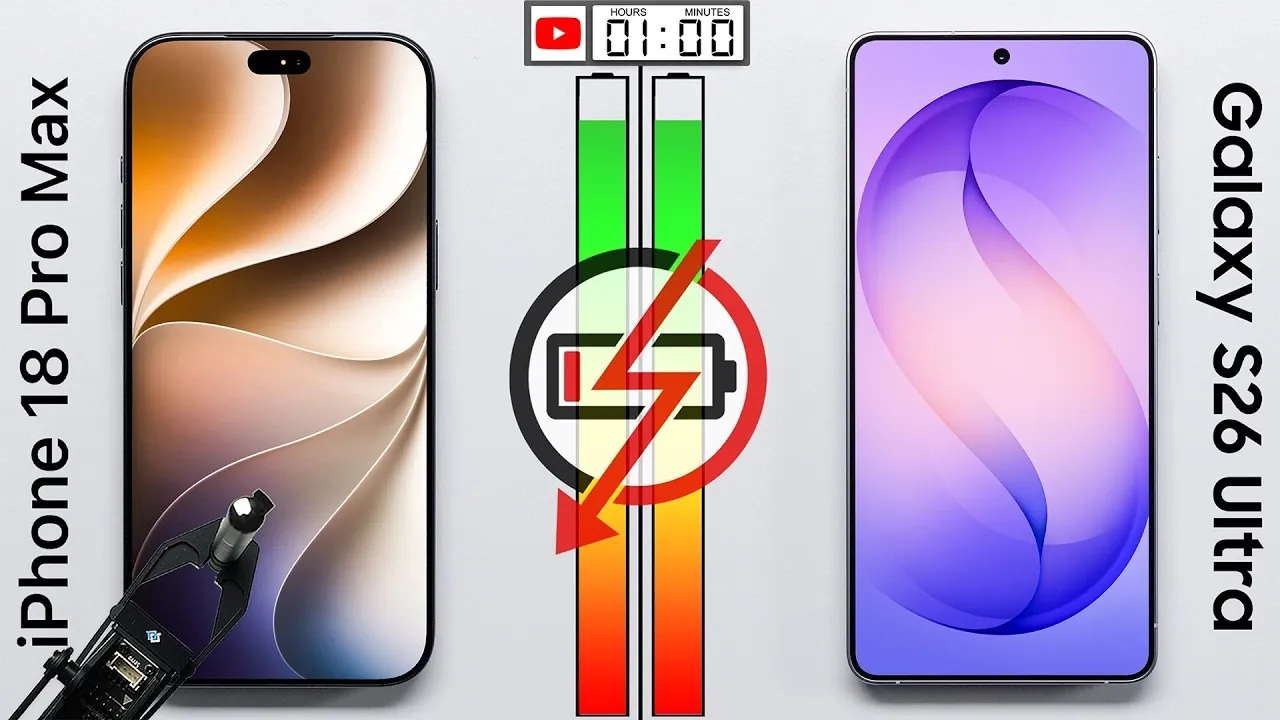
The iPhone 18 Pro Max, equipped with Apple’s advanced 2nm A20 Pro chip and a substantial 5,567 mAh battery, has set a new benchmark for smartphone battery performance. In a direct comparison with the Samsung Galaxy S26 Ultra and Google Pixel 11 Pro XL, the iPhone demonstrated superior efficiency and endurance across a variety of real-world usage scenarios. While the competition was close in certain areas, the iPhone ultimately emerged victorious, finishing with an impressive 11% battery remaining after its rivals had fully depleted.

Battery Capacity and Processor Efficiency
Battery capacity is a critical factor in determining how long a smartphone can sustain heavy usage. The iPhone 18 Pro Max features a 5,567 mAh battery, the largest ever in an iPhone, providing a solid foundation for extended use. In contrast, the Galaxy S26 Ultra and Pixel 11 Pro XL feature slightly smaller batteries. However, raw capacity alone does not guarantee better performance. The efficiency of the processor plays an equally significant role and this is where the iPhone’s 2nm A20 Pro chip excels.
The A20 Pro chip is engineered for exceptional power efficiency, outperforming the 3nm Snapdragon 8 Elite Gen 5 in the Galaxy and the 3nm Tensor G6 in the Pixel. This advanced energy optimization allows the iPhone to deliver extended battery life without sacrificing performance, giving it a distinct edge over its competitors.
Real-World Usage: How the Devices Performed
To evaluate battery performance, a series of tests simulated everyday activities, including phone calls, messaging, web browsing, video playback, gaming and app usage. Each device was pushed to its limits to assess how effectively it managed power under various conditions.
- Phone Calls: The iPhone retained 100% battery after one hour of calls, outperforming both the Galaxy and Pixel in this category.
- Messaging and Email: All three devices exhibited minimal battery drain, performing similarly during light communication tasks.
- Browsing: The Galaxy demonstrated better raw milliamp-hour efficiency during web browsing, but the iPhone’s optimized chip offset this advantage over prolonged sessions.
- Social Media: On platforms like Instagram, the iPhone excelled in refresh rate management, consuming less power than its competitors.
- Standby: The Galaxy led in standby efficiency, followed by the Pixel, with the iPhone slightly trailing in this specific scenario.
- Video Playback: During YouTube streaming, the iPhone and Galaxy performed equally well, while the Pixel drained faster under similar conditions.
- Gaming: Despite its smaller battery, the Pixel demonstrated surprising efficiency during gaming, but the iPhone maintained a slight edge in overall longevity.
- Navigation: The Galaxy performed best during GPS navigation, consuming less power than the iPhone and Pixel.
- Intensive Apps: In high-drain tasks like Snapchat, the iPhone showed the least battery loss, highlighting its superior app-specific power management capabilities.
Refresh Rate and Standby Performance
Refresh rate management plays a crucial role in power consumption, particularly during activities like social media browsing and gaming. The iPhone’s adaptive refresh rate technology allowed it to conserve energy effectively during tasks such as scrolling through Instagram or playing graphics-intensive games. This feature ensures that the display adjusts its refresh rate dynamically, reducing unnecessary power usage.
However, in standby mode, the Galaxy S26 Ultra outperformed the iPhone, showcasing Samsung’s advancements in idle power optimization. This makes the Galaxy a strong contender for users who prioritize battery life during periods of minimal device activity.
Final Results: A Clear Winner Emerges
The final phase of testing involved a controlled app cycle designed to drain the remaining battery of each device. The Pixel 11 Pro XL was the first to deplete, lasting 2 hours and 2 minutes in this phase. The Galaxy S26 Ultra followed, lasting 20 minutes longer than the Pixel. The iPhone 18 Pro Max, however, outperformed both, lasting an impressive 3 hours and 46 minutes in the same cycle and finishing with 11% battery remaining.
This result underscores the iPhone’s ability to combine a large battery with efficient power management, delivering a level of endurance that sets it apart from its competitors.
Why the iPhone 18 Pro Max Stands Out
The iPhone 18 Pro Max’s performance in this battery test highlights its ability to balance hardware and software optimization. Its 2nm A20 Pro chip not only enhances processing power but also ensures that energy is used efficiently across a wide range of tasks. This combination of advanced technology and practical application makes the iPhone a standout choice for users seeking a smartphone capable of handling diverse real-world scenarios without frequent recharging.
While the Galaxy S26 Ultra excelled in specific areas such as standby efficiency and GPS navigation and the Pixel 11 Pro XL demonstrated commendable gaming efficiency, neither device could match the iPhone’s overall performance. For users who demand exceptional battery life and consistent performance, the iPhone 18 Pro Max sets a new standard in smartphone endurance.
Become an expert in iPhone 18 Pro Max with the help of our in-depth articles and helpful guides.
- Early iPhone 18 Reports Point to Major Unconfirmed Shifts
- iPhone 18 Pro Max Leaks: 10 Massive Upgrades Coming to Camera, Screen, and Battery
- Early iPhone 18 Pro Max Leak Reveals the Upgrade We’ve Been Waiting For
- Just Leaked: 10 Huge Upgrades for the iPhone 18 Pro Max
- Early First Look at the Expected iPhone 18 Pro Design
- Apple May Keep the iPhone 18’S Best New Feature Exclusive to the Pro Max
Source & Image Credit: PhoneBuff
Disclosure: Some of our articles include affiliate links. If you buy something through one of these links, Geeky Gadgets may earn an affiliate commission. Learn about our Disclosure Policy.
