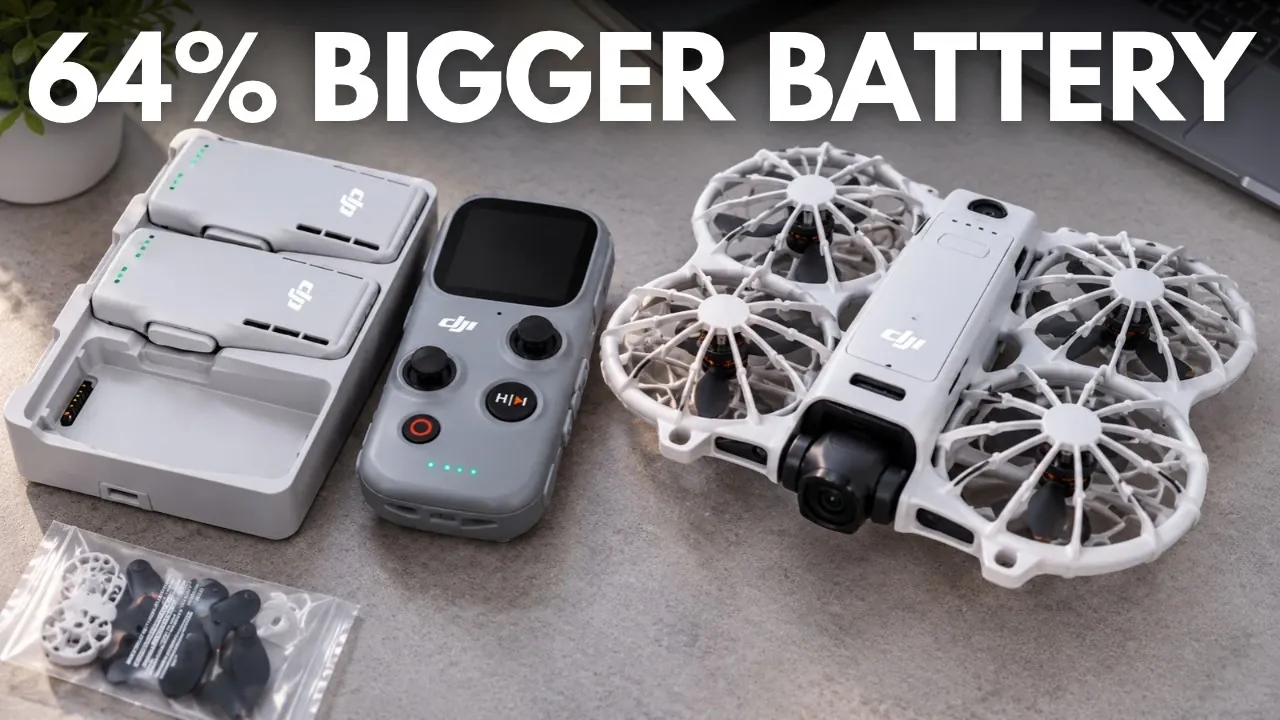
The DJI Neo 3 takes a significant step forward by addressing one of the most pressing issues faced by its predecessor, the Neo 2: limited flight time. As highlighted by Tech Court, the Neo 3’s upgraded 18.9 Wh, 3-cell battery system offers a substantial improvement over the Neo 2’s 11.5 Wh, 2-cell configuration. This enhancement extends flight times from approximately 10-11 minutes to 14-16 minutes, providing users with more flexibility for capturing footage or completing tasks without frequent interruptions. However, this improvement comes with a trade-off, as the new battery design is incompatible with Neo 2 batteries, requiring an investment in additional accessories for those upgrading.
Explore how the Neo 3’s design changes, such as its enhanced obstacle sensing and upgraded camera system, contribute to a more reliable and versatile flying experience. Learn about the redesigned propeller replacement mechanism that simplifies maintenance, making sure less downtime between flights. Additionally, gain insight into how these advancements translate to real-world usability, from improved safety in complex environments to better performance during extended operations. This feature offers a comprehensive look at what the Neo 3 brings to the table for drone enthusiasts and professionals alike.
Extended Flight Time and Improved Efficiency
TL;DR Key Takeaways :
- The DJI Neo 3 features a significantly upgraded battery system, offering 14-16 minutes of flight time compared to the Neo 2’s 10-11 minutes, though it requires new, incompatible batteries.
- Design enhancements include improved obstacle sensing, a more advanced camera system for superior image quality and an upgraded ventilation system for better heat management during extended flights.
- The drone introduces a streamlined propeller replacement mechanism, simplifying maintenance and reducing downtime for users.
- Structural improvements, such as increased weight and a redesigned propeller arrangement, enhance stability and overall performance.
- Unexplored features, like a mysterious control mechanism, hint at potential future functionality, adding intrigue to the Neo 3’s capabilities.
Upgraded Battery System
A standout feature of the Neo 3 is its upgraded battery system, which significantly enhances flight performance. The drone is equipped with an 18.9 Wh, 3-cell battery, a notable improvement over the Neo 2’s 11.5 Wh, 2-cell configuration. This upgrade translates to an estimated flight time of 14-16 minutes, compared to the Neo 2’s 10-11 minutes under similar conditions.
The increased flight time allows users to capture more footage or complete longer missions without frequent interruptions. However, this improvement comes with a trade-off: the new battery system is incompatible with Neo 2 batteries due to differences in voltage and contact design. For those upgrading from the Neo 2, this means investing in new batteries and accessories, potentially increasing the overall cost of ownership. Despite this, the enhanced efficiency and extended flight time make the Neo 3 a more capable option for demanding tasks.
Design Enhancements: Optimized for Performance and Durability
The Neo 3’s design has been reimagined to accommodate its advanced hardware. Weighing 193 grams, the drone is larger and heavier than its predecessor, but this added bulk supports several key improvements that enhance its functionality and reliability:
- Obstacle Sensing: Upgraded sensors provide better navigation in complex environments, reducing the likelihood of collisions and improving safety.
- Camera System: A more advanced camera setup delivers superior image quality, catering to both casual users and professionals who require high-resolution footage.
- Ventilation System: Enhanced cooling mechanisms ensure consistent performance during extended flights by effectively managing heat buildup.
These design changes make the Neo 3 a more robust and versatile drone, capable of handling a wider range of scenarios. Whether navigating tight spaces or capturing high-quality visuals, the Neo 3 is built to perform reliably under various conditions.

Unlock more potential in DJI Neo 3 by reading previous articles we have written.
- Rumoured DJI Neo 3 Drone Targets a September 2026 Launch
- Leaked DJI Neo 3 May Feature a 1/1.3-Inch Sensor Upgrade
- DJI Neo 3 Leak Reveals a Likely Upward Obstacle Detection Sensor
- Leaked DJI Neo 3 May Integrate Transceiver vs Neo 2 Module
- Unidentified Upward Sensor Clouds the DJI Neo 3 Box Leak
- Leaked DJI Neo 3 Shows a 192.7G Build vs 151G DJI Neo 2
- DJI Neo 3 vs DJI Neo 2: the 11-Minute Battery Flaw Explained
- DJI Neo 3 Could Extend the Neo 2’S 19-Minute Flight Time
- New FCC Rules May Block the DJI Neo 3 from a US Release
Streamlined Maintenance: Simplified Propeller Replacement
Maintenance is a critical aspect of drone ownership and the Neo 3 introduces a redesigned propeller replacement mechanism to simplify this process. A removable diamond-shaped section beneath the propeller cage provides easier access to the motor and propeller assembly. While this system is slightly more complex than the Neo 2’s, it prioritizes efficiency and ease of use, reducing the time and effort required for routine upkeep. This improvement ensures that users can focus more on flying and less on maintenance, making the Neo 3 a practical choice for frequent use.
Key Upgrades and Differences from the Neo 2
The Neo 3 represents more than just an incremental update; it is a comprehensive redesign that addresses the shortcomings of its predecessor while introducing new capabilities. Key differences include:
- Enhanced Camera and Sensors: The revised hardware improves image quality and obstacle detection, offering greater functionality for diverse applications.
- Structural Improvements: A new propeller arrangement and increased weight contribute to better stability and performance.
- Advanced Components: The larger body accommodates upgraded systems, making sure a more reliable and efficient operation.
These upgrades collectively enhance the Neo 3’s usability, making it a strong contender for users seeking a more capable and versatile drone.
Unexplored Features: Potential for Future Discoveries
While the Neo 3 introduces several confirmed advancements, some features remain unexplored. A control mechanism located beneath the drone has yet to be fully explained, leaving room for speculation about its purpose. This feature could potentially unlock additional functionality, further enhancing the drone’s usability. As more information becomes available and users gain hands-on experience, the full potential of this feature may come to light.
Real-World Performance: Practical Implications
The true measure of the Neo 3’s success lies in its real-world performance. The upgraded battery system promises longer flight times, but its effectiveness will depend on factors such as weather conditions, payload and user handling. Similarly, the enhanced design and hardware upgrades are expected to improve usability, but their practical benefits will only become evident through everyday operations. For professionals and enthusiasts alike, the Neo 3 offers a promising blend of innovation and functionality, but its ultimate value will be determined by how well it performs in diverse scenarios.
A Practical Step Forward in Drone Technology
The DJI Neo 3 addresses the Neo 2’s most significant challenges, particularly in flight time, design and maintenance. With its upgraded battery system, refined hardware and user-focused improvements, the Neo 3 provides a compelling option for those seeking a reliable and efficient drone. While some features remain unexplored, the advancements introduced in the Neo 3 make it a practical and versatile tool for a wide range of applications. For drone enthusiasts and professionals, the Neo 3 represents a thoughtful evolution, blending meaningful upgrades with proven functionality to meet the demands of modern users.
Media Credit: Tech Court
Disclosure: Some of our articles include affiliate links. If you buy something through one of these links, Geeky Gadgets may earn an affiliate commission. Learn about our Disclosure Policy.
