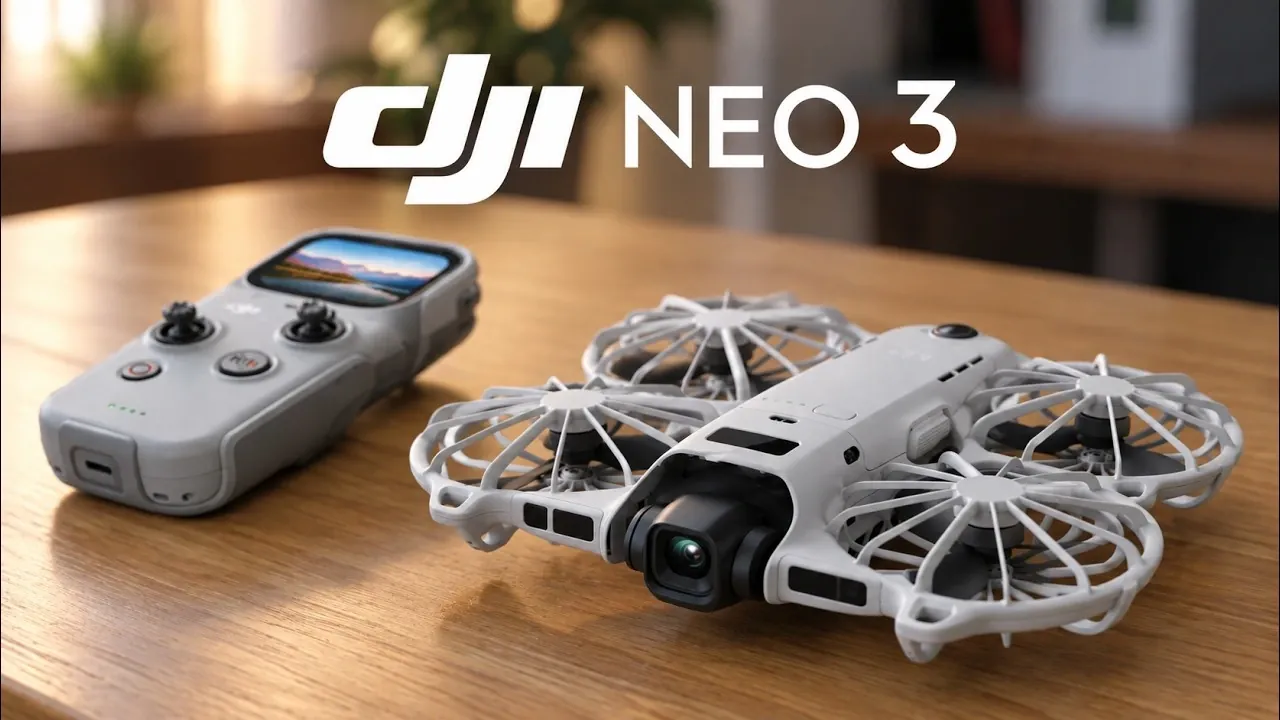
The DJI Neo 3 marks a notable evolution in compact drone design, blending advanced functionality with a streamlined form. As highlighted by TechAvid, one of its standout features is the upgraded camera system, which now includes a 1/1.3-inch sensor, a significant improvement over the Neo 2’s 1/2-inch sensor. This enhancement is expected to deliver better performance in low-light conditions, improved dynamic range and sharper image clarity, making it a strong contender for aerial photographers and videographers. Additionally, the redesigned body incorporates enhanced ventilation openings to improve thermal management, making sure reliable performance during extended or demanding flights.
Explore how the Neo 3’s redesigned propeller guards enhance safety and maneuverability, particularly in confined spaces or for less experienced pilots. You’ll also gain insight into the new DJI RC Mini controller, which offers a compact design and an integrated display for greater portability and ease of use. These updates, alongside other potential improvements, position the Neo 3 as a versatile option for both hobbyists and professionals seeking a capable, compact drone.
Enhanced Camera System for Professional-Grade Imaging
TL;DR Key Takeaways :
- The DJI Neo 3 features a larger 1/1.3-inch camera sensor, promising superior image quality, enhanced low-light performance and improved dynamic range for professional-grade aerial photography and videography.
- A redesigned body with improved thermal management includes new ventilation openings, making sure better cooling, reliability and performance during extended or demanding flights.
- Innovative propeller guards with a spoke-like structure enhance safety, minimize collision damage and improve maneuverability, making the drone suitable for both novice pilots and confined spaces.
- The new DJI RC Mini controller offers a compact design with an integrated display, eliminating the need for a smartphone and providing a more portable and user-friendly piloting experience.
- Key details like battery life and processing power remain unconfirmed, but the Neo 3 is positioned as a new compact drone with advanced features for both professionals and hobbyists.
The Neo 3’s camera system is shaping up to be one of its most compelling features. A larger, more robust camera housing indicates a focus on delivering superior image quality. Reports suggest the inclusion of a 1/1.3-inch sensor, a notable upgrade from the Neo 2’s 1/2-inch sensor. This improvement is expected to significantly enhance:
- Performance in low-light conditions
- Dynamic range for capturing detailed highlights and shadows
- Overall image clarity and sharpness
These advancements position the Neo 3 as a strong contender for aerial photographers and videographers seeking professional-grade results in a compact form factor. Adding to the intrigue is a new black rectangular module located above the camera. While its exact purpose remains speculative, it could potentially house advanced imaging or stabilization technology. If confirmed, this feature would further solidify the Neo 3’s versatility for creative and technical applications alike.
Redesigned Body with Improved Thermal Management
The Neo 3 introduces a streamlined body design that prioritizes both functionality and durability. Newly added ventilation openings on the sides and rear are designed to enhance airflow, addressing the critical need for effective thermal management during extended flights. Improved ventilation offers several key benefits:
- Better regulation of internal temperatures, reducing the risk of overheating
- Increased reliability in demanding environmental conditions
- Enhanced performance during prolonged or intensive operations
This focus on cooling efficiency demonstrates DJI’s commitment to making sure the Neo 3 can handle challenging flight scenarios without compromising stability or longevity. The refined design not only improves functionality but also contributes to the drone’s sleek and modern aesthetic.

Gain further expertise in DJI Neo by checking out these recommendations.
- Rumoured DJI Neo 3 Drone Targets a September 2026 Launch
- Unidentified Upward Sensor Clouds the DJI Neo 3 Box Leak
- DJI Neo 3 Could Extend the Neo 2’S 19-Minute Flight Time
- How to Connect Your DJI Neo 2 to the Meta Quest 3
- DJI Neo 2 vs Lito Series: the Best Sub-$500 Drone Guide
- Insta360 May Challenge DJI Neo 2 with Rumored 360-Degree Drone
- Why the RayNeo Air 4 Pro is the Perfect DJI Neo 2 Upgrade
- Modified DJI Neo 2 Hits 163 Km/h with Custom 3D Printed Mounts
- DJI Neo 2 vs Avata 2, the Honest Test That Flips Our Best Drone Pick Today
- A Mystery DJI Drone Prototype Was Just Spotted : Anticipated Neo 3?
Innovative Propeller Guards for Safety and Maneuverability
Safety and portability are central to the Neo 3’s design, as evidenced by its reimagined propeller guards. Featuring a spoke-like structure, these new guards provide enhanced protection for the propellers while maintaining a lightweight and compact profile. Key advantages of the redesigned guards include:
- Minimized risk of damage during accidental collisions
- Improved safety for novice pilots and indoor use
- Better maneuverability in confined or obstacle-rich environments
The propeller guards also seamlessly integrate with the drone’s overall design, blending practicality with a modern aesthetic. This thoughtful approach underscores DJI’s focus on creating user-friendly products that cater to a wide range of skill levels and use cases.
DJI RC Mini Controller: Compact and Convenient
Accompanying the Neo 3 is the debut of the DJI RC Mini controller, a smaller alternative to the RCN3 that features an integrated display. This new controller is designed to enhance portability and simplify drone operation. Notable features include:
- An integrated display, eliminating the need for a smartphone
- A streamlined setup process for quicker deployment
- A compact design that makes it easier to transport
The RC Mini controller reflects DJI’s dedication to improving the user experience, offering a more convenient and efficient way to pilot the Neo 3. Its compact design and integrated features make it particularly appealing for users who prioritize portability and ease of use.
Unanswered Questions: Battery Life and Performance
Despite the exciting leaks, some critical details about the Neo 3 remain unknown. Information about its battery capacity and flight time has yet to be confirmed, leaving questions about the drone’s endurance and overall usability. Additionally, speculation surrounds potential upgrades to processing power and connectivity features, which could further enhance its performance.
These unanswered questions add to the anticipation surrounding the Neo 3. While the leaked details paint a promising picture, the full scope of its capabilities will only be revealed once DJI releases official specifications. Until then, the Neo 3 remains a highly anticipated addition to the compact drone market.
Setting a New Standard for Compact Drones
The DJI Neo 3 represents a significant step forward in compact drone technology. With a larger camera sensor, improved ventilation, redesigned propeller guards and the introduction of the DJI RC Mini controller, it promises to deliver a refined and capable flying experience. These features suggest that DJI is setting a new benchmark for small drones, catering to both creative professionals and hobbyists.
As the official release approaches, the Neo 3’s combination of advanced features and compact design positions it as a compelling choice for a wide range of aerial applications. Whether you’re an experienced pilot or new to drones, the Neo 3’s innovative features and user-friendly design could make it an ideal tool for capturing stunning aerial imagery and exploring new perspectives.
Media Credit: TechAvid
Disclosure: Some of our articles include affiliate links. If you buy something through one of these links, Geeky Gadgets may earn an affiliate commission. Learn about our Disclosure Policy.
