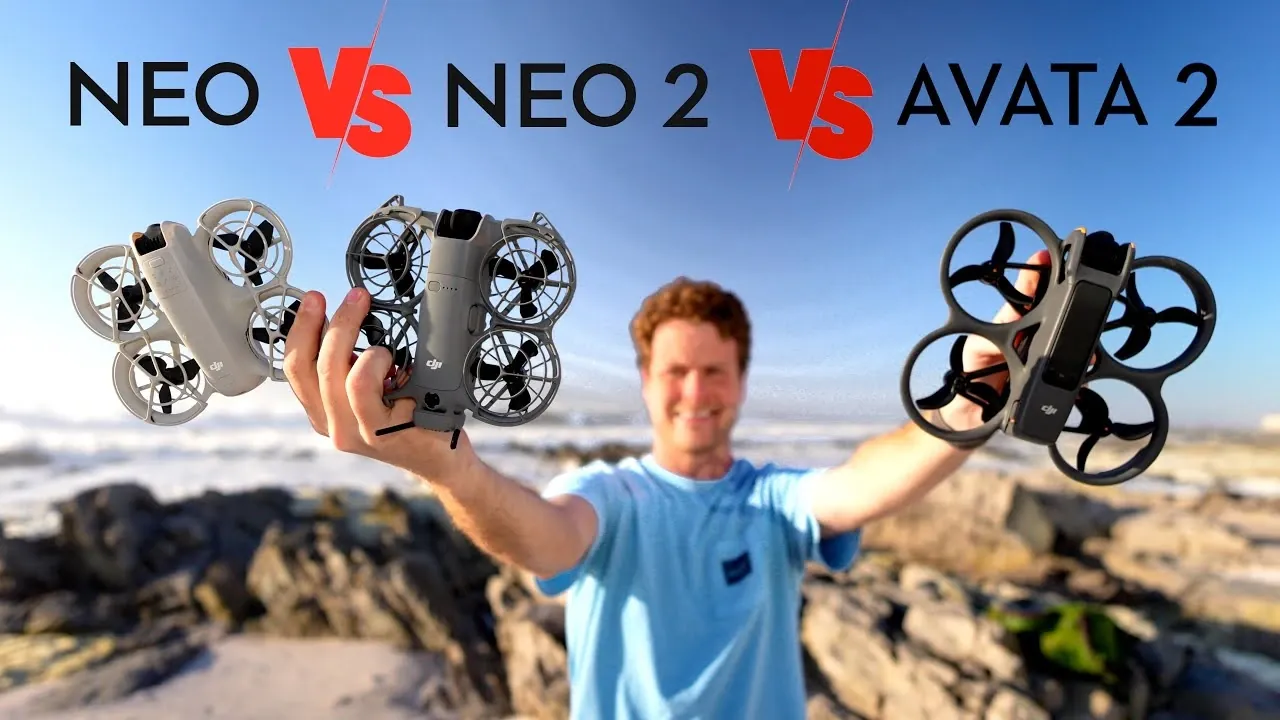
Is the DJI Neo 2 the drone that finally bridges the gap between casual content creators and professional filmmakers? With its sleek design, advanced Quickshot modes, and a camera capable of recording in 4K at 60fps, it certainly makes a bold claim for the title of “best DJI drone ever.” But no product is without its trade-offs, and the Neo 2 is no exception. Despite its impressive features, it faces stiff competition from the Avata 2, which offers longer flight times and superior FPV capabilities. Whether you’re a drone enthusiast chasing cinematic landscapes or a beginner looking for ease of use, the Neo 2 promises something for everyone, but does it deliver?
In this comparison, Luke Maximo Bell explores what sets the Neo 2 apart, from its gesture control and obstacle avoidance to its upgraded camera system. Along the way, we’ll also compare it to the Avata 2, diving into where each drone excels and where they fall short. Luke Maximo Bell, known for his insightful takes on drone tech, weighs in on whether the Neo 2 is a fantastic option or just another incremental upgrade. By the end, you’ll have a clearer picture of which drone suits your needs and whether the Neo 2 lives up to its hype, or if the Avata 2 remains the reigning champion. Sometimes, the best choice isn’t just about specs but how a drone fits into your creative vision.
DJI Neo 2 Overview
TL;DR Key Takeaways :
- The DJI Neo 2 features a refined design with improved portability, durability, and a removable digital transceiver for extended range, making it ideal for aerial photography enthusiasts.
- Its camera system offers significant upgrades, including a two-axis gimbal, wider aperture (f/2.2), and 4K video recording at 60fps, delivering high-quality footage suitable for both casual and professional use.
- Advanced Quickshot modes and gesture control enhance usability, allowing users to capture cinematic shots effortlessly and operate the drone intuitively without a controller.
- Omnidirectional obstacle avoidance powered by a LiDAR sensor ensures safety and precision, making it a reliable choice for beginners and experienced users alike.
- While the Neo 2 excels in creative functionality and ease of use, it falls short in battery life (12 minutes) and advanced FPV performance compared to the Avata 2, which is better suited for professionals and extended sessions.
Design and Build
The Neo 2 features a refined design that is both functional and portable. Slightly larger and darker than the Neo 1, it weighs 162 grams, 26 grams more than its predecessor, giving it a sturdy and durable feel. A standout feature is the removable digital transceiver, which significantly extends the drone’s range. This addition is particularly valuable for capturing footage in expansive or remote areas where maintaining a strong signal is critical. The Neo 2 strikes a balance between portability and performance, making it a versatile tool for aerial photography and videography enthusiasts.
The drone’s compact build ensures it remains easy to transport, while its robust construction inspires confidence during use. Its design also incorporates improved aerodynamics, which enhances stability during flight, even in moderate wind conditions. These thoughtful design elements make the Neo 2 a practical choice for users seeking a reliable and adaptable drone.
Battery Life
Battery life is one of the Neo 2’s more noticeable limitations. With a flight time of 12 minutes, it falls short of the Neo 1’s 13 minutes and 5 seconds and the Avata 2’s impressive 17 minutes and 18 seconds. While the Neo 2’s battery life is sufficient for short creative projects or casual use, it may prove restrictive for extended sessions or professional applications.
For users who prioritize longer flight times, the Avata 2 offers a clear advantage. However, the Neo 2’s fast-charging capability partially offsets this limitation, allowing users to quickly recharge and resume their projects. Additionally, carrying extra batteries can help mitigate the impact of its shorter flight duration, making sure uninterrupted shooting sessions.
DJI Neo 2 Review & Avata 2 Comparison

Browse through more resources below from our in-depth content covering more areas on drones.
- Drones capable of 3D printing in flight will transform construction
- 8+ Big drones capable of carrying large payloads and heavy
- CNN Will Use Drones For News Reporting
- Awesome parachute system saves drones and rockets
- Build a Local Qwen3-VL AI Security System with Drones & Phones
- How to build a drone tracking radar
- New Interceptor drones being created by Oculus co-founder Palmer
- Learn how to fly drones in first person using tiny FPV drones
- 1,500 drones flying in formation set two Guinness World Records
- DARPA Will Turn Old Drones Into WiFi Hotspots
Advanced Quickshot Modes
The Neo 2 introduces a suite of advanced Quickshot modes designed to simplify complex aerial maneuvers and enhance creative possibilities. These modes include Helix, Dolly Zoom, Master Shots, and Selfie Shot, each offering unique ways to capture cinematic footage with minimal effort. The drone’s intuitive side buttons and front display make selecting and switching between modes seamless, further enhancing its usability.
For beginners, the Neo 2’s Quickshot modes, such as Circle and Rocket, provide an easy entry point into aerial videography. Experienced users, on the other hand, will appreciate the precision and smoothness these modes deliver, allowing professional-quality results. Whether you’re capturing dynamic action shots or scenic landscapes, the Neo 2’s Quickshot features are designed to elevate your creative output.
Gesture Control
Gesture control is another standout feature of the Neo 2, offering an intuitive and interactive way to operate the drone mid-flight. With simple hand gestures, users can adjust framing, reposition the drone, or trigger specific actions without relying on a controller. This functionality is particularly useful for capturing dynamic or spontaneous shots, as it allows for greater flexibility and creativity during flight.
For content creators, gesture control adds a layer of convenience, allowing seamless adjustments while focusing on the subject or scene. Casual users will also find this feature appealing, as it simplifies the flying experience and reduces the learning curve. The Neo 2’s gesture control is a practical tool that enhances both usability and creative potential.
Camera and Video Performance
The Neo 2’s camera system represents a significant upgrade over its predecessor. Equipped with a two-axis gimbal, it delivers superior stabilization, making sure smooth and steady footage even during dynamic movements. The wider aperture (f/2.2 compared to the Neo 1’s f/2.8) enhances low-light performance, resulting in sharper and more detailed images in challenging lighting conditions.
The ability to record in 4K at 60fps—an improvement over the Neo 1’s 4K at 30fps, ensures high-resolution video quality suitable for professional use. Additionally, the upgraded image processor sharpens details and enhances overall image clarity, making the Neo 2 a strong contender for videographers and photographers alike. Whether capturing fast-paced action or serene landscapes, the Neo 2’s camera system delivers impressive results.
Obstacle Avoidance and Safety Features
Safety is a key focus of the Neo 2, which incorporates omnidirectional obstacle avoidance powered by a LiDAR sensor. This advanced system enhances maneuverability and reduces the risk of collisions, particularly during complex flights or in unpredictable environments. Whether navigating tight spaces or flying in areas with numerous obstacles, the Neo 2’s obstacle avoidance system provides an added layer of security.
This feature is especially beneficial for beginners, as it reduces the likelihood of accidents and builds confidence during operation. Experienced users will also appreciate the enhanced safety and precision it offers, allowing for more daring and creative flight paths. The Neo 2’s safety features make it a reliable choice for users of all skill levels.
Controller Options and FPV Performance
The Neo 2 supports a range of controller options, including the DJI RCN3, RC2, and FPV controllers, catering to different user preferences and needs. The motion controller, in particular, provides an intuitive flying experience, making it easier to handle the drone in challenging conditions or during intricate maneuvers.
While the Neo 2 supports FPV mode with up to 4K at 100fps, it lacks the power and precision required for confident manual FPV flying. In this area, the Avata 2 outshines the Neo 2, offering superior control and performance for advanced pilots. For casual users or those new to FPV, the Neo 2’s capabilities are sufficient, but professionals may find its limitations restrictive.
Comparison with Avata 2
When compared to the Avata 2, the Neo 2 is better suited for casual users and content creators who prioritize ease of use and creative functionality. The Avata 2, on the other hand, excels in FPV performance, power, and camera quality, making it a more suitable choice for professional filmmakers and advanced pilots.
The Neo 2’s strengths lie in its intuitive controls, advanced Quickshot modes, and enhanced camera system, which make it ideal for capturing quick, cinematic shots. However, it cannot match the Avata 2’s capabilities in extended flight times or manual FPV operations. Ultimately, the choice between the two drones depends on the user’s specific needs and priorities.
Media Credit: Luke Maximo Bell
Disclosure: Some of our articles include affiliate links. If you buy something through one of these links, Geeky Gadgets may earn an affiliate commission. Learn about our Disclosure Policy.
