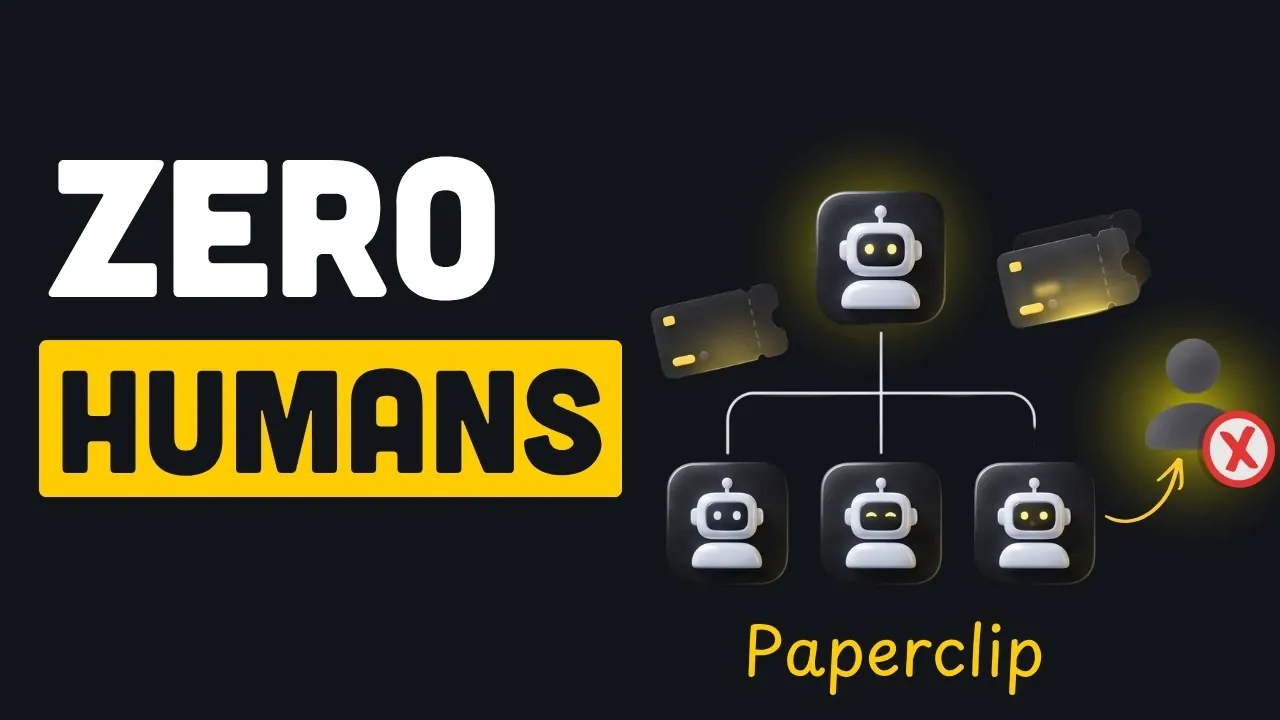
AI-driven companies are no longer a distant concept but a practical reality enabled by platforms like Paperclip. Designed to manage multiple AI agents within a structured framework, Paperclip mimics the dynamics of a traditional organization. By assigning roles such as CEO or engineer and implementing features like task management systems and budget controls, it ensures that agents collaborate efficiently toward shared objectives. As highlighted by Better Stack, this approach is particularly valuable for complex projects requiring precise coordination, transparency and accountability.
Explore how Paperclip’s features can streamline your multi-agent workflows. Learn how to establish clear roles and workflows to align agents with your project’s goals and discover how budget controls can prevent resource inefficiencies. Gain insight into the platform’s accountability mechanisms, such as audit logs and traceability, which ensure compliance and transparency. This analysis offers a clear roadmap for using Paperclip to manage AI-driven projects effectively.
What is Paperclip?
TL;DR Key Takeaways :
- Paperclip transforms multiple AI agents into a cohesive, company-like team, allowing goal-oriented workflows, effective resource allocation and clear accountability.
- Key features include organizational charts for role assignment, task management systems for tracking progress, budget controls to manage computational costs and monitoring tools for transparency and compliance.
- The platform is ideal for complex, collaborative projects across industries like software development, research and content creation, where coordination and efficiency are critical.
- Challenges include the need for clear rules, detailed initial setup and potential over-complexity for simpler projects or single-agent tasks.
- Paperclip stands out by integrating role assignment, task delegation and resource management into a centralized system, enhancing collaboration, accountability and resource efficiency for large-scale AI-driven projects.
Paperclip is a platform designed to turn a collection of AI agents into a cohesive and collaborative unit. Rather than allowing agents to operate independently or with minimal coordination, it provides a structured framework that mirrors the organization of a traditional company. You can assign specific roles, define clear goals and establish workflows to ensure that every agent contributes effectively to the overall mission. This structured approach eliminates inefficiencies, reduces confusion and enhances productivity, especially in complex projects where seamless collaboration is critical.
By creating a virtual company environment, Paperclip ensures that agents work together toward shared objectives, making it easier to manage large-scale projects that require precision and coordination.
Core Features of Paperclip
Paperclip offers a range of features designed to streamline the management of AI agents and improve their collaboration:
- Organizational Charts: Assign roles such as CEO, CTO, or engineer to establish a hierarchy that mirrors a real-world company structure. This ensures clarity in responsibilities and decision-making processes.
- Task Management: Use a ticketing system to delegate tasks, track progress and maintain traceability through ancestry links, making sure that every task aligns with the overall project goals.
- Budget Control: Set resource usage limits to prevent excessive computational costs and maintain operational efficiency.
- Monitoring and Accountability: Implement features like audit logs, heartbeats and traceability mechanisms to track agent actions and ensure compliance with project objectives.
- Open source Customization: Self-host the platform to tailor it to your specific needs while maintaining local control over your operations and data.
These features work together to create a robust framework for managing AI agents, particularly in scenarios that demand high levels of coordination, transparency and oversight.

Learn more about AI agents by reading our previous articles, guides and features :
- How to Build Custom AI Agents to Automate Anything & Everything
- NVIDIA Neatron 3 Super & Nemoclaw Target Safer AI Agents at Scale
- Claude Can Now Code Websites “By Sight” Here’s How It Works
- Combining NotebookLM & Gemini Gems to Build Powerful Custom AI Agents
- Building AI Agents to analyze Excel spreadsheet data and more
- Stop Struggling with Spreadsheets : Microsoft’s AI Agent Mode is Here
- Why Anthropic is Using “Harnesses” to Control Long-Running AI Agents
- The Secret Behind Claude’s 6X Performance Boost: Exploring Dream Mode
- This New CLI Tool Just Made Deploying AI Agents Ridiculously Easy
- Coinbase & Stripe Launch Tools for AI Agents to Pay & Buy Online
How Paperclip Can Be Used
Paperclip is particularly effective for projects that require collaboration among multiple AI agents. For example, in a software development project, you can assign specialized roles to each agent, such as coding, testing, or documentation. This ensures that agents focus on their areas of expertise while contributing to the overall goal. The platform’s goal-oriented workflows and accountability mechanisms make it ideal for projects where transparency, efficiency and coordination are critical.
Beyond software development, Paperclip can be applied to industries such as research, content creation and data analysis, where multiple agents must work together to achieve complex objectives. Its structured approach ensures that every agent’s efforts are aligned with the project’s overarching goals.
Challenges and Limitations
While Paperclip offers numerous advantages, it is not without its challenges. To use the platform effectively, you must define clear rules and prompts for your agents. Poorly structured setups can lead to inefficiencies, such as redundant tasks, miscommunication, or wasted resources. Additionally, Paperclip’s advanced features may be unnecessary for simpler projects or single-agent operations, where its complexity could outweigh its benefits.
Another potential limitation is the time investment required for initial setup. Establishing roles, workflows and budgets demands careful planning and attention to detail. Without this preparation, the platform’s full potential may not be realized.
How Paperclip Stands Out
Paperclip distinguishes itself from traditional agent frameworks by focusing on the management of an entire “company” of agents rather than just individual workflows. This centralized operating model enhances collaboration, accountability, and resource efficiency, making it particularly valuable for complex or large-scale projects. By providing a higher-level framework, Paperclip allows you to manage multi-agent setups with greater precision and control.
Unlike other tools that may focus solely on task delegation or resource management, Paperclip integrates these elements into a cohesive system. This holistic approach ensures that all aspects of multi-agent collaboration are addressed, from role assignment to budget control.
Steps for Implementation
To implement Paperclip effectively, follow these steps:
- Define Goals: Clearly outline your project’s objectives to guide the actions of your AI agents and ensure alignment with the desired outcomes.
- Assign Roles: Designate specific roles for each agent, such as a “CEO” for decision-making or specialists for tasks like data analysis, content generation, or quality assurance.
- Set Budgets: Establish resource usage limits to control computational costs and prevent inefficiencies.
- Delegate Tasks: Use the task management system to assign and track work, making sure that all agents contribute effectively to the shared objective.
This structured approach minimizes inefficiencies, enhances productivity and ensures that all agents work toward a common goal.
Key Benefits of Paperclip
Paperclip offers several advantages that make it a valuable tool for managing AI-driven projects:
- Streamlined Management: A centralized dashboard simplifies the coordination of multiple agents, reducing the complexity of multi-agent workflows.
- Cost Efficiency: Integrated budget controls prevent resource overuse, helping you manage computational expenses effectively.
- Improved Transparency: Features like audit logs and traceability provide clear insights into agent actions, making sure accountability and compliance with project goals.
- Enhanced Collaboration: The platform’s company-like structure fosters teamwork and ensures that all agents contribute meaningfully to the project.
These benefits make Paperclip an excellent choice for anyone seeking to optimize multi-agent collaboration in complex projects.
When to Use Paperclip
Paperclip is best suited for larger, collaborative projects that require coordination among multiple AI agents. For smaller tasks or single-agent operations, its advanced features may be excessive and unnecessary. To maximize its potential, you must invest time in setting up a well-structured framework that aligns with your project’s goals.
By carefully defining roles, workflows and budgets, you can ensure that your agents operate effectively within the simulated company environment. This thoughtful approach to implementation will help you avoid inefficiencies and unlock the full potential of Paperclip’s capabilities.
Media Credit: Better Stack
Disclosure: Some of our articles include affiliate links. If you buy something through one of these links, Geeky Gadgets may earn an affiliate commission. Learn about our Disclosure Policy.
