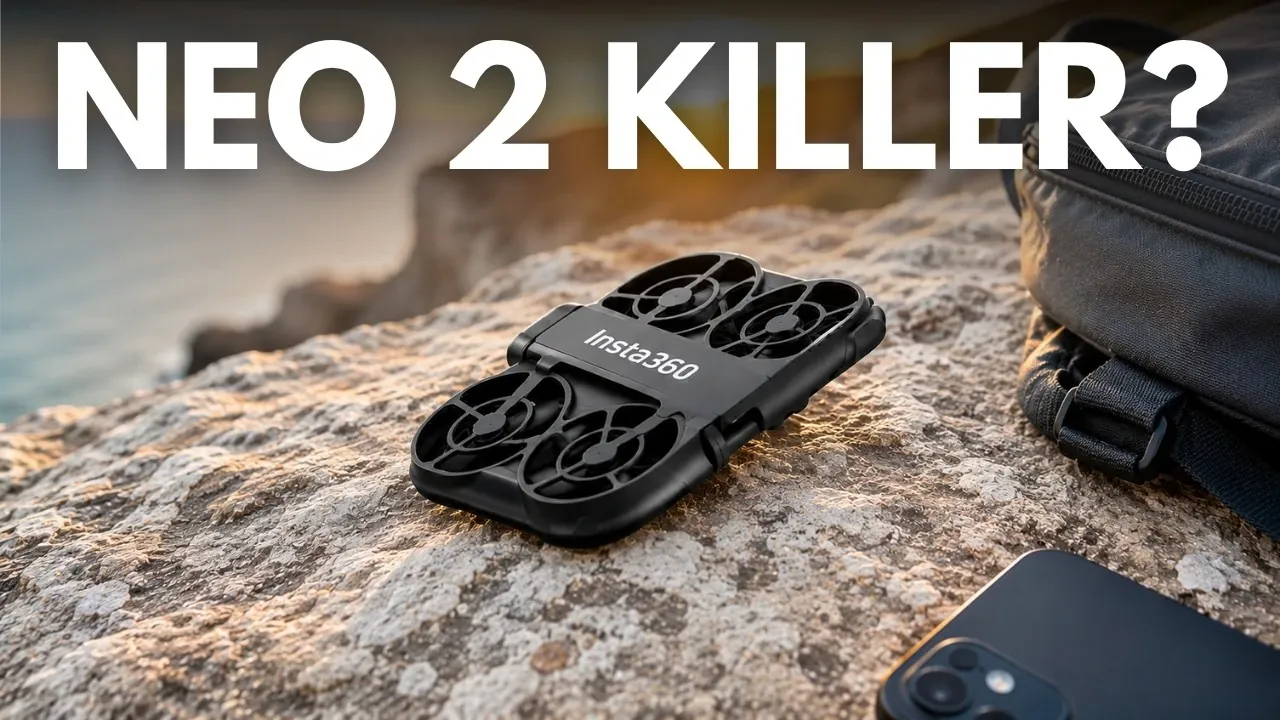
Insta360’s rumored entry into the drone market has drawn attention for its potential to compete with DJI’s Neo 2. The Neo 2, known for features like palm launch and quick shots, has become a popular choice for creators due to its compact design and ease of use. According to Tech Court, leaked details suggest Insta360 may prioritize portability and safety, with a foldable design and enclosed propellers. A notable rumored feature is the integration of a 360-degree camera, allowing users to reframe footage during editing, which aligns with Insta360’s expertise in immersive imaging.
Learn how Insta360’s rumored features could address specific limitations of the Neo 2, such as battery performance or wind resistance. Gain insight into the challenges of creating a competitive drone ecosystem and balancing advanced features with durability. This guide also explores the potential impact of Insta360’s entry on the broader drone market.
What We Know About Insta360’s Rumored Drone
TL;DR Key Takeaways :
- Insta360 is rumored to be entering the drone market with a compact, foldable drone featuring enclosed propellers and a built-in 360-degree camera, targeting content creators with portability and advanced imaging capabilities.
- The DJI Neo 2 sets a high benchmark in the drone market with its user-friendly design, seamless ecosystem integration and reliable performance, making it a tough competitor for Insta360.
- Key challenges for Insta360 include building a robust ecosystem, balancing innovation with practicality and addressing areas where DJI’s Neo 2 falls short, such as battery life and wind resistance.
- Opportunities for Insta360 to stand out include offering improved battery life, enhanced wind resistance, quieter operation, advanced AI features and using its expertise in 360-degree camera technology.
- Industry analysts predict a potential launch between late 2026 and early 2027, with Insta360 focusing on refining its design and ecosystem to disrupt the compact drone market and challenge DJI’s dominance.
Leaked patents and prototype images suggest that Insta360 is developing a drone tailored for content creators. The design reportedly emphasizes portability and safety, featuring a compact, foldable form factor with enclosed propellers. This approach aligns with the growing demand for drones that are easy to carry and operate in various environments. A standout feature is the rumored integration of a built-in 360-degree camera, allowing users to reframe footage during post-production. This capability uses Insta360’s expertise in immersive imaging and creator-focused tools, potentially giving it a competitive edge in the market.
The inclusion of a 360-degree camera could redefine how creators capture and edit aerial footage, offering unparalleled flexibility. By combining portability with advanced imaging capabilities, Insta360 appears to be targeting a niche audience of creators who prioritize versatility and ease of use. However, the success of this rumored drone will depend on how well it balances these features with performance and durability.
Why the DJI Neo 2 Sets the Benchmark
The DJI Neo 2 has established itself as a leader in the consumer drone market, thanks to its combination of technical reliability and user-centric design. Its strengths include intuitive controls, seamless integration with DJI’s ecosystem and a polished user experience. Features such as palm launch, quick shots and compatibility with DJI’s editing tools and accessories have made it a favorite among both casual users and professional creators.
While the Neo 2’s technical specifications are solid, its real appeal lies in its dependability and ease of use. DJI has built a reputation for delivering drones that perform consistently in a variety of conditions, making them a trusted choice for consumers. This strong foundation has allowed DJI to dominate the market, setting a high standard for any competitor looking to challenge its position.

Learn more about Insta360 with other articles and guides we have written below.
- Why Insta360’s Luna Ultra Might Make You Skip the DJI Pocket 4
- Why DJI Just Called Out the Insta360 Luna Ultra’s Biggest Flaw
- What the Insta360 Luna Ultra and Pro Launch Means for Vloggers
- Why You Should Wait for the Luna Ultra Before Buying DJI
- What the New Insta360 Luna Ultra Specs Reveal About Its Launch
- How the Insta360 Luna Ultra Challenges DJI’s Cinematic Dominance
- New Insta360 Luna Ultra Leak Answers a Major Camera Question
- Why Insta360’s Unreleased Luna Ultra is Already Beating DJI
- Why Pro Creators Are Skipping the Insta360 Luna Ultra for DJI
- Why the Insta360 Luna Ultra Could Cost US and EU Buyers Significantly More
Key Challenges Facing Insta360
For Insta360 to successfully compete with DJI, it must address several critical challenges:
- Established Ecosystem: DJI’s ecosystem is extensive, offering a wide range of accessories, software and customer support. Insta360 will need to develop a similarly robust ecosystem to attract and retain users.
- Balancing Innovation and Practicality: While features like a foldable design enhance portability, they must not come at the expense of durability or performance. Consumers expect drones to withstand real-world conditions without compromising functionality.
- Addressing DJI’s Weaknesses: Insta360 has an opportunity to differentiate itself by focusing on areas where the Neo 2 falls short, such as improving battery life, enhancing wind resistance and introducing advanced tracking capabilities.
These challenges highlight the complexity of entering a market dominated by an established player. Insta360 will need to carefully balance innovation with practicality to deliver a product that meets the needs of its target audience while standing out from the competition.
The Role of Ecosystem Integration
In today’s drone market, hardware alone is not enough to guarantee success. A cohesive ecosystem that includes software, accessories and customer support is essential for building long-term user loyalty. DJI’s ecosystem is a prime example of this, offering seamless integration between its drones, editing tools and accessories.
For Insta360, creating a comparable ecosystem will require significant investment and strategic planning. This includes making sure compatibility with popular editing software, providing reliable firmware updates and developing a range of complementary accessories. Additionally, strong customer support will be crucial for building trust and encouraging repeat purchases. By focusing on ecosystem integration, Insta360 can enhance the overall user experience and position itself as a serious competitor in the drone market.
Opportunities for Insta360 to Stand Out
Despite the challenges, Insta360 has several opportunities to differentiate itself and capture market share. Key areas where it could excel include:
- Improved Battery Life: Offering longer flight times would make the drone more versatile and appealing to creators who need extended operational capabilities.
- Enhanced Wind Resistance: Better stability in challenging weather conditions could attract users seeking reliability in diverse environments.
- Quieter Operation: Reduced noise levels would be a significant advantage for those filming in sensitive or quiet settings.
- Advanced AI Features: Incorporating automated tracking, obstacle avoidance and intelligent flight modes could set the drone apart in terms of functionality.
- 360-Degree Camera Integration: This feature would provide unmatched flexibility for reframing and editing, catering specifically to the needs of content creators.
By focusing on these areas, Insta360 can address some of the limitations of existing drones while introducing features that appeal to its target audience. This approach could help the company carve out a unique position in the market.
Looking Ahead: Market Predictions
Industry analysts anticipate that Insta360’s drone could launch between late 2026 and early 2027. This timeline suggests that the company is taking a deliberate approach to product development, focusing on refining its design and ecosystem before entering the market. Insta360’s broader strategy appears to involve evolving into a comprehensive creator ecosystem, using its expertise in cameras and software to deliver an integrated solution for content creators.
If Insta360 can successfully execute this strategy, it has the potential to disrupt the compact drone market and challenge DJI’s dominance. However, achieving this will require a combination of innovative features, robust ecosystem development and effective marketing to build awareness and trust among consumers.
Final Thoughts on Insta360’s Potential
Insta360’s rumored drone represents a significant opportunity to redefine expectations in the compact drone market. By addressing the shortcomings of DJI’s Neo 2 and introducing meaningful innovations, Insta360 could position itself as a serious competitor. However, success will depend on more than just hardware. The company must also focus on building a cohesive ecosystem, delivering a seamless user experience and earning the trust of its audience. While the path forward is challenging, Insta360’s expertise in imaging and creator tools gives it a strong foundation to build upon. If executed effectively, this venture could mark a new chapter in the evolution of portable drones.
Media Credit: Tech Court
Disclosure: Some of our articles include affiliate links. If you buy something through one of these links, Geeky Gadgets may earn an affiliate commission. Learn about our Disclosure Policy.
