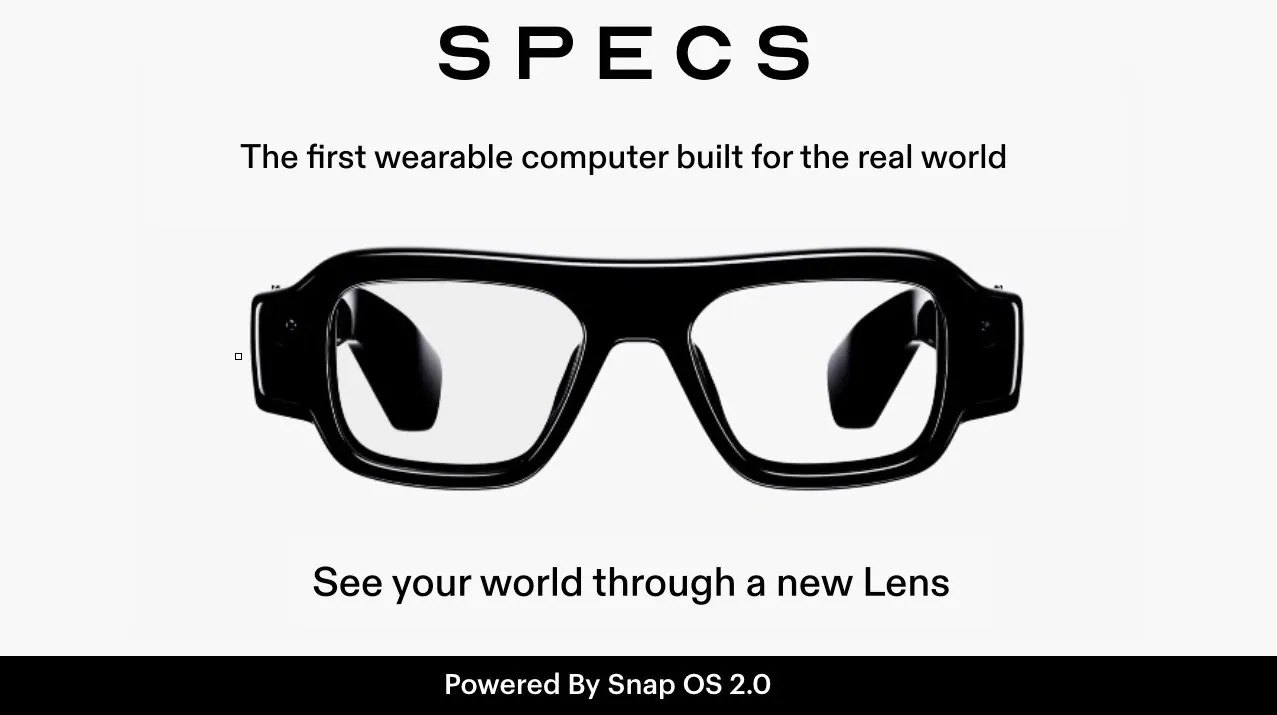
Snap Inc.’s latest AR glasses have sparked debate over their practicality and market positioning. With a hefty price tag of $2,200 and a design that leans more toward functionality than style, these Snap SPECS glasses seem tailored for developers and niche use cases rather than everyday consumers. Alive Studios examines how the reliance on Snap’s proprietary Lens Studio platform and the glasses’ bulky form factor may limit their appeal, especially when compared to sleeker, more consumer-friendly options like Meta’s Ray-Ban Stories. The question of whether Snap can bridge the gap between advanced technology and widespread adoption looms large.
In this overview, you’ll gain insight into the challenges Snap faces in balancing innovation with accessibility. Explore how pricing, design and ecosystem constraints affect the glasses’ potential to attract both developers and consumers. You’ll also discover key comparisons to competitors and learn about the specific industries where these glasses could find a foothold. By the end, you’ll have a clearer understanding of the hurdles Snap must overcome to make its AR glasses a viable contender in the augmented reality market.
High Cost and Limited Appeal: A Barrier to Adoption
TL;DR Key Takeaways :
- Snap’s SPECS AR Glasses, priced at $2,200, face criticism for being expensive and impractical, targeting a niche audience of developers and tech enthusiasts rather than mainstream consumers.
- The glasses’ bulky design and unclear market positioning create challenges in appealing to both developers and everyday users, leading to skepticism about their adoption potential.
- Investor and market reactions have been lukewarm, with Snap’s stock dropping nearly 10% after the announcement, reflecting doubts about the product’s ability to drive growth.
- While the glasses offer advanced AR capabilities with potential use cases in education, e-commerce and design, their high cost and reliance on Snap’s proprietary ecosystem limit accessibility and practicality.
- Key challenges include ecosystem limitations, privacy concerns and competition from more polished alternatives like Meta’s Ray-Ban Stories and Apple’s Vision Pro, raising questions about Snap’s ability to refine and scale the product for broader adoption.
The $2,200 price point of Snap SPECS glasses places them well beyond the reach of the average consumer, positioning them instead as a tool for developers, tech enthusiasts, or businesses. This exclusivity is further compounded by their bulky design, which detracts from their appeal for casual, everyday use. In contrast, competitors like Meta’s Ray-Ban Stories offer a sleeker, more consumer-friendly alternative that combines style with functionality. Snap’s glasses, by comparison, feel more like a prototype or a developer-focused tool than a polished product ready for mainstream adoption.
This raises a critical question: who is the target audience for these glasses? By attempting to cater to both developers and consumers, Snap risks alienating both groups. Developers may find the glasses too limited in scope for professional use, while consumers may view them as impractical and overpriced. This dual focus creates a blurred market strategy, making it difficult for the product to establish a clear identity.
Market Reaction: Tepid Enthusiasm and Investor Doubts
The market’s response to Snap SPECS has been lukewarm, reflecting broader concerns about their viability. Following the product’s announcement, Snap’s stock experienced a nearly 10% drop, signaling investor skepticism about the glasses’ potential to drive growth. Online discussions have mirrored this sentiment, with AR enthusiasts acknowledging the technical advancements but questioning the glasses’ real-world value and necessity.
This muted reception underscores the challenges Snap faces in convincing both investors and consumers of the product’s relevance. In a competitive AR market, innovation alone is not enough. Success requires a clear and compelling value proposition, something Snap’s glasses currently struggle to deliver. Without a strong narrative that resonates with users, the glasses risk being overshadowed by more accessible and practical alternatives.

Uncover more insights about AR glasses in previous articles we have written.
- What Makes XREAL Aura the Most Important XR Release Of 2026
- Google I/O : Google and Samsung Are Changing Smart Glasses Forever
- RayNeo Air 4 Pro Offers Dual Micro OLED Displays For $239
- VITURE Beast vs XREAL One Pro: Why One Set of AR Glasses Completely Dominates
- One Month Using the RayNeo Air 4 Pro Glasses: the Keep or Return Verdict
- RayNeo X3 Pro Smart Glasses with Gemini AI, but a Major Catch Remains
- Why Snap’s New $2,195 Specs Could Be the iPhone Moment for AR
- Why the RayNeo Air 4 Pro is the Perfect DJI Neo 2 Upgrade
- Samsung’s New Smart Glasses Are Aiming Straight for Meta’s Crown
- Apple Vision Pro Features Just Got Shrunk Into Everyday Wearable Glasses : Snap Spectacles
How Snap Stacks Up Against Competitors
In the rapidly evolving AR landscape, Snap’s glasses occupy a unique but precarious position. They offer more advanced features than Meta’s Ray-Ban Stories, which prioritize simplicity and style, but fall short of the comprehensive ecosystem and refined design of Apple’s Vision Pro. Unlike these competitors, Snap’s glasses feel more like a developer kit than a fully realized consumer product.
This positioning limits their appeal to a narrow audience. Developers may appreciate the glasses’ potential for experimentation, but mainstream consumers are unlikely to invest in a product that lacks the polish, usability and ecosystem integration of its competitors. Without a clear competitive edge, Snap’s glasses risk being perceived as a niche offering rather than a fantastic innovation.
Potential Use Cases: Where AR Could Shine
Despite their challenges, Snap’s AR glasses hint at exciting possibilities for specific applications. Their advanced AR capabilities could unlock new opportunities in various industries, including:
- Education and Training: Facilitating immersive, interactive learning experiences that enhance engagement and retention.
- E-commerce: Allowing virtual try-ons and product demonstrations to transform online shopping.
- Design and Architecture: Assisting professionals with visualization, prototyping and collaborative design processes.
- Event Planning and Content Creation: Enhancing social interactions and storytelling through dynamic AR overlays.
While these use cases are promising, they remain largely speculative. The glasses’ high cost and reliance on Snap’s proprietary ecosystem limit their practicality, making it difficult to translate these possibilities into widespread adoption. For these applications to gain traction, Snap must address the barriers that currently hinder the glasses’ accessibility and usability.
Challenges: Ecosystem and Privacy Concerns
One of the most significant hurdles for Snap’s AR glasses is their dependence on Lens Studio, Snap’s proprietary AR development platform. While Lens Studio provides robust tools for creating AR content, its relatively small user base limits the glasses’ utility. Developers may hesitate to invest time and resources into a platform that lacks widespread adoption, further narrowing the glasses’ appeal.
Privacy concerns also present a major challenge. AR wearables, particularly those used in public spaces, raise questions about data security and social acceptance. Many potential users may feel uneasy about wearing a device that could be perceived as intrusive or invasive. Addressing these concerns will be critical for Snap to build trust and gain acceptance among mainstream users.
Future Prospects: Can Snap Turn Things Around?
While the current iteration of Snap’s AR glasses faces significant obstacles, there is potential for growth and improvement. Advances in technology could lead to lighter, more affordable versions that appeal to a broader audience. As AR becomes more integrated into daily life, these glasses could carve out a niche among tech enthusiasts and professionals.
However, long-term success will depend on Snap’s ability to address the glasses’ current limitations. This includes refining the design to make it more user-friendly, expanding the ecosystem to attract developers and demonstrating clear, compelling use cases that resonate with consumers. Without these improvements, the glasses risk being remembered as an ambitious but flawed experiment rather than a meaningful step forward in AR technology.
For now, Snap SPECS serve as a reminder that even the most advanced technology must align with user needs and expectations to succeed. Whether they become a stepping stone to future advancements or a cautionary tale in the competitive world of augmented reality remains to be seen.
Media Credit: Alive Studios
Disclosure: Some of our articles include affiliate links. If you buy something through one of these links, Geeky Gadgets may earn an affiliate commission. Learn about our Disclosure Policy.
