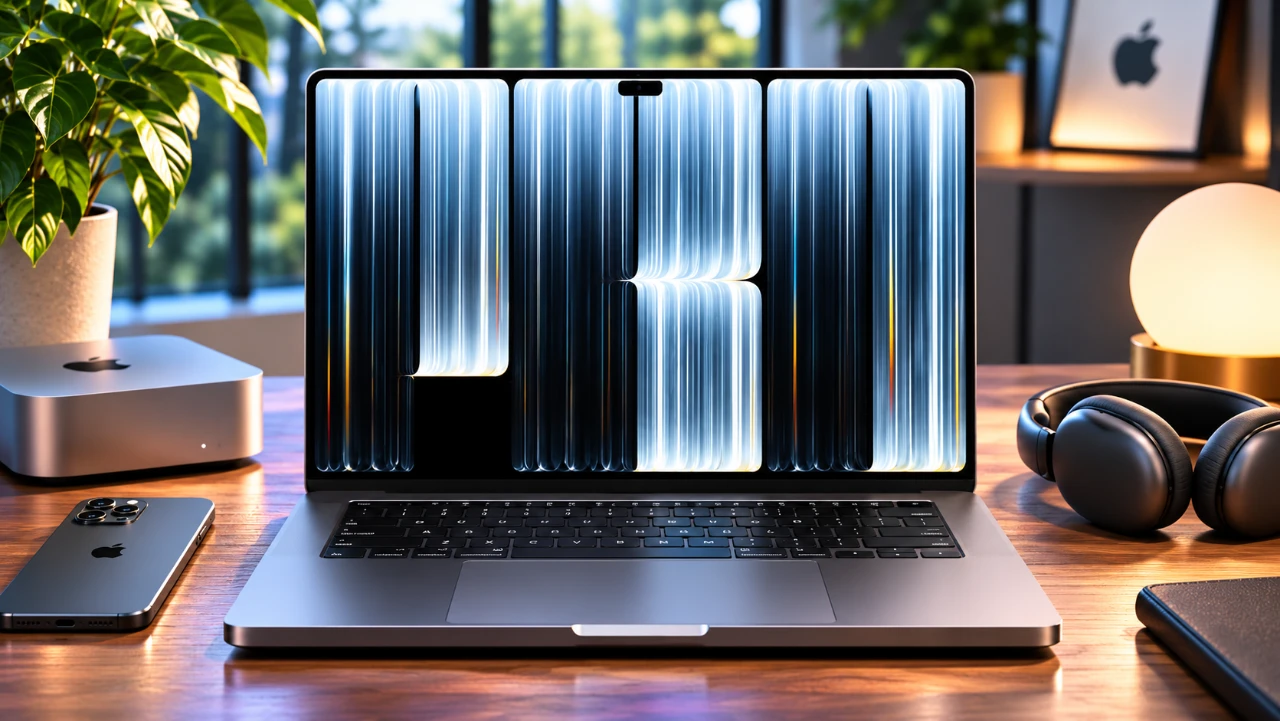
Apple’s latest MacBook Pro OLED XDR introduces a blend of refined design elements and enhanced features, including a touchscreen OLED display, Dynamic Island integration, and improved connectivity options. Despite these updates, the device retains the same M5 Pro and M5 Max chips as its predecessor, leaving potential buyers to weigh the value of these upgrades against their specific needs and current devices. The video below from ZONEofTECh gives us more details about Apple’s latest MacBook Pro.

Key Features and Design Updates
The MacBook Pro Pro OLED XDR showcases a sleeker, lighter design, but its most notable addition is the Pro OLED XDR touchscreen display. This advanced screen delivers exceptional color accuracy, sharper visuals, and enhanced interactivity. The inclusion of Dynamic Island, a feature adapted from the iPhone, adds a layer of functionality by providing real-time notifications and interactive controls at the top of the screen.
Additional design updates include:
- Improved speakers that deliver richer, more immersive audio quality.
- The return of the backlit Apple logo, a nostalgic nod to earlier MacBook designs.
- Enhanced brightness levels of up to 2,000 nits, making sure better visibility in outdoor environments.
While these updates enhance the overall user experience, they represent incremental improvements rather than innovative changes.
Performance: Incremental Gains
Beneath its polished exterior, the MacBook Pro OLED XDR continues to rely on the M5 Pro and M5 Max chips, offering no significant leap in raw processing power compared to the previous generation. However, there are some noteworthy enhancements that may appeal to certain users:
- Memory bandwidth has been increased from 200 GB/s on the M2 Pro to 307 GB/s, allowing smoother multitasking and improved performance for memory-intensive applications.
- Battery life has been extended, with the 14-inch model now lasting up to 22 hours on a single charge, making it one of the longest-lasting MacBooks to date.
For users upgrading from older models, these improvements may be significant. However, for those already using an M5-based MacBook Pro, the performance gains are marginal and unlikely to justify the cost of upgrading.
Should You Upgrade?
Deciding whether to upgrade to the MacBook Pro OLED XDR depends heavily on your current device and specific requirements:
- If you own an M4 or M5 MacBook Pro, the new model may not offer enough compelling features to warrant the investment unless you specifically need the touchscreen display or improved memory bandwidth.
- For users of M1, M2, or Intel-based MacBook Pros, this model represents a significant step forward in terms of performance, battery life, and display quality.
However, the base 14-inch M6 MacBook Pro emerges as a strong alternative. Priced $900 less than the Pro OLED XDR models, it offers better single-core performance and may be a more cost-effective choice for most users.
Exploring Alternatives
For those seeking value or considering other options, there are several viable alternatives to the MacBook Pro OLED XDR:
- Refurbished M5 or M5 Pro models: These provide excellent performance at a reduced cost, making them ideal for users who do not require the latest features.
- Waiting for the next-generation MacBook Pros: Expected to feature M7 Pro and M7 Max chips, the upcoming models are anticipated to focus on AI advancements and further performance enhancements.
These alternatives may offer better value and longevity, particularly for users who prioritize cost-effectiveness over having the latest features.
Connectivity and Usability Enhancements
The MacBook Pro OLED XDR also introduces several connectivity upgrades that enhance its usability for professional and everyday tasks:
- Wi-Fi 7 and Bluetooth 6: These technologies enable faster and more reliable wireless connections, improving productivity and convenience.
- Center Stage camera: This feature ensures you remain in focus during video calls, even if you move around, making it ideal for remote work and virtual meetings.
- HDMI 2.1 support: Professionals using external displays will appreciate the ability to connect to higher resolutions and refresh rates, enhancing workflows that rely on multiple screens.
These updates cater to users who rely on their MacBook for demanding professional tasks, offering improved functionality and seamless connectivity.
Making the Right Choice
The MacBook Pro OLED XDR is a refined update, best suited for users with older models or those who require specific features like the touchscreen OLED display or enhanced memory bandwidth. While the design and usability improvements are welcome, the absence of a new chip limits its appeal for current M5 users.
For most buyers, the base M6 model or waiting for the next generation of MacBook Pros offers better value and a more future-proof investment. Carefully assess your needs, budget, and the longevity of your current device before deciding whether this upgrade is the right choice for you.
Here are additional guides from our expansive article library that you may find useful on MacBook Pro.
- Apple’s M6 MacBook Pro Leaks Reveal a Surprising Strategy Shift
- The OLED MacBook Pro Is Finally Confirmed for October—And It Changes Everything
- What to Expect From Apple’s Rumored M6 MacBook Pro Drop This Month
- Leaked OLED MacBook Pro Marks Apple’s Biggest Mac Shift in Years
- Apple Officially Confirms New Macs Are Arriving Next Week
- Leaked M6 MacBook Pro: Apple’s Biggest Silicon Leap in Years
Source: ZONEofTECH
Disclosure: Some of our articles include affiliate links. If you buy something through one of these links, Geeky Gadgets may earn an affiliate commission. Learn about our Disclosure Policy.
