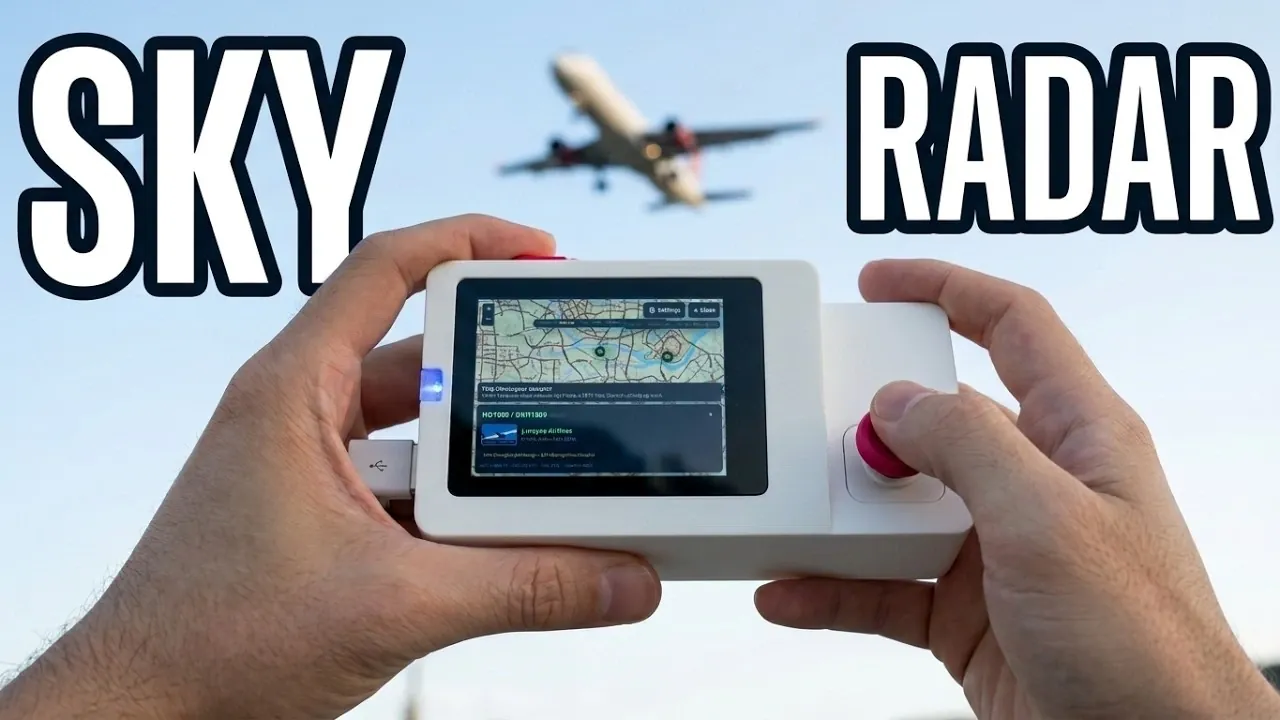
Jdaie Lin demonstrates how to build a compact and portable device that brings real-time flight tracking into your hands. By combining a Raspberry Pi, software-defined radio (SDR), and AI, the project captures ADS-B signals broadcast by aircraft to display critical flight data such as altitude, speed and coordinates. A key feature of the design is its touchscreen radar map, which visualizes this information in an intuitive format, making it accessible for both aviation enthusiasts and those new to the field. The inclusion of a Pi Sugar battery ensures portability, while heat sinks and active cooling maintain performance during extended use.
Explore how this device integrates AI for interactive insights, allowing you to ask questions about flight destinations or estimated arrival times. You’ll also discover how external hardware like an antenna and physical controls enhance usability, even in challenging environments. Whether you’re interested in tracking live air traffic, teaching aviation concepts, or experimenting with telemetry data, this guide provides practical steps and considerations to bring the skies closer to your fingertips.
TL;DR Key Takeaways :
- A portable air traffic control device can be created using Raspberry Pi, SDR and AI to track real-time aircraft telemetry data, including flight coordinates, altitude, speed and identification codes.
- The device features a compact design with a Raspberry Pi, Pi Sugar battery and a touchscreen interface, allowing users to monitor aircraft movements on a live radar map.
- Hardware enhancements like a touchscreen, joystick, scroll wheel and external antenna improve usability and signal reception, making the device versatile for indoor and outdoor use.
- AI integration provides an interactive experience, allowing users to ask questions about flight data, such as destination, altitude and estimated arrival time, with accurate responses.
- Real-world testing demonstrated the device’s reliability and potential applications for aviation enthusiasts, educators and amateur air traffic controllers, showcasing the power of accessible technology in aviation exploration.
How Real-Time Flight Tracking Works
The foundation of this project lies in capturing live telemetry data from commercial aircraft. Using an SDR receiver connected to a Raspberry Pi, the device intercepts ADS-B signals. These signals, broadcasted by planes, contain critical flight information, including:
- Flight coordinates, which pinpoint the aircraft’s location
- Altitude, providing insight into the plane’s elevation
- Speed, revealing how fast the aircraft is traveling
- Identification codes, which uniquely identify each flight
Once intercepted, this data is processed and visualized, allowing you to track aircraft movements in real time with remarkable accuracy. Essentially, it’s like having a personal radar station that fits in your hands, offering a fascinating glimpse into the world of aviation.
Designing a Portable Radar Station
Portability is a key feature of this project, making sure the device is both compact and functional. A Raspberry Pi, paired with a Pi Sugar battery, forms the core of the system, creating a self-contained power solution. The device includes a live radar map displayed on a touchscreen interface, which is both visually appealing and highly functional. This map allows users to monitor aircraft movements in real time, explore flight paths and access telemetry data with ease.
The intuitive design ensures that even individuals with minimal technical experience can navigate the system effortlessly. Whether you’re an aviation enthusiast or a curious learner, the device offers an engaging way to explore the skies.

Uncover more insights about Raspberry Pi in previous articles we have written.
- PSPi Mod Fits Raspberry Pi Compute Module 4 in PSP 1000
- Sprout Pi an Easy Install Modern Upgrade for Apple iPods and iPod Minis : Bluetooth, DAC, USB-C and More
- Orange Pi 5 Pro vs Raspberry Pi 5 mini PCs compared
- Raspberry Pi Zero 2 W USB soundcard and DAC
- Open source Raspberry Pi chart plotter project for sailors
- Replace Your Apple TV with a Raspberry Pi Streaming Media Centre
- How to build a Raspberry Pi 5 NAS
- Raspberry Pi 400 laptop with 11.9-inch touchscreen LCD
- DIY MidoJoy Raspberry Pi Handheld Gaming Case With 8,000mAh Battery
- Waveshare PocketTerm35 Turns Raspberry Pi 5 Into a Handheld
Hardware Features for Enhanced Usability
To enhance usability and interactivity, several hardware components were integrated into the device. These features ensure a seamless and enjoyable user experience:
- Touchscreen interface: Provides responsive and intuitive navigation, making it easy to interact with the radar map and access flight data
- Physical controls: Includes a joystick and scroll wheel for precise adjustments and improved control over the interface
- External antenna: Boosts signal reception, making sure reliable data capture even in areas with weaker coverage
These hardware enhancements make the device versatile and user-friendly, whether you’re using it indoors or outdoors. The combination of portability and functionality ensures that the device is practical for a wide range of applications.
AI Integration: Your Virtual Flight Crew
One of the standout features of this device is its integration of AI-powered assistance. The conversational AI acts as a virtual flight crew, offering insights into the telemetry data. For example, you can ask the AI questions such as:
- “What is the destination of this aircraft?”
- “How high is this plane flying?”
- “What is the estimated arrival time?”
The AI responds with accurate, context-aware information, adding an interactive and immersive layer to the experience. This feature not only enhances usability but also makes the process of tracking flights more engaging and informative, appealing to both casual users and aviation enthusiasts.
Overcoming Design Challenges
Creating a handheld radar station presented several challenges, particularly in terms of heat management and portability. Both the Raspberry Pi and SDR receiver generate significant heat during operation, which was mitigated through the use of:
- Heat sinks: Dissipate heat effectively to prevent overheating
- Active cooling solutions: Ensure consistent performance during extended use
Additionally, achieving a balance between portability and functionality required careful planning. The placement of components and weight distribution were optimized to ensure the device remains ergonomic and easy to handle. These design considerations ensure that the device is practical for real-world use, whether you’re conducting tests outdoors or using it in a classroom setting.
Testing the Device in Real-World Scenarios
The device was rigorously tested in outdoor environments to track and identify real aircraft in real time. During these tests, it successfully intercepted telemetry data from multiple planes, displaying their movements on the radar map with minimal latency. This practical application demonstrated the device’s potential for various uses, including:
- Aviation enthusiasts: Track flights and explore air traffic patterns
- Educators: Teach students about air traffic and aviation technology
- Amateur air traffic controllers: Experiment with real-world flight data
The results highlighted the device’s reliability and versatility, making it a valuable tool for anyone interested in exploring the skies.
Unlocking the Skies with Accessible Technology
This project showcases how accessible technologies can be combined to create powerful and interactive tools. By using the capabilities of the Raspberry Pi, SDR and AI, you can transform raw telemetry data into a hands-on learning experience. Whether you’re an aviation enthusiast, an educator, or simply curious about air traffic, this device offers a unique way to connect with the world above. It’s a testament to how innovative thinking and readily available technology can bring the mysteries of the skies within reach, empowering individuals to explore and understand the dynamics of aviation.
Media Credit: Jdaie Lin
Disclosure: Some of our articles include affiliate links. If you buy something through one of these links, Geeky Gadgets may earn an affiliate commission. Learn about our Disclosure Policy.
