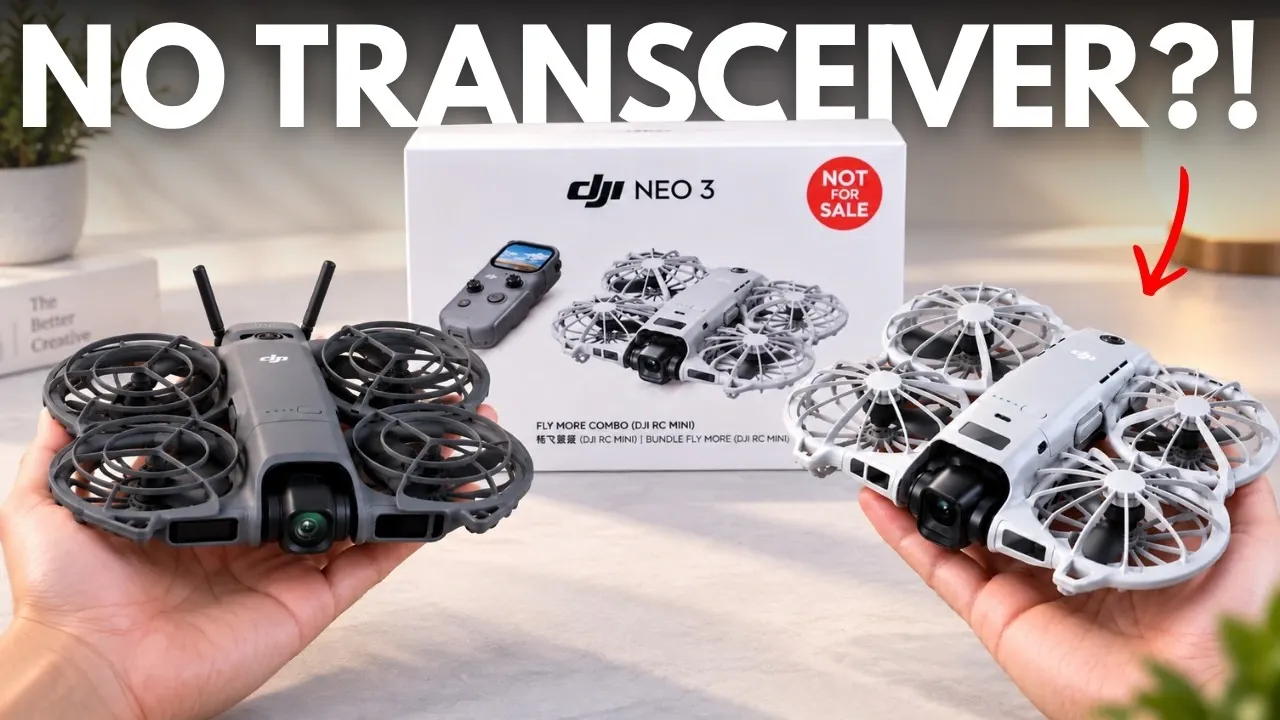
The DJI Neo 3 appears poised to address some of the key criticisms of its predecessor, the Neo 2, particularly in terms of design and functionality. One notable upgrade is the introduction of a pusher propeller configuration, which could enhance flight efficiency while contributing to a more compact and portable design. Additionally, leaked images suggest the Neo 3 may feature an upward-facing obstacle detection sensor, a potentially valuable addition for navigating environments with vertical challenges like trees or buildings. Tech Court’s analysis highlights how these potential improvements could make the Neo 3 a more versatile option for both recreational and professional drone users.
In this overview, you’ll gain insight into how the Neo 3’s rumored upgrades, such as the integration of O4 radio hardware and a redesigned RC Mini controller, could simplify setup and improve usability. Explore the implications of these changes for signal reliability, portability and overall performance. The discussion also touches on the drone’s potential camera enhancements and the community’s expectations for improved battery life and obstacle avoidance. These details provide a clearer picture of what the Neo 3 might offer, even as key questions remain unanswered.
Innovative Design Enhancements: Propulsion and Aerodynamics
TL;DR Key Takeaways :
- The DJI Neo 3 introduces a pusher propeller configuration, enhancing flight efficiency, portability and aerodynamics with a sleeker design.
- A mysterious top-mounted component, speculated to be an upward-facing obstacle detection sensor, could improve navigation in complex environments.
- The new DJI RC Mini controller focuses on portability and user convenience, with leaked accessories hinting at additional customization options.
- Integrated O4 radio hardware simplifies communication by eliminating the need for an external transceiver, potentially improving reliability and setup.
- Rumored upgrades in camera performance and obstacle sensing capabilities aim to enhance imaging quality and navigation in challenging terrains.
The Neo 3 introduces a pusher propeller configuration, marking a significant shift from traditional drone designs. This adjustment could lead to improved flight efficiency and a more compact, streamlined body, making the drone easier to transport and operate. Additionally, the absence of visible screws on the motor mounts hints at a redesigned mounting system. This change could reduce maintenance needs, enhance aerodynamics and contribute to a sleeker overall appearance.
A particularly intriguing feature is a mysterious component located on the top of the drone. Speculation suggests it could serve as an upward-facing obstacle detection sensor or house additional hardware. If confirmed, this feature could greatly enhance the Neo 3’s ability to navigate complex environments, especially in scenarios involving vertical obstacles such as trees, buildings, or cliffs. This would be a welcome addition for users operating in challenging terrains or urban areas.
Controller Redesign: Compact and Practical
The introduction of the DJI RC Mini controller underscores a focus on portability and user convenience. This lightweight controller is equipped with physical sticks, offering precise control while maintaining a compact form factor. Such a design caters to users who prioritize ease of transport without sacrificing functionality.
Leaked images of accessories, including an expansion cover and an anti-loosening pad, suggest additional customization options for the controller. While their exact purposes remain unclear, these accessories could enhance the controller’s versatility, making it adaptable to various use cases. This focus on user-friendly design could make the Neo 3 particularly appealing to drone operators who value both portability and performance.

Learn more about DJI Neo 3 with other articles and guides we have written below.
- Rumoured DJI Neo 3 Drone Targets a September 2026 Launch
- Leaked DJI Neo 3 May Feature a 1/1.3-Inch Sensor Upgrade
- Unidentified Upward Sensor Clouds the DJI Neo 3 Box Leak
- DJI Neo 3 Could Extend the Neo 2’S 19-Minute Flight Time
- A Mystery DJI Drone Prototype Was Just Spotted : Anticipated Neo 3?
Integrated Radio Hardware: Simplified Communication
One of the most notable potential upgrades in the Neo 3 is the integration of O4 radio hardware directly into the drone. Unlike the Neo 2, which required an external digital transceiver, the Neo 3 appears to incorporate this component into its internal design. This change could streamline the setup process, improve reliability and reduce the need for additional equipment.
However, questions remain about how this integration will impact key performance metrics such as range, signal stability and latency. While the move toward a more integrated system is promising, its real-world effectiveness will depend on DJI’s execution and the quality of the hardware.
Battery Performance: A Critical Factor
Battery life is a pivotal consideration for drone users and the Neo 2 faced criticism for its limited endurance. Unfortunately, the leaks provide no concrete information about the Neo 3’s flight time or battery capacity. Addressing this issue with longer flight times would significantly enhance the drone’s versatility, allowing users to capture more footage or complete more complex tasks without frequent recharging.
For many potential buyers, battery performance will likely be a deciding factor. Whether DJI has managed to improve this aspect remains an open question, but it is an area of keen interest for the drone community.
Camera and Sensing Capabilities: A Step Forward
The Neo 3’s camera housing appears larger than that of its predecessor, suggesting potential improvements in imaging performance. Users have expressed interest in features such as native vertical video, enhanced tracking capabilities and better low-light performance. These upgrades could make the Neo 3 a valuable tool for a wide range of applications, from recreational photography to professional videography and mapping.
Additionally, the rumored upward obstacle detection system could complement existing sensors, offering a more comprehensive obstacle avoidance solution. This feature would be particularly useful for navigating environments with vertical challenges, further expanding the drone’s utility in diverse scenarios.
Community Anticipation and Feedback
The leaks surrounding the Neo 3 have generated significant excitement among drone enthusiasts. Many have shared their expectations, with common demands including improved wind resistance, longer battery life and a more robust obstacle avoidance system. These features are seen as essential for enhancing the drone’s performance and reliability in real-world conditions.
Speculation also suggests that pre-release units may already be in the hands of select creators under non-disclosure agreements (NDAs). This has only heightened anticipation, as the community eagerly awaits official confirmation and detailed specifications from DJI.
Unanswered Questions and Future Prospects
Despite the promising leaks, several key questions remain unanswered. The exact purpose of the top-mounted component is still unclear, leaving room for speculation about its potential functionality. Similarly, the roles of the RC Mini’s leaked accessories, such as the expansion cover and anti-loosening pad, have yet to be clarified.
While the integration of radio hardware is a welcome change, its impact on performance metrics like range and signal stability remains uncertain. These lingering questions highlight the need for an official announcement from DJI to provide clarity on the Neo 3’s capabilities and features.
The DJI Neo 3 represents a potential leap forward for the Neo series, addressing many of the criticisms directed at its predecessor. With rumored improvements in propulsion, hardware integration, portability and sensing capabilities, the Neo 3 could set a new standard for consumer drones. However, until DJI releases official details, these insights remain speculative. For now, the leaks offer an intriguing glimpse into what could be a significant evolution in drone technology.
Media Credit: Tech Court
Disclosure: Some of our articles include affiliate links. If you buy something through one of these links, Geeky Gadgets may earn an affiliate commission. Learn about our Disclosure Policy.
