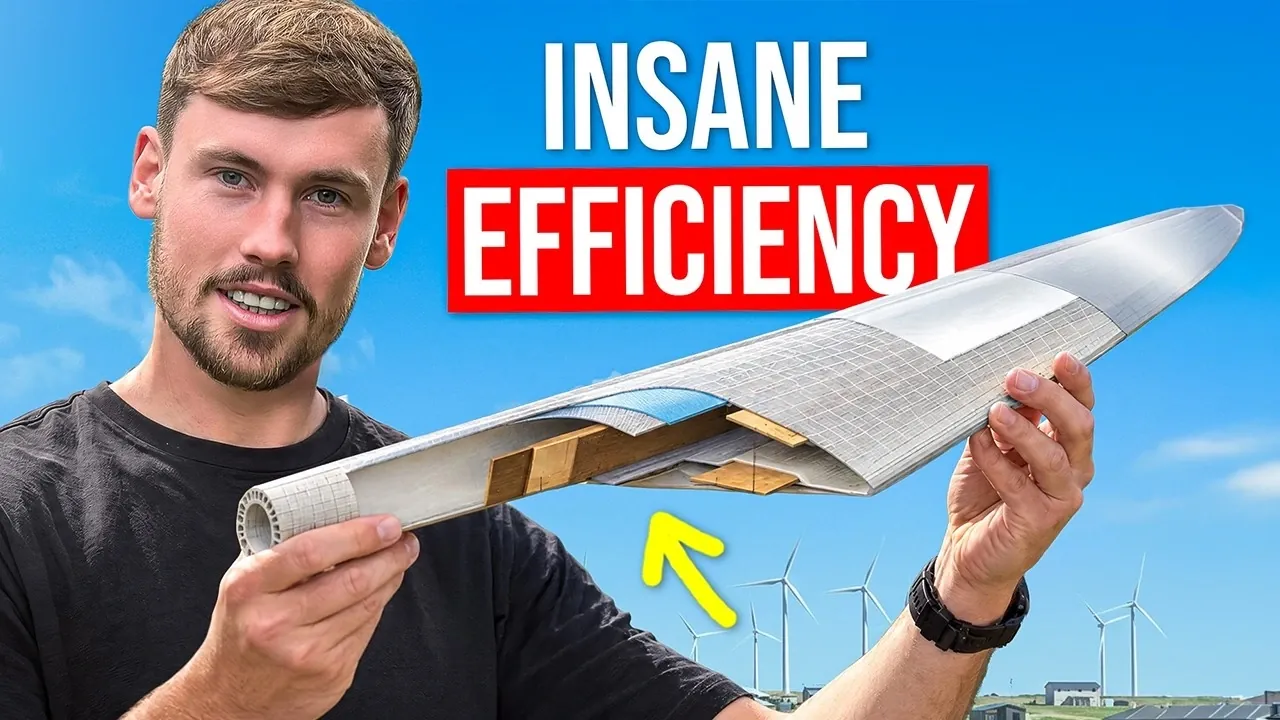
Fraunhofer’s latest small wind turbine achieves an impressive 83% increase in power output compared to conventional models, addressing key limitations in low-wind regions. As highlighted by Ziroth, this breakthrough is made possible through a combination of lightweight composite blades and advanced manufacturing techniques, including 3D-printed molds and automated fiber placement. The turbine operates at an efficiency of 53%, nearing the theoretical maximum for wind energy systems and features a low cut-in speed of just 2.7 meters per second, making it exceptionally effective in areas with inconsistent wind conditions.
Explore how these advancements tackle longstanding challenges in small wind turbine performance, from improving energy capture in low-wind environments to reducing production time and costs. Gain insight into the bend-twist coupling design that dynamically adjusts to changing wind conditions and the broader implications of these manufacturing innovations for scaling up renewable energy systems. This analysis unpacks the practical applications of Fraunhofer’s turbine and its potential to reshape both residential and commercial wind energy solutions.
Efficiency and Advanced Performance
TL;DR Key Takeaways :
- Fraunhofer’s small wind turbine achieves an 83% increase in power output compared to conventional models, making it highly effective in low wind speed regions.
- The turbine operates at an impressive 53% efficiency, close to the Betz limit, thanks to its lightweight composite blades optimized for low wind conditions.
- Innovative manufacturing techniques, including 3D-printed molds, Automated Fiber Placement (AFP), and bend-twist coupling, enhance performance, reduce costs and streamline production.
- The turbine’s cut-in speed of 2.7 meters per second allows it to generate power in areas with inconsistent or low wind speeds, addressing a key challenge for small wind turbines.
- Fraunhofer’s advancements in blade design and production methods have the potential to transform both small and large wind turbines, making wind energy more accessible and cost-effective globally.
This turbine operates at an efficiency of 53%, approaching the Betz limit of 59.3%, which represents the theoretical maximum efficiency for wind energy systems. Such a high level of performance is achieved through the use of lightweight composite blades optimized for low wind speeds. The turbine’s cut-in speed—the minimum wind speed required to generate power, is as low as 2.7 meters per second, making it highly effective in areas with inconsistent or low wind conditions. By refining the blade design and material properties, Fraunhofer has created a turbine that generates significantly more power than traditional small wind turbines. This makes it a practical and efficient solution for regions where conventional turbines often struggle to perform.
Overcoming Challenges in Small Wind Turbines
Small wind turbines have historically faced several challenges that limit their effectiveness. These include:
- Reduced blade size: Smaller blades result in a smaller swept area, which limits the amount of energy that can be captured from the wind.
- Urban installation issues: Turbines installed in built-up areas often encounter lower and more turbulent wind speeds, reducing their efficiency.
- Low wind performance: Conventional small turbines generate minimal electricity in areas with low wind conditions.
These challenges highlight the need for innovative solutions that maximize energy output while addressing the physical and environmental constraints of small wind turbines.

Here are additional guides from our expansive article library that you may find useful on energy technologies.
- Proxima Fusion Plans the Alpha Stellarator for the Early 2030S
- Google Partner Project Red Yields Only 40-60% of Target Power
- Google Project Suncatcher Uses Space Solar Panels for AI
- Why Traditional Home Batteries Are Losing Ground to Plug-in Alternatives
- MIT Says Energy-Storing Concrete Improves 10-fold by Switching to Organic Electrolyte
- Bloom Energy Server – Bloom Box Fuel Cell Gets Official
- 2025’s Best Keyboards : Gamers & Creatives Say Goodbye to Boring Keyboards
- Sun-Ways Installs 18 kW Removable Solar Panels on Train Tracks
- CATL Targets Lithium-Air Batteries for 1,000-Mile EV Range
- Apple Silicon AI Performance: Local Al on Apple Silicon Uses 7X Less RAM
Breakthrough Manufacturing Techniques
Fraunhofer’s turbine stands out due to its innovative manufacturing processes, which enhance both performance and cost-effectiveness. Key advancements include:
- 3D-Printed Molds: By eliminating the need for traditional physical blade models, 3D printing significantly reduces production time and costs.
- Automated Fiber Placement (AFP): This precise layering of composite fibers results in lightweight yet durable blades, minimizing material waste and labor requirements.
- Bend-Twist Coupling: This advanced blade design allows the blades to dynamically adapt to changing wind conditions, improving both efficiency and durability.
These techniques not only streamline production but also enable the creation of innovative blade designs that enhance the turbine’s overall performance.
Expanding the Potential of Wind Energy
The advancements in manufacturing demonstrated by Fraunhofer’s turbine have implications that extend far beyond small-scale systems. By reducing blade production time from 24 hours to under 4 hours, these methods could significantly lower production costs for both small and large wind turbines. Additionally, the adaptive blade designs enabled by AFP improve turbine efficiency and adaptability, making wind energy systems more effective across a wider range of environmental conditions. These innovations have the potential to make wind energy more accessible and cost-effective, broadening its application in both residential and commercial settings.
Shaping the Future of Renewable Energy
While small wind turbines are inherently constrained by physical limitations, the manufacturing innovations pioneered by Fraunhofer hold far-reaching potential for the wind energy industry. These techniques could be scaled up for use in large wind turbines, where efficiency and cost-effectiveness are critical to meeting global energy demands. By streamlining production processes and allowing high-performance designs, Fraunhofer’s advancements could drive significant improvements in renewable energy systems. This work underscores the role of advanced manufacturing in unlocking new possibilities for sustainable and efficient energy solutions, paving the way for a more resilient and environmentally friendly energy future.
Media Credit: Ziroth
Disclosure: Some of our articles include affiliate links. If you buy something through one of these links, Geeky Gadgets may earn an affiliate commission. Learn about our Disclosure Policy.
