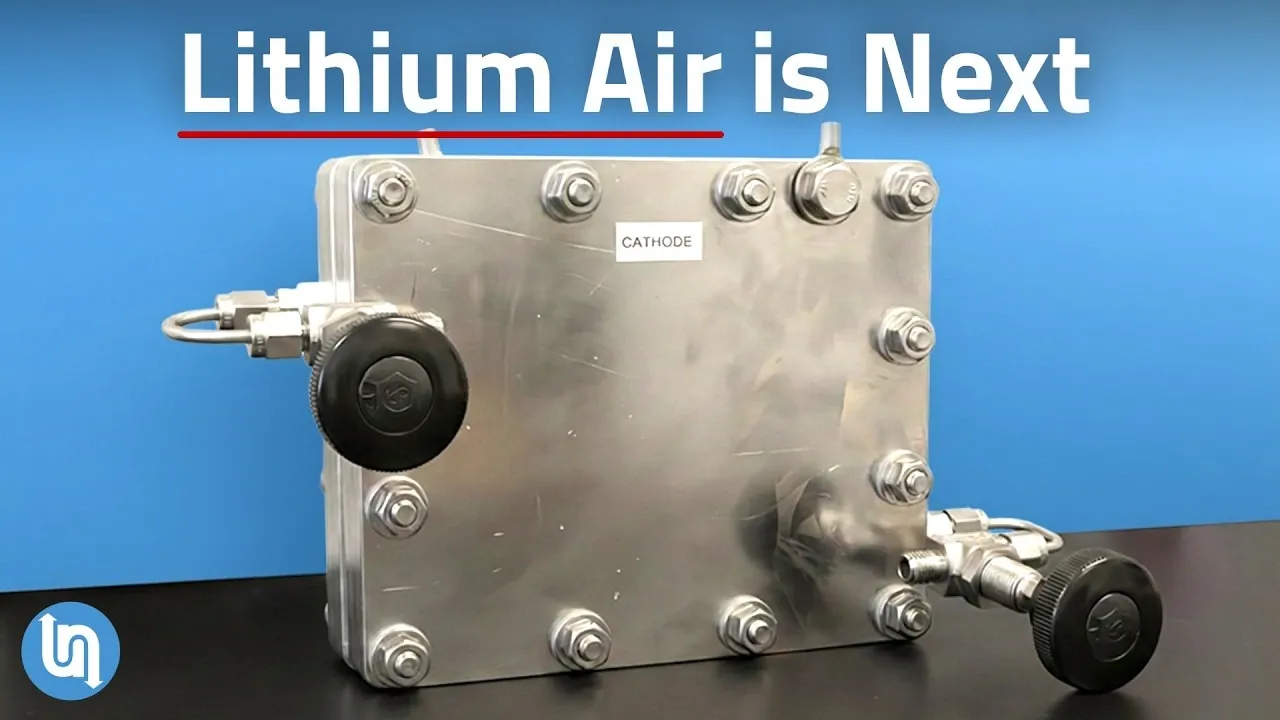
CATL, the world’s largest battery manufacturer, is shifting its focus beyond solid-state batteries to explore the possibilities of lithium-air technology. According to Undecided with Matt Ferrell, lithium-air batteries present a theoretical energy density of 5,200 Wh/kg, significantly higher than the 250 Wh/kg typical of lithium-ion batteries. This advancement could support electric vehicles with ranges approaching 1,000 miles per charge and create opportunities for sectors like aviation and long-haul trucking. However, key obstacles such as sensitivity to air impurities, manufacturing challenges and scalability must be addressed before these batteries can reach widespread adoption.
Gain insight into the technical hurdles facing lithium-air batteries and how researchers are working to overcome them. Discover specific breakthroughs, such as prototypes achieving energy densities of up to 1,000 Wh/kg and examine CATL’s approach to positioning lithium-air as a viable successor to solid-state technology. Additionally, explore the broader implications for industries requiring sustainable, high-capacity energy solutions.
What Are Lithium-Air Batteries?
TL;DR Key Takeaways :
- Lithium-air batteries offer a new energy density of up to 5,200 Wh/kg, far surpassing lithium-ion and solid-state batteries, making them ideal for applications like electric vehicles, drones and aviation.
- Recent advancements include prototypes achieving 1,000 Wh/kg at the cell level and improved durability with up to 1,000 charge cycles, bringing the technology closer to practical use.
- Key challenges include sensitivity to air impurities, scalability issues and the need for cost-effective manufacturing processes, which require further research and innovation.
- Major players like CATL and startups are heavily investing in lithium-air technology, with commercialization efforts expected to gain traction after 2030.
- While lithium-air batteries hold immense potential, practical performance currently lags behind theoretical capabilities, highlighting the need for continued development to bridge this gap.
Lithium-air batteries represent a significant leap forward from traditional lithium-ion and solid-state batteries. Unlike conventional designs that rely on heavy metals such as nickel or cobalt, lithium-air batteries use oxygen from the air as a cathode material. This unique approach not only reduces the overall weight of the battery but also dramatically enhances its energy storage capacity.
Key Features of Lithium-Air Batteries:
- Energy Density: With a theoretical energy density of 5,200 Wh/kg, lithium-air batteries far exceed the 250 Wh/kg typically achieved by lithium-ion batteries. This makes them a highly attractive option for applications requiring extended energy storage.
- Potential Applications: The increased capacity could enable electric vehicles (EVs) to travel up to 1,000 miles on a single charge, power long-range drones and even electrify regional aircraft and long-haul trucks.
This combination of lightweight design and high energy density positions lithium-air batteries as a promising candidate for next-generation energy solutions.
Recent Technological Breakthroughs
In recent years, significant progress has been made in the development of lithium-air batteries, bringing them closer to practical use. These advancements address some of the critical limitations that have historically hindered their viability.
Notable Developments Include:
- Prototypes: Researchers have developed prototypes achieving energy densities of up to 1,000 Wh/kg at the cell level and 700 Wh/kg at the pack level, demonstrating the potential for real-world applications.
- Improved Durability: Advances in design have enabled certain lithium-air batteries to endure up to 1,000 charge cycles while maintaining efficiency, a critical factor for commercial adoption.
- 2023 Milestone: A collaboration between Argonne National Laboratory and the Illinois Institute of Technology resulted in a solid-state lithium-air battery that addressed key issues such as stability and energy efficiency, marking a pivotal step toward commercialization.
These breakthroughs underscore the growing feasibility of lithium-air batteries as a viable alternative to existing energy storage technologies.

Expand your understanding of batteries with additional resources from our extensive library of articles.
- Biggest Battery Company Replaces Lithium with Sodium for Grid Storage
- Why the Leaked iPhone 18 Pro Price Changes Everything
- First Mass-Produced Solid-State Battery Performance Fully Tested
- Why the iPhone 18 Pro Battery Leak is Bad News for Upgraders
- Revolutionary iPhone 18 Pro Camera Tech Will Blow Your Mind
- iPhone 18 Pro Max: Why Variable Aperture is the Upgrade We’ve Waited For
- The iPhone 18 Pro Max Just Solved the Biggest Problem with Smartphone Camera
- Quantum Batteries Use Superabsorption for Faster Scaling Charge
- The iPhone 18 Pro is Growing: Apple’s Secret Plan for a “Pro” Camera Revolution
- Apple September Event: 5 Brand New Devices Confirmed
Applications and Industry Impact
The high energy density and lightweight design of lithium-air batteries could have a profound impact on several industries, allowing advancements that were previously unattainable with current battery technologies.
Potential Applications:
- Electric Vehicles (EVs): Lithium-air batteries could extend the driving range of EVs to unprecedented levels, reducing the need for frequent charging and making long-distance travel more practical.
- Aviation: Regional aircraft could transition to electric propulsion, significantly reducing carbon emissions and operational costs.
- Drones and Trucks: Long-range drones and electrified long-haul trucks could benefit from the lightweight and high-capacity design, allowing more efficient and sustainable operations.
By addressing the energy demands of these sectors, lithium-air technology has the potential to drive significant progress in electrification and carbon reduction efforts.
Challenges Hindering Progress
Despite their promise, lithium-air batteries face several technical and practical challenges that must be overcome before they can achieve widespread adoption.
Key Challenges Include:
- Air Impurities: Exposure to water vapor and carbon dioxide in the air can degrade battery performance, necessitating advanced filtration systems or alternative designs to ensure reliability.
- Scalability: While thin lab prototypes have demonstrated impressive results, scaling up to thicker, commercial-grade cathodes remains a complex engineering challenge that requires innovative solutions.
- Manufacturing: Current production processes are still in their infancy, requiring significant investment and technological advancements to achieve cost-effective mass production.
These obstacles highlight the need for continued research and development to unlock the full potential of lithium-air batteries and bring them closer to market readiness.
Future Development and Commercialization
Efforts to commercialize lithium-air batteries are gaining momentum, with both private companies and government agencies investing heavily in research and development.
Key Initiatives Driving Progress:
- Startups and Funding: U.S.-based startup Air Energy is aiming to bring lithium-air batteries to market by 2027, while the U.S. Department of Energy is funding projects to achieve energy densities of 1,000 Wh/kg at the pack level.
- CATL’s Role: As a global leader in battery manufacturing, CATL is heavily investing in lithium-air technology. While solid-state batteries are expected to dominate in the near term, CATL views lithium-air as a long-term solution, with significant advancements anticipated after 2030.
These initiatives reflect a growing commitment to overcoming the technical and economic barriers to commercialization, paving the way for lithium-air batteries to become a cornerstone of future energy systems.
Efficiency and Comparisons
Lithium-air batteries hold the potential to surpass traditional energy sources, including gasoline, in terms of energy efficiency when paired with the high energy conversion rates of electric vehicles. However, it is essential to distinguish between theoretical and practical performance metrics.
Key Comparisons:
- Theoretical vs. Practical: While lithium-air batteries boast a theoretical energy density of 5,200 Wh/kg, real-world implementations currently achieve much lower figures, reflecting the gap between laboratory results and commercial viability.
- Gasoline Comparisons: Although some claims suggest that lithium-air batteries could rival gasoline’s energy density of 12,000 Wh/kg, these comparisons are based on idealized scenarios and do not account for the practical limitations of current technology.
Understanding these nuances is critical for setting realistic expectations and appreciating the incremental progress being made in lithium-air battery development.
The Road Ahead
Lithium-air battery technology represents a bold and promising step forward in the evolution of energy storage. With unprecedented energy density and efficiency, these batteries have the potential to transform industries such as transportation, aviation and logistics, allowing electric vehicles, drones and aircraft to achieve new levels of performance and range.
However, significant challenges remain, from addressing sensitivity to air impurities to scaling up manufacturing processes. For CATL and the broader energy sector, lithium-air batteries are not just a technological ambition but a critical pathway toward a more sustainable and electrified future. As research and development efforts continue to advance, the promise of lithium-air technology may soon become a reality, reshaping the landscape of energy storage and its applications.
Media Credit: Undecided with Matt Ferrell
Disclosure: Some of our articles include affiliate links. If you buy something through one of these links, Geeky Gadgets may earn an affiliate commission. Learn about our Disclosure Policy.
