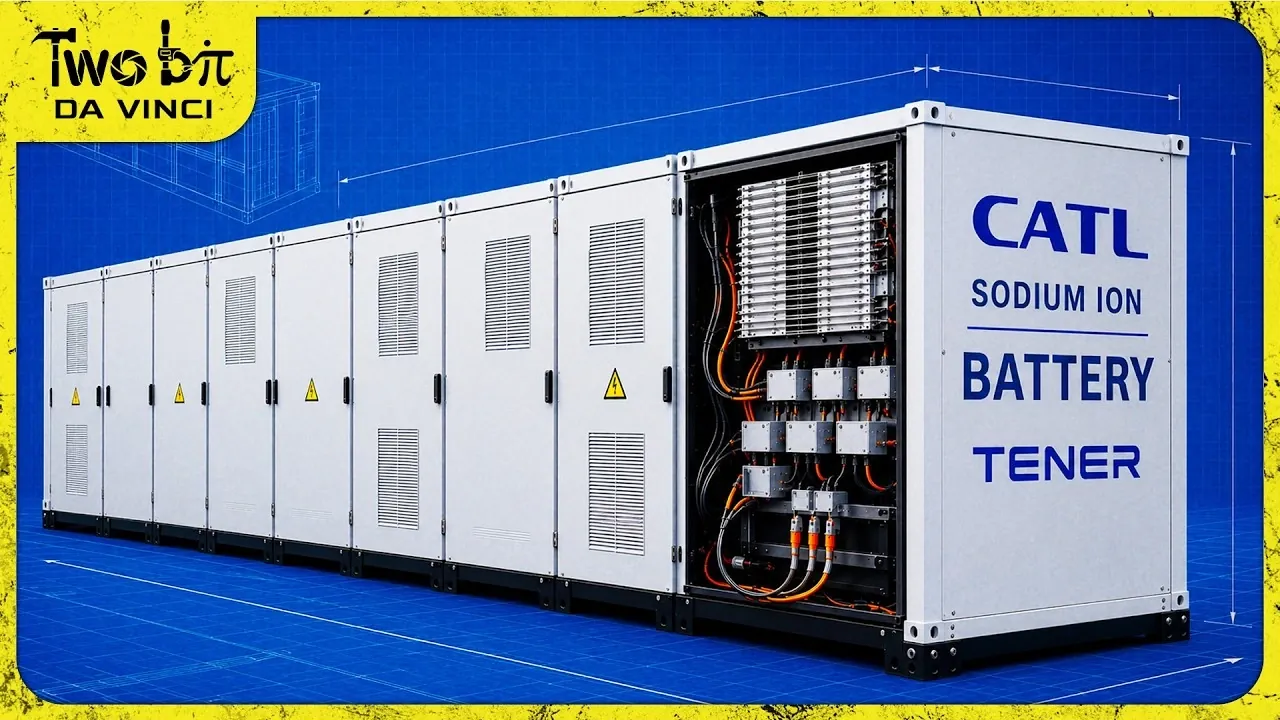
The world’s largest battery manufacturer, Contemporary Amperex Technology Co. Limited (CATL), is making a significant shift in energy storage by introducing a sodium-ion battery-based grid storage system called “Tenor Sodium.” This move marks a departure from the dominance of lithium-ion technology, driven by challenges like supply chain bottlenecks, price volatility and safety concerns. Sodium, derived from abundant materials like salt, offers a more stable and cost-effective alternative, making it particularly suitable for large-scale applications. Two Bit da Vinci explores how CATL’s focus on sodium-ion batteries addresses critical issues in energy storage while paving the way for more sustainable solutions.
Gain insight into the key advantages of sodium-ion technology, from its exceptional durability and safety profile to its ability to operate efficiently in extreme temperatures. Understand how these batteries excel in grid storage applications, offering affordable and scalable solutions that integrate seamlessly with renewable energy systems. Explore the broader implications of this shift, including the potential economic and environmental benefits, as sodium-ion batteries emerge as a practical complement to lithium-ion technology in the evolving energy landscape.
What is Sodium-Ion Technology?
TL;DR Key Takeaways :
- CATL has introduced the “Tenor Sodium” grid storage system, powered entirely by sodium-ion batteries, marking a shift from lithium-ion technology to a more sustainable and cost-effective alternative.
- Sodium-ion batteries offer key advantages, including abundant raw materials, exceptional durability with over 10,000 charge cycles and enhanced safety compared to lithium-ion batteries.
- These batteries are particularly suited for stationary energy storage applications, such as grid systems and residential energy solutions, where cost and scalability are prioritized over energy density.
- Sodium-ion technology addresses critical challenges of lithium-ion batteries, such as supply chain constraints, price volatility, safety risks and performance issues in extreme temperatures.
- CATL’s advancements in sodium-ion technology position it as a vital component in the transition to a sustainable energy future, complementing lithium-ion batteries and supporting renewable energy adoption.
CATL’s innovative “Tenor Sodium” grid storage system is powered entirely by sodium-ion batteries, signaling a fantastic approach to energy storage. Unlike lithium-ion batteries, which prioritize high energy density, sodium-ion batteries focus on three critical factors: cost-effectiveness, scalability and sustainability. These attributes make them particularly suitable for stationary energy storage applications, such as grid systems, where affordability and reliability outweigh the need for compact size or lightweight design. By using sodium-ion technology, CATL is addressing the growing demand for energy storage solutions that are both practical and environmentally responsible.
Key Advantages of Sodium-Ion Batteries
Sodium-ion batteries offer a range of benefits that distinguish them from their lithium-based counterparts. These advantages make them an attractive option for addressing the limitations of existing energy storage technologies:
- Abundance: Sodium is one of the most readily available elements on Earth, derived from common materials like salt and soda ash. This ensures a stable and predictable supply chain, free from the geopolitical and ethical challenges associated with materials like cobalt and nickel.
- Durability: These batteries exhibit exceptional longevity, with the ability to endure over 10,000 charge-discharge cycles. They also maintain reliable performance in extreme temperatures, operating efficiently even at -40°C.
- Safety: Sodium-ion batteries are inherently safer than lithium-ion batteries, as they are less prone to overheating and flammability. This makes them a more secure option for large-scale energy storage systems.
These features position sodium-ion batteries as a practical and sustainable alternative for applications where cost and reliability are paramount.

Advance your skills in batteries by reading more of our detailed content.
- Why the Leaked iPhone 18 Pro Price Changes Everything
- First Mass-Produced Solid-State Battery Performance Fully Tested
- Why the iPhone 18 Pro Battery Leak is Bad News for Upgraders
- The Engineering Behind CATL’s 30-Second EV Charging Battery Breakthrough
- What is a Silicon-Carbon Battery? The Samsung Galaxy S27 Ultra’s Secret Weapon Explained
- Revolutionary iPhone 18 Pro Camera Tech Will Blow Your Mind
- Did Apple Just Make a Huge Mistake with the iPhone 18 Pro Max Colors?
- iPhone 18 Pro Max: Why Variable Aperture is the Upgrade We’ve Waited For
- Powerful HyperJuice USB-C portable battery pack and GaN charger
- iOS 27 Leaks Reveal the End of an Era: Apple’s New Priorities Confirmed
The Challenges of Lithium-Ion Batteries
While lithium-ion batteries have dominated the energy storage market for decades, they are not without significant drawbacks. These limitations underscore the need for alternative technologies like sodium-ion batteries:
- Supply Chain Constraints: The extraction and processing of lithium, cobalt and nickel are concentrated in a few regions, leading to supply shortages and price instability. This dependence on limited resources creates vulnerabilities in the energy storage supply chain.
- Safety Concerns: Lithium-ion batteries are prone to overheating and, in some cases, flammability. These risks pose challenges for their use in certain applications, particularly in large-scale storage systems.
- Performance Limitations: Lithium-ion batteries degrade more rapidly in cold climates, reducing their efficiency and reliability in extreme environmental conditions.
These issues highlight the importance of diversifying energy storage technologies to create a more resilient and sustainable energy infrastructure.
The Evolution of Sodium-Ion Batteries
Sodium-ion battery technology has a long history, dating back to the 1960s. However, early research faced significant obstacles, including low energy density and limited cycle life, which hindered its practical application. Recent advancements, particularly in the development of hard carbon anode materials, have addressed many of these challenges. These breakthroughs have transformed sodium-ion batteries into a viable and competitive option for specific applications, particularly in stationary energy storage. As a result, sodium-ion technology is now poised to play a critical role in the energy storage landscape.
Applications Where Sodium-Ion Batteries Excel
Sodium-ion batteries are particularly well-suited for applications where cost and scalability take precedence over weight and energy density. Key areas where these batteries excel include:
- Grid Storage Systems: Sodium-ion batteries provide an affordable and reliable solution for large-scale energy storage, allowing the integration of renewable energy sources and enhancing grid stability.
- Residential Energy Solutions: These batteries offer a cost-effective and sustainable option for home energy storage systems, making renewable energy more accessible to households.
While lithium-ion batteries remain the preferred choice for high-energy-density applications such as electric vehicles and portable electronics, sodium-ion batteries fill a critical gap by offering a practical solution for stationary energy storage needs.
Economic and Environmental Impacts
The adoption of sodium-ion batteries carries significant economic and environmental benefits, reinforcing their potential as a cornerstone of the sustainable energy transition:
- Cost Stability: The widespread availability of sodium ensures a more predictable and stable cost structure, reducing reliance on scarce and expensive materials like lithium, cobalt and nickel.
- Sustainability: Sodium-ion batteries have a lower environmental impact compared to lithium-ion batteries, as they minimize the ecological footprint associated with resource extraction and processing. This aligns with global efforts to transition to renewable energy systems.
By offering scalable and affordable energy storage solutions, sodium-ion technology supports the broader adoption of renewable energy, contributing to a cleaner and more sustainable future.
The Future of Sodium-Ion Technology
CATL’s sodium-ion battery technology is positioned for rapid expansion in the coming years. By using existing lithium-ion manufacturing infrastructure, CATL can scale production efficiently, reducing costs and accelerating time-to-market. As global demand for renewable energy and energy storage solutions continues to grow, sodium-ion batteries are well-equipped to meet this need. Their unique combination of affordability, scalability and sustainability makes them a vital component in the transition to a cleaner, more resilient energy future.
Looking ahead, sodium-ion batteries are expected to complement lithium-ion technology, creating a diversified energy storage ecosystem capable of addressing a wide range of applications. This diversification not only enhances energy security but also reduces dependence on finite resources, paving the way for a more sustainable and equitable energy landscape. As the world moves toward a renewable energy future, sodium-ion technology will play an increasingly important role in shaping a more sustainable and resilient global energy system.
Media Credit: Two Bit da Vinci
Disclosure: Some of our articles include affiliate links. If you buy something through one of these links, Geeky Gadgets may earn an affiliate commission. Learn about our Disclosure Policy.
