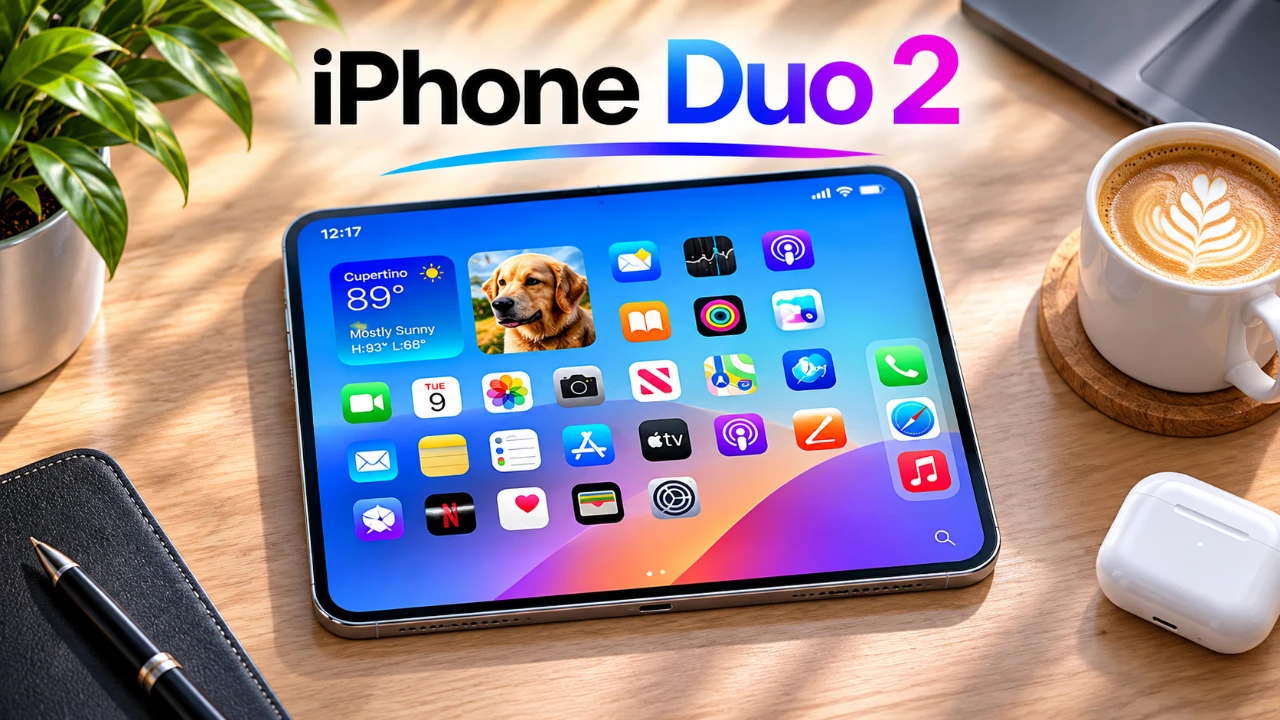
The iPhone Duo 2 is generating significant attention as speculation grows about its potential upgrades in biometric security, design, and its position within the competitive foldable phone market. While the current model has made notable strides, it has also faced criticism in key areas. Apple’s next iteration may address these shortcomings, but how substantial will the improvements be? The video below from GregglesTV gives us a look at the rumored features and enhancements expected in the iPhone Duo 2.
TL;DR Key Takeaways :
- Thinner & Lighter Chassis: Apple is actively working to shed weight from the 254-gram original model, targeting a noticeably slimmer and more pocket-friendly profile.
- Face ID Engineering Hurdle: Integrating 3D Face ID into the ~5mm-thin frame remains a top engineering priority—though hardware stacking challenges mean Touch ID could stay.
- Same Screen Dimensions: Expected to retain the familiar 7.6-inch inner folding OLED and 5.4-inch outer cover display while focusing on crease durability and brightness.
- Action Button & A21 Pro: Rumored to adopt a programmable Action button alongside next-generation 2nm A21 Pro silicon ahead of a fall 2027 debut.
Biometric Features: Aiming for Enhanced Security
Biometric security remains a critical focus for the iPhone Duo 2. The current model lacks Apple’s hallmark Face ID, relying instead on a basic software-based Face Unlock feature alongside its physical Touch ID power button. This limited optical functionality restricts facial authentication to unlocking the cover screen, excluding more secure applications like Apple Pay or banking logins. This gap in usability and security has been a notable drawback.
Rumors suggest that the side-mounted fingerprint sensor will continue to be part of the device, especially since an outer-screen sensor wouldn’t face the user when unfolded. However, integrating full 3D Face ID hardware into a ~5mm-thin foldable chassis presents significant component-stacking challenges. If Apple’s engineers overcome these space constraints before final hardware sign-off, the iPhone Duo 2 could align much closer with the seamless security standards of its slab-style counterparts.
Design and Build: Addressing Weight and Thickness
The original iPhone Duo—weighing in at 254 grams—has faced criticism for being bulkier and heavier than competing foldable devices from brands like Samsung and Motorola. In a market where portability and comfort are paramount, these physical shortcomings have been a disadvantage. Apple is reportedly prioritizing making the iPhone Duo 2 thinner and lighter, addressing these ergonomic concerns directly.
A more streamlined design would improve both daily handling and pocketability, making the device far more comfortable for extended one-handed use. By achieving a sleeker profile, Apple could better compete with rivals that have already mastered featherweight book-style foldables. This shift could also attract users who value portability without compromising on hybrid screen functionality.
Screen Technology: Improving Durability and Quality
The iPhone Duo 2 is expected to retain the same screen dimensions as its predecessor: a 7.6-inch inner display and a 5.4-inch outer display (with larger screen sizes reportedly held back for a third-generation model). While these dimensions remain competitive, they suggest a focus on refinement rather than a radical form-factor overhaul. Instead, Apple is likely to focus on elevating the durability, brightness, and visual quality of its OLED panels.

Foldable screens often face challenges related to longevity and crease visibility over time. By building upon its nano-texture anti-glare finish and reinforcing the underlying hinge architecture, Apple could further boost user confidence in the device’s long-term reliability. These refinements, while subtle on a spec sheet, make a meaningful difference in everyday outdoor readability and wear resistance.
Processor and Performance: Incremental Upgrades
Performance improvements are anticipated, with Apple likely to introduce the next-generation A21 Pro chip (built on a second-generation 2nm process) for the iPhone Duo 2. Because the current A20 Pro model already delivers flagship-tier speed, these generational gains are expected to focus heavily on thermal efficiency and on-device Siri AI processing rather than dramatic architectural shifts.
Meanwhile, major hardware leaps in camera technology remain uncertain. While reports indicate Apple has explored adding a dedicated telephoto lens to justify its $1,999+ tier, fitting extra optical zoom hardware into an even thinner chassis remains difficult—meaning Apple may stick primarily to refined dual 48MP Fusion sensors.
New Features: The Action Button
One of the most anticipated usability additions to the iPhone Duo 2 is the programmable Action button, a staple already found across standard and Pro iPhones. This customizable button could provide instant access to frequently used functions such as the camera, flashlight, voice memos, or personalized Shortcuts—potentially even doubling or pairing neatly with camera controls to save chassis space.
While the Action button adds welcome day-to-day convenience, it represents a quality-of-life catch-up rather than a brand-new innovation. Beyond this physical control and chassis slimming, the iPhone Duo 2 is expected to focus on polishing the foldable iOS experience rather than reinventing the wheel.
Competitive Positioning: Standing Out in a Crowded Market
Apple faces intense competition in the foldable phone market, particularly from brands like Samsung and Motorola, which have spent multiple generations refining ultra-thin, lightweight designs and versatile multi-lens camera arrays. To remain competitive heading into late 2027, the iPhone Duo 2 must address its first-generation weight and biometric compromises while capitalizing on deep ecosystem integration.
Without meaningful hardware refinements, Apple risks losing momentum to rival foldables as well as its own rumored 20th-anniversary iPhone 20 Pro lineup. By focusing on a lighter build, potential Face ID integration, and improved panel durability, Apple has a clear roadmap to strengthen its second-generation entry.
What to Expect from the iPhone Duo 2
Targeted for a fall 2027 release window alongside the iPhone 20 series, the iPhone Duo 2 appears poised to deliver targeted, practical refinements rather than a sweeping redesign. Key updates—including a thinner and lighter frame, the addition of the Action button, A21 Pro efficiency, and a potential breakthrough on Face ID—aim to resolve early adopter pain points.
As Apple continues to navigate the engineering trade-offs of ultra-thin foldables, its ability to balance weight reduction with flagship expectations will determine how strongly the iPhone Duo 2 resonates with buyers.
Here are more articles that you may find helpful on iPhone Duo.
- Early iPhone Duo 2 Leaks Reveal Major Hardware Upgrades
- iPhone Duo: Key Details Apple Barely Mentioned on Stage
- Apple’s iPhone Duo 2 Just Leaked: Everything Changing With the Next Foldable
- iPhone Duo Buyer’s Guide: How to Choose Without Regrets
- iPhone Duo vs. Galaxy Z Fold 8: Did Apple Just Catch Samsung?
- iPhone Duo: 5 Features That Make It Worth the Price
Source: GregglesTV
Disclosure: Some of our articles include affiliate links. If you buy something through one of these links, Geeky Gadgets may earn an affiliate commission. Learn about our Disclosure Policy.
