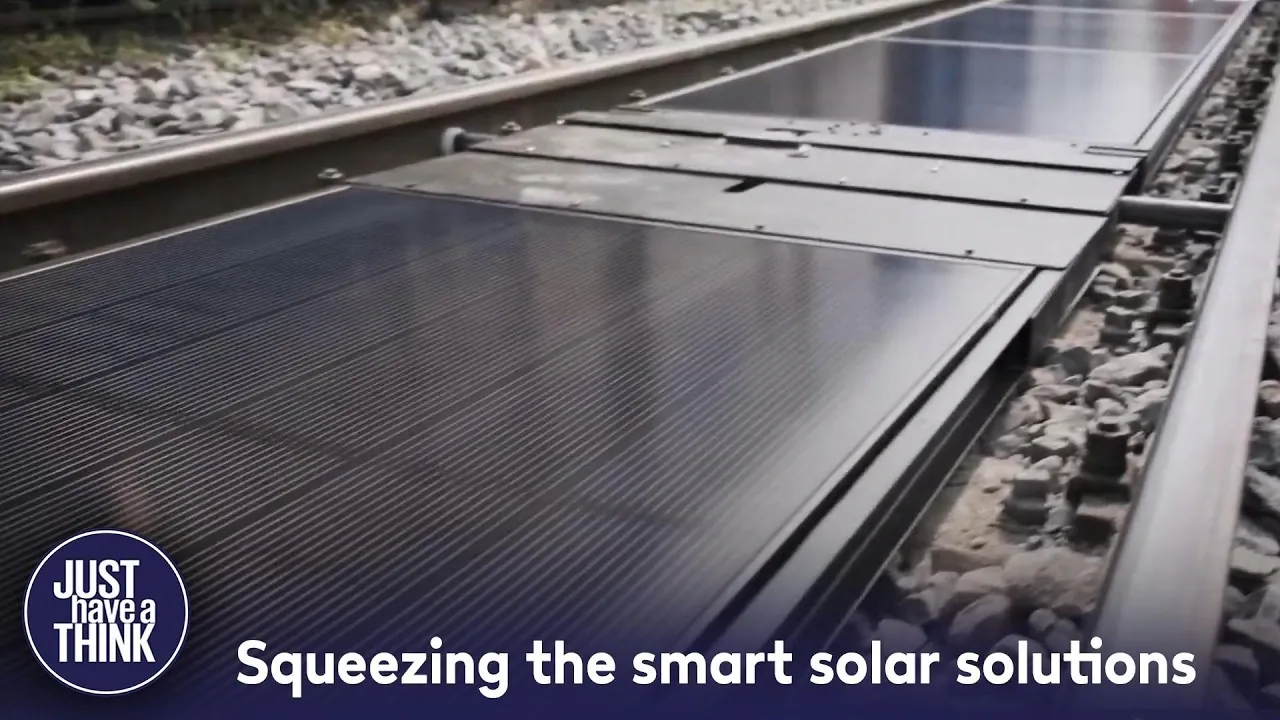
Harnessing the potential of existing infrastructure, Sun-Ways has introduced a solar railway system that installs removable photovoltaic panels between active train tracks. This approach aims to generate renewable energy without competing for scarce land resources, addressing a key obstacle in the expansion of solar power. Just Have a Think explores how this system, which currently features a prototype producing 18 kW of energy across 100 meters of track, could serve as a model for integrating sustainability into transportation networks. By using underused spaces, the solar railway offers a practical solution to balancing energy production with land conservation.
Explore the broader implications of this concept, from its scalability across extensive rail networks to the challenges posed by flat panel installation and environmental exposure. Gain insight into how the system’s modular design supports adaptability, making sure minimal disruption during maintenance or upgrades. Finally, understand the economic and environmental trade-offs that will shape its future, including the potential for widespread adoption in countries like Switzerland, France and South Korea. This overview provides a grounded look at how solar railways could contribute to renewable energy goals while addressing pressing sustainability concerns.
How It Works
TL;DR Key Takeaways :
- Sun-Ways has developed a new solar railway system that installs removable photovoltaic panels between active railway tracks, addressing land-use conflicts in renewable energy production.
- The prototype system spans 100 meters of track with 48 panels, generating 18 kW of energy and is designed for easy removal to ensure uninterrupted railway operations.
- Challenges include reduced efficiency due to flat panel installation, exposure to environmental factors and higher costs compared to traditional solar farms, requiring further technological and economic optimization.
- Scaling the system across Switzerland’s 5,000 kilometers of rail tracks could generate 1 TWh of electricity annually, significantly boosting the country’s renewable energy capacity and inspiring global interest.
- By using existing infrastructure, the system minimizes land-use conflicts, aligns with sustainability goals and demonstrates the potential of innovative solutions to expand renewable energy production worldwide.
Sun-Ways’ solar railway system is the first of its kind, featuring removable solar panels installed directly on operational railway tracks. The prototype consists of 48 photovoltaic panels spanning 100 meters of track, collectively producing 18 kW of energy. These panels are designed for easy removal using specialized machinery, making sure that railway operations remain uninterrupted. By using existing rail infrastructure, the system eliminates the need for additional land, providing a sustainable alternative to traditional solar farms.
The design prioritizes adaptability and efficiency. The removable nature of the panels ensures that maintenance and upgrades can be carried out with minimal disruption. This modular approach also allows for scalability, making it possible to expand the system across larger rail networks. By using underused spaces, the solar railway system represents a forward-thinking solution to renewable energy production.
Challenges in Implementation
While the solar railway system offers significant potential, it also faces several technical and economic challenges that must be addressed to ensure its success:
- Horizontal Installation: Unlike traditional solar panels that are angled to maximize sunlight capture, these panels are installed flat, which reduces their overall efficiency.
- Environmental Exposure: The panels are exposed to vibrations, dirt, snow and debris from passing trains, all of which could impact their durability and energy output over time.
- Cost Concerns: The installation and maintenance costs are higher than those of conventional solar farms, raising questions about the system’s economic scalability.
These challenges highlight the need for further technological advancements and cost optimization to ensure the system’s long-term viability. Addressing these issues will be critical to achieving widespread adoption and maximizing the system’s potential benefits.

Become an expert in energy with the help of our in-depth articles and helpful guides.
- Proxima Fusion Plans the Alpha Stellarator for the Early 2030S
- How the Super Soaker Inventor Built a Heat Engine Without Moving Parts
- SeaTwirl’s IKEA-Style Turbines Cut Deep-Water Energy Costs
- IKEA Smart Home 2026: Affordable Automation with Hidden Limits
- Apple Silicon AI Performance: Local Al on Apple Silicon Uses 7X Less RAM
- Apple Watch Ultra 4 Leak Reveals Redesign and Health Features
- Google DeepMind CEO Says AGI Could Arrive in 3 to 5 Years
- iPhone Ultra Fold Leaks Reveal Apple’s First Foldable Phone
- Recent iPhone 18 Leaks Detail the Release Date and $899 Price
- Ultimate Apple Watch Accessory: EnergyLink Charging Watch Band
Scaling the Impact
If implemented on a larger scale, the solar railway system could make a substantial contribution to renewable energy production. Switzerland, with its extensive 5,000 kilometers of rail tracks, has the capacity to host approximately 2.5 million solar panels. This could generate an estimated 1 TWh of electricity annually, equivalent to 20% of the country’s current solar photovoltaic output. Such a contribution would significantly bolster Switzerland’s renewable energy capacity and support its sustainability goals.
The concept has already attracted interest from other countries, including Italy, France, South Korea and the UK, indicating its potential for global adoption. By adapting the system to suit different climates and railway infrastructures, it could become a versatile solution for renewable energy generation worldwide. The scalability of this innovation underscores its potential to transform how solar energy is integrated into urban and rural environments.
Addressing Land Use Conflicts
One of the most compelling advantages of the solar railway system is its ability to reduce competition for land. Traditional solar farms often require large areas of land, which can conflict with agricultural activities, natural habitats, or urban development. By using existing infrastructure such as railways, rooftops, car parks, canals and noise barriers, this approach minimizes the need for new land development.
This integration of solar technology into the built environment represents a practical and efficient way to expand renewable energy production without compromising valuable resources. It also aligns with broader sustainability goals by promoting the dual use of infrastructure, reducing environmental impact and supporting the transition to cleaner energy sources.
Economic and Environmental Trade-Offs
While the solar railway system offers clear environmental benefits, its economic feasibility remains a significant consideration.
- Cost Efficiency: The higher costs associated with installation and maintenance may pose a barrier to widespread adoption, especially when compared to the lower costs of traditional solar farms.
- Environmental Gains: By repurposing existing infrastructure and reducing land-use conflicts, the system aligns with sustainability objectives and contributes to the expansion of renewable energy capacity.
Balancing these trade-offs will be essential to determining the system’s role in the broader renewable energy landscape. Policymakers, investors and engineers will need to collaborate to refine the technology, reduce costs and ensure that the system delivers both economic and environmental value.
Looking Ahead
The solar railway system developed by Sun-Ways exemplifies the importance of exploring diverse applications for solar technology. As the world works to meet ambitious decarbonization targets, integrating renewable energy into existing infrastructure will be a critical strategy. By addressing the technical and economic challenges associated with this system, it has the potential to play a pivotal role in creating a more sustainable and energy-efficient future.
This innovation not only highlights the potential of underutilized spaces but also serves as a reminder of the importance of creative solutions in tackling global energy challenges. As interest grows and further advancements are made, the solar railway system could become a cornerstone of renewable energy strategies worldwide, contributing to a cleaner and more sustainable planet.
Media Credit: Just Have a Think
Disclosure: Some of our articles include affiliate links. If you buy something through one of these links, Geeky Gadgets may earn an affiliate commission. Learn about our Disclosure Policy.
