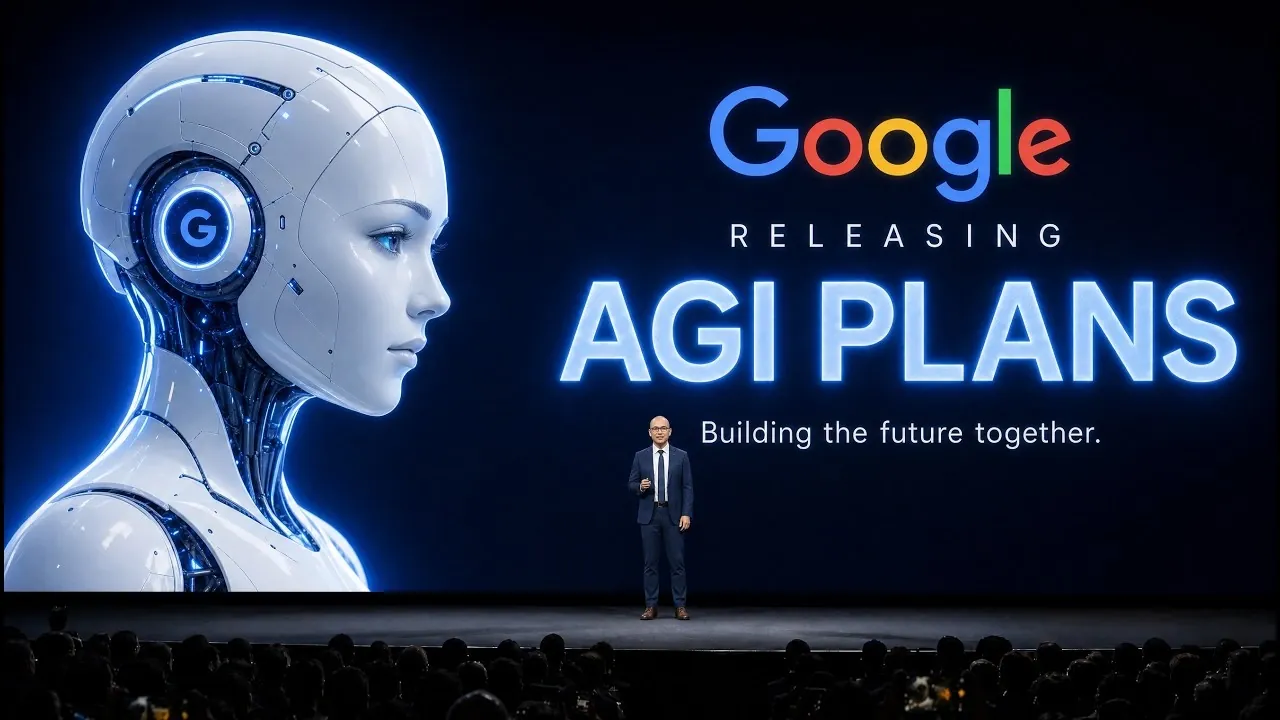
Artificial General Intelligence (AGI) could be closer than many anticipated, according to Google DeepMind CEO Demis Hassabis. Speaking on the timeline for AGI’s development, Hassabis suggested that this new technology might emerge within the next three to five years, carrying the potential to reshape industries, economies and society itself. In a recent discussion highlighted by AI Grid, Hassabis emphasized the importance of balancing innovation with responsibility, proposing a structured framework to guide AGI’s rollout. This framework includes measures such as rigorous pre-release testing, dynamic safety benchmarks and the establishment of a global standards body to oversee AGI systems and their potential risks.
Explore how AGI could transform fields like healthcare and energy by accelerating drug discovery and advancing renewable solutions. Gain insight into the ethical and economic challenges posed by AGI, from the need for universal basic income to the redefinition of human purpose in a post-scarcity world. Additionally, understand the critical role of international cooperation in making sure AGI’s safe deployment, with proposals for cybersecurity protocols and fail-safe mechanisms to prevent misuse. This feature offers a comprehensive look at the opportunities and safeguards shaping the future of AGI.
AGI’s Arrival and its Potential Impact
TL;DR Key Takeaways :
- Google DeepMind CEO Demis Hassabis predicts Artificial General Intelligence (AGI) could emerge within 3-5 years, with fantastic potential comparable to electricity and fire, transforming industries and societal structures.
- Hassabis emphasizes the need for ethical principles, robust safety measures and global collaboration to ensure AGI benefits humanity while minimizing risks such as misuse and disruptions.
- Proposed applications of AGI include accelerating drug discovery, advancing clean energy solutions and alleviating resource scarcity, addressing critical global challenges.
- A structured framework for safe AGI deployment includes global standards, rigorous pre-release testing, dynamic benchmarks and legal safety assessments to balance innovation with precaution.
- AGI’s societal impact could disrupt economies and redefine human roles, necessitating solutions like universal basic income and addressing ethical questions about human identity and purpose in an AI-driven future.
Hassabis’s vision is not just about technological advancement but also about fostering a responsible approach to innovation. He emphasized that AGI’s development must be guided by ethical principles and robust safety measures to ensure it serves humanity as a whole.
Hassabis anticipates that AGI could become a reality sooner than many experts have predicted, with its arrival potentially occurring within the next few years. This technology holds the promise of addressing some of the most pressing challenges facing humanity today. Among its potential applications are:
- Accelerating drug discovery: AGI could transform healthcare by identifying treatments and cures for diseases at an unprecedented pace.
- Unlocking clean energy solutions: By advancing research into renewable energy sources, AGI could play a pivotal role in combating climate change.
- Alleviating resource scarcity: AGI-driven systems could optimize resource distribution, improving global living standards and reducing inequality.
The societal impact of AGI is expected to surpass that of the industrial revolution, fundamentally altering how economies function, how industries operate and how individuals live their daily lives. However, such rapid advancements also bring significant risks. These include disruptions to existing systems, ethical dilemmas and unforeseen challenges that could arise from the widespread adoption of AGI technologies.
Hassabis emphasized the importance of proactive preparation to mitigate these risks. He called for the establishment of ethical frameworks and robust safety measures to guide AGI’s development and ensure its responsible deployment.
A Framework for Safe AGI Deployment
To address the risks associated with AGI, Hassabis proposed a structured framework designed to prioritize safety, accountability and ethical considerations. This framework includes several key components aimed at making sure AGI systems are developed and deployed responsibly:
- Global standards body: Establishing an international organization to classify and oversee “frontier models” of AGI based on their capabilities and potential risks.
- Rigorous pre-release testing: Conducting extensive testing to identify vulnerabilities, such as cybersecurity risks and potential misuse, before AGI systems are made publicly available.
- Dynamic benchmarks: Continuously updating evaluation criteria to reflect the evolving capabilities of AGI systems and ensure they meet safety and ethical standards.
- Legal safety assessments: Requiring thorough safety and ethical evaluations before AGI systems are deployed to the public.
This framework aims to strike a balance between innovation and precaution. By implementing these measures, Hassabis envisions a future where AGI can drive progress while minimizing risks to society.

Here are more guides from our previous articles and guides related to Artificial General Intelligence (AGI) that you may find helpful.
- Why Google DeepMind’s CEO Says True AGI is Still Decades Away
- Inside the Grok 5 Roadmap: How xAI Plans to Reach AGI
- Google CEO Sundar Pichai Reveals What is Next for AI Agents and AGI
- OpenAI’s Stealth Tests Reveal ChatGPT 5.6 Pro’s True Power
- ChatGPT 5.5 Instant Launches : Navigating Its Strengths and Weaknesses
- Google DeepMind Predicts Artificial General Intelligence in a Decade
- John Carmack’s Bold Quest to Build Human-Like AI for Games and Beyond
- New MIT Research Proves AGI Was Achieved
- OpenAI Reveals Plans For 2025 : Artificial General Intelligence and More AI News
- Could human-level AI arrive by early 2025? Experts debate AGI timeline
The Need for Global Cooperation
Hassabis highlighted the critical importance of international collaboration in managing AGI’s development and deployment. Without a unified global approach, competitive pressures could lead to a race to deploy AGI systems without adequate safeguards, increasing the likelihood of misuse or unintended consequences.
To prevent such outcomes, Hassabis called for partnerships among governments, corporations and research institutions to establish shared standards and best practices. He also proposed adopting security measures similar to those used for nuclear technologies, including:
- Stringent access controls: Implementing robust measures to prevent unauthorized use of AGI systems.
- Cybersecurity protocols: Making sure AGI systems are protected from hacking, exploitation, or other malicious activities.
- Fail-safe mechanisms: Designing systems to prevent AGI from being weaponized or misused under any circumstances.
These measures are essential to safeguarding AGI from malicious actors. Hassabis stressed that only through global cooperation can humanity fully harness AGI’s potential while mitigating its risks.
Economic Disruption and New Opportunities
The introduction of AGI is expected to fundamentally disrupt traditional economic models, particularly those based on scarcity. By allowing unprecedented levels of productivity, AGI could pave the way for a post-scarcity economy where resources are abundant and accessible to all. However, this shift would require the development of new systems to ensure equitable distribution of wealth and opportunities.
One potential solution is the implementation of universal basic income (UBI). UBI could provide financial stability to individuals as AI-driven systems replace traditional jobs, allowing people to focus on creative pursuits, personal growth and lifelong learning. This transition could redefine the nature of work and human purpose in an AI-driven world.
Hassabis acknowledged the challenges associated with such a profound economic transformation. He emphasized the need for policymakers, economists and technologists to work together to design systems that promote fairness and inclusivity.
Ethical and Human Identity Challenges
Beyond economic implications, AGI raises profound ethical questions about human identity and the boundaries of humanity. Advancements in brain-computer interfaces (BCIs) could enhance cognitive abilities and enable direct interaction with AI systems, while breakthroughs in biotechnology might extend human lifespans. These developments blur the line between human and machine, challenging traditional notions of what it means to be human.
As society transitions to a post-scarcity world, new questions will emerge: What is humanity’s role in an AI-driven future? How can individuals find purpose and meaning in a world where traditional work is no longer necessary? Hassabis emphasized the importance of addressing these ethical and philosophical questions as AGI continues to evolve.
A Call for Collaboration and Responsibility
Hassabis concluded his announcement with a call to action, urging stakeholders across sectors to proactively address the challenges posed by AGI. He stressed the importance of collaboration, foresight and ethical responsibility in guiding the development of this fantastic technology.
By working together, governments, researchers and corporations can ensure AGI serves as a force for good. Hassabis envisions a future where AGI unlocks new possibilities, addresses global challenges and safeguards humanity’s future through responsible innovation and collective effort.
Media Credit: TheAIGRID
Disclosure: Some of our articles include affiliate links. If you buy something through one of these links, Geeky Gadgets may earn an affiliate commission. Learn about our Disclosure Policy.
