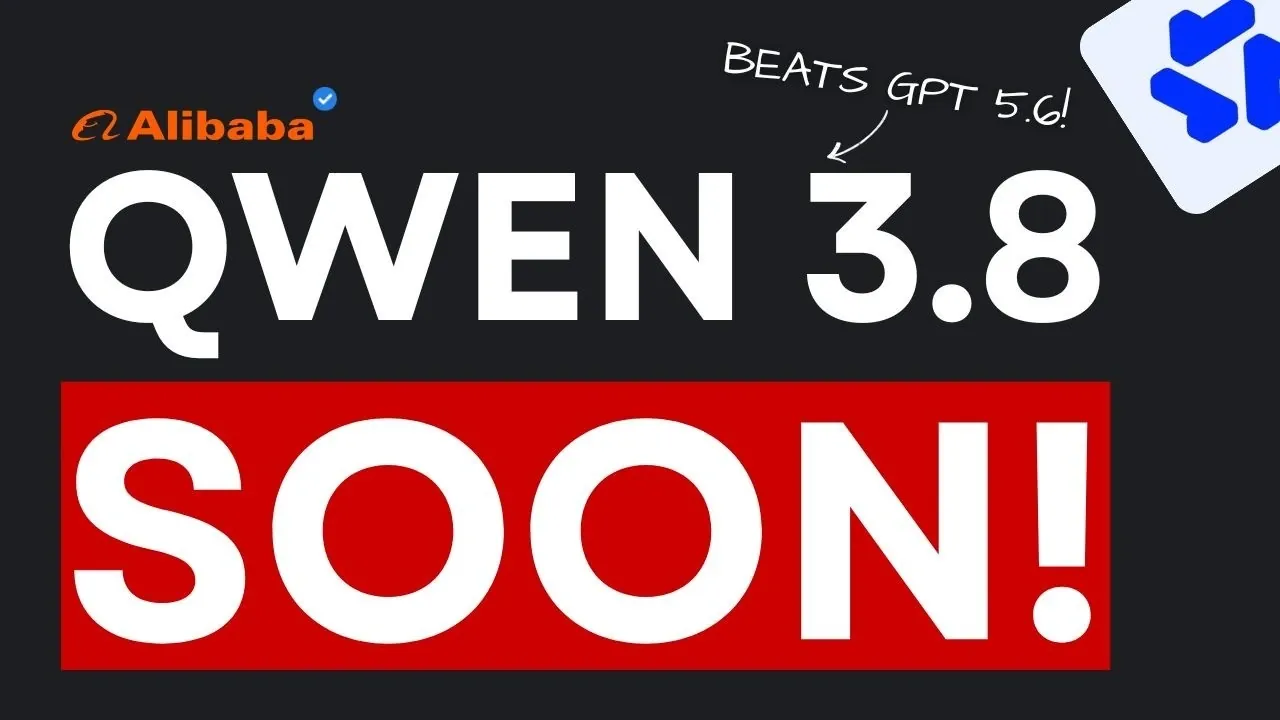
The release of Qwen 3.8 and DeepSeek 4GA marks a notable moment in the evolving AI landscape, as detailed by Universe of AI. Qwen 3.8, developed with 2.4 trillion parameters, introduces self-evolution capabilities that allow it to refine its performance over time. DeepSeek 4GA, on the other hand, emphasizes coding optimization and 3D generation, making it a versatile option for various applications. These developments arrive as Fable 5 faces scrutiny over performance declines, highlighting shifting dynamics in the competitive AI market.
Dive into the specifics of Qwen 3.8’s parameter design and how it supports adaptive learning. Understand DeepSeek 4GA’s approach to agentic behavior and its implications for industry use cases. Finally, examine the challenges confronting Fable 5 and what they reveal about the broader trends in AI development and adoption.
Qwen 3.8: A 2.4-Trillion-Parameter Powerhouse
TL;DR Key Takeaways :
- Qwen 3.8, developed by Chinese researchers, stands out with 2.4 trillion parameters, self-evolution capabilities and cost efficiency, making it a fantastic option for complex tasks and accessibility in AI.
- DeepSeek 4GA focuses on coding optimization, agentic behavior and 3D generation, offering high performance at a lower cost, disrupting the dominance of premium AI models.
- Chinese AI labs are reshaping the global AI market by introducing affordable, high-performance models, though scalability challenges remain a concern.
- Fable 5, once a benchmark in AI, is facing performance degradation and user dissatisfaction, prompting a shift toward newer, more innovative alternatives like Qwen 3.8 and DeepSeek 4GA.
- The AI industry is undergoing a competitive transformation, prioritizing innovation, affordability and accessibility, with emerging trends like self-evolution and advanced 3D generation driving new possibilities across sectors.
Qwen 3.8, developed by Chinese researchers, has captured global attention with its remarkable 2.4 trillion parameters, establishing itself as one of the most advanced AI models to date. While Fable 5 has long been regarded as a benchmark for peak performance, Qwen 3.8 introduces a distinct advantage: self-evolution capabilities. This feature enables the model to autonomously adapt and improve, making it particularly effective for complex tasks such as advanced coding, real-time decision-making and dynamic learning.
What sets Qwen 3.8 apart is its cost efficiency. Available for testing on platforms like Alibaba, it offers near-frontier performance at a fraction of the cost associated with premium models. This affordability makes it an appealing choice for businesses and developers seeking high computational power without incurring prohibitive expenses. By combining advanced capabilities with a cost-effective approach, Qwen 3.8 is redefining accessibility in AI.
DeepSeek 4GA: Balancing Innovation and Accessibility
DeepSeek 4GA is another rising contender in the AI landscape, currently in testing and generating significant interest for its versatile capabilities. It focuses on three core areas: coding optimization, agentic behavior, and 3D generation, making it a valuable tool across industries such as software development, virtual reality and beyond.
Speculation about DeepSeek 4GA’s pricing strategy suggests a deliberate effort to undercut premium models, offering high performance at a lower cost. This approach has the potential to disrupt the market by attracting a diverse range of users, from startups to established enterprises. By challenging the dominance of high-cost models from labs like OpenAI and Anthropic, DeepSeek 4GA is positioning itself as a competitive alternative for those seeking innovation without financial strain.

Here are more guides from our previous articles and guides related to Qwen AI models that you may find helpful.
- Alibaba’s New Qwen 3.6 Max AI is Quietly Outperforming Claude 4.5 Opus
- Why Alibaba’s New Qwen 3.7 Max Just Dethroned the Top AI Models
- Why Alibaba’s Qwen 3.7 Max is Quietly Outperforming Opus 4.7 in Coding
- The Qwen 3 Family : A Multilingual, Customizable Future for Artificial Intelligence
- Qwen 3 TTS AI Released : Clone Any Voice for Free and Craft Rich Speech
- Why 80% of U.S. Startups Are Quietly Switching to Chinese AI Models
- CodeQwen free open source AI coding assistant
- China May Lock Down Open-Source AI Models: Qwen, GLM 5.2 & DeepSeek?
Chinese AI Labs: Redefining Market Expectations
Chinese AI labs are emerging as pivotal players in the global AI market, using cost-efficient models like Qwen 3.8 and Kimmy K3 to meet the growing demand for affordable yet powerful solutions. These models are not only competitive in terms of performance but also challenge the traditional pricing structures upheld by established AI leaders.
However, this rapid rise is accompanied by challenges. The high demand for models like Kimmy K3 has exposed scalability issues in infrastructure, highlighting the need for robust systems to support widespread adoption. Despite these hurdles, Chinese labs are demonstrating that innovation and affordability can coexist, compelling traditional players to reevaluate their strategies. This shift underscores the growing influence of Chinese AI labs in shaping global market dynamics.
Fable 5: A Decline in Performance?
Once regarded as the gold standard in AI, Fable 5 is now facing scrutiny for performance degradation. Users have reported a noticeable decline in output quality, raising concerns about the model’s long-term reliability. Additionally, subscription limitations imposed by Enthropic, the lab behind Fable 5, have frustrated users, prompting many to explore alternatives like Qwen 3.8 and DeepSeek 4GA.
These challenges highlight the difficulties of maintaining peak performance in large-scale AI models. As competitors continue to innovate and offer more accessible solutions, Fable 5’s struggles serve as a reminder of the importance of ongoing optimization and user-focused policies. The model’s decline underscores the competitive pressures facing established players in an increasingly dynamic market.
Market Dynamics: A Competitive Shift
The AI market is undergoing a significant transformation as new entrants challenge the status quo. Chinese labs are using cost-efficient models to disrupt traditional pricing structures, while established leaders face mounting pressure to justify their premium offerings. Delays in the release of Google DeepMind’s Gemini 3.5 Pro have further contributed to market uncertainty, creating opportunities for emerging models to gain traction.
Simultaneously, debates around model distillation practices and transparency are intensifying. As the industry evolves, the focus is shifting toward delivering affordable, high-quality models that cater to a wide range of user needs. This competitive shift is fostering an environment where innovation and accessibility are prioritized, benefiting users across industries.
Emerging Trends in AI Development
The rapid pace of AI innovation is pushing the boundaries of what these technologies can achieve. Features like self-evolution and advanced 3D generation are becoming increasingly prevalent, unlocking new possibilities across sectors such as healthcare, entertainment and education. However, these advancements also bring challenges, including the need for scalable infrastructure and the intensification of market competition.
For users, the growing availability of affordable, high-performance models is a welcome development. Whether you are a developer, researcher, or business leader, the current landscape offers more options than ever before. Staying informed about these trends will be essential for using the opportunities they present and navigating the complexities of a rapidly evolving industry.
Media Credit: Universe of AI
Disclosure: Some of our articles include affiliate links. If you buy something through one of these links, Geeky Gadgets may earn an affiliate commission. Learn about our Disclosure Policy.
