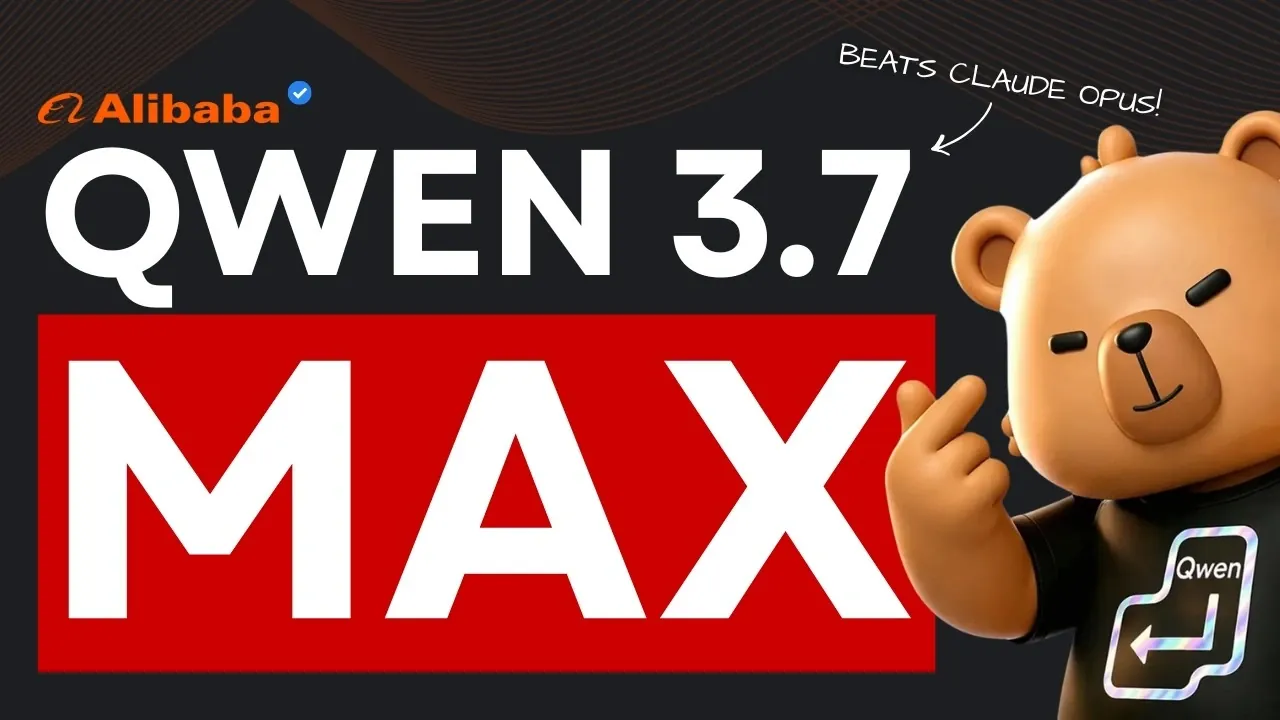
Alibaba’s Qwen 3.7 Max has quietly gained traction as a standout AI model, excelling in areas like coding and agentic workflows. As highlighted by Universe of AI, its performance on benchmarks such as Terminal Bench 2.0 and MCP Atlas demonstrates its ability to handle complex, long-horizon tasks with precision. Notably, it achieves a tenfold speed improvement in GPU kernel optimization, making it particularly effective for computationally demanding applications. Despite these achievements, Qwen 3.7 Max remains underappreciated compared to more prominent models like GPT 5.5 and Opus 4.7, offering a unique mix of efficiency and affordability that sets it apart in niche markets.
Explore how Qwen 3.7 Max’s coding expertise outshines competitors in specialized benchmarks and why its cost-effective API pricing is reshaping accessibility for developers. Gain insight into its adaptability for automation-heavy projects and the challenges posed by its verbosity in token generation during extended tasks. This feature also examines broader industry trends, such as the aggressive pricing strategies of Chinese AI labs and the implications for global competition.
Unpacking Qwen 3.7 Max’s Performance
TL;DR Key Takeaways :
- Qwen 3.7 Max excels in coding and agentic workflows, outperforming competitors like DeepSeek and Opus 4.6 Max in benchmarks such as Terminal Bench 2.0 and MCP Atlas.
- It offers significant cost advantages, with input costs at half and output costs at one-quarter of GPT 5.5’s rates, making it a highly affordable AI solution.
- The model demonstrates exceptional efficiency in GPU kernel optimization and long-horizon tasks, making it ideal for complex, automation-heavy projects.
- Challenges include verbosity in token generation, which can increase costs during long-duration tasks, requiring careful resource management.
- Qwen 3.7 Max highlights Alibaba’s growing influence in the AI market, with its performance and affordability challenging Western AI leaders and reshaping industry dynamics.
Qwen 3.7 Max has set itself apart by achieving remarkable results in coding and agentic workflows, areas where precision and efficiency are paramount. It has outperformed prominent competitors such as DeepSeek, Opus 4.6 Max and Kimmy K2.6 Thinking in critical evaluations like Terminal Bench 2.0 and MCP Atlas. These benchmarks highlight its technical prowess and adaptability.
Key performance highlights include:
- A tenfold speed improvement in GPU kernel optimization tasks, demonstrating its efficiency in handling computationally intensive operations.
- Exceptional proficiency in managing long-horizon tasks, making it ideal for complex, multi-step processes that require sustained focus and accuracy.
- Proven adaptability in agentic workflows, where it operates independently across extended tasks with a high degree of precision and reliability.
These strengths make Qwen 3.7 Max a preferred choice for developers working on intricate, automation-heavy projects, particularly in industries where efficiency and scalability are critical.
How It Stacks Up Against Western Models
When compared to Western AI models, Qwen 3.7 Max presents a mixed but compelling case. It matches Opus 4.7 on the Artificial Analysis Intelligence Index, a key benchmark for evaluating AI capabilities. However, it falls short of OpenAI’s GPT 5.5 in areas such as general intelligence and writing quality, where GPT 5.5 remains the leader.
Despite these limitations, Qwen 3.7 Max excels in coding-specific benchmarks, outperforming both Opus 4.6 and 4.7. Its ability to streamline coding workflows and tackle complex programming challenges positions it as a valuable tool for developers focused on technical applications. This coding expertise, combined with its affordability, makes it a strong contender in niche markets where specialized performance is prioritized over general-purpose capabilities.

Here are additional guides from our expansive article library that you may find useful on Qwen.
- Qwen 3.5 35B vs Sonnet 4.5 : Benchmarks vs Reality Results Across Three Tasks
- Alibaba’s New Qwen 3.6 Max AI is Quietly Outperforming Claude 4.5 Opus
- Why Alibaba’s New Qwen 3.7 Max Just Dethroned the Top AI Models
- Qwen 3.5 Small Expands On-Device AI to Phones and IoT with Offline Support
- The Qwen 3 Family : A Multilingual, Customizable Future for Artificial Intelligence
- New Qwen 3.5 AI Model Beats Opus 4.5 & Gemini 3 : Fully Tested
- Qwen3-TTS vs ElevenLabs : Multilingual TTS with Tone & Emotion Control
- Google Drops Gemma 4 for Consumer Hardware
- Inside Qwen 3.6 Plus : 1-Million-Token AI Designed for Advanced Reasoning
- Qwen TTS Ships Local TTS Under Apache 2.0 : Voice Cloning in 3 Seconds
Affordability and Accessibility
One of the standout features of Qwen 3.7 Max is its cost-effectiveness, which sets it apart from many of its competitors. Its API pricing is significantly lower than that of GPT 5.5, making it an attractive option for businesses and developers seeking high-performance AI solutions without breaking the bank.
Key pricing advantages include:
- Input costs that are half the rate of GPT 5.5.
- Output costs reduced to just one-quarter of GPT 5.5’s rates.
In addition to its affordability, Qwen 3.7 Max supports the Anthropic API protocol, making sure seamless integration into existing workflows. This compatibility enhances its usability and broadens its appeal, particularly for developers looking for a model that can be easily incorporated into diverse projects. Its combination of competitive pricing and practical integration makes it a compelling choice for organizations of all sizes.
Challenges and Limitations
While Qwen 3.7 Max offers numerous advantages, it is not without its challenges. One notable limitation is its verbosity in generating tokens, which can lead to higher costs during long agentic runs. For users managing resource-intensive tasks, this inefficiency may pose a significant challenge, particularly in scenarios where token optimization is critical to maintaining cost-effectiveness.
This verbosity issue highlights the need for careful resource management when deploying Qwen 3.7 Max in large-scale or long-duration tasks. Developers and businesses must weigh its strengths against this limitation to determine its suitability for their specific needs.
Shifting Industry Trends
The AI industry is undergoing rapid transformation, with new developments reshaping the competitive landscape. Several emerging trends are worth noting:
- Google’s Gemini 3.5 Pro is expected to introduce an “extreme high” thinking mode, potentially rivaling both GPT 5.5 and Opus 4.7 in advanced reasoning and problem-solving capabilities.
- Chinese AI labs, including Xiaomi and DeepSeek, are aggressively lowering API pricing, signaling a shift in cost structures and intensifying competition with Western labs.
These trends suggest that established players like OpenAI and Anthropic may need to reassess their pricing strategies to maintain their market positions. The increasing competitiveness of Chinese AI labs, combined with their focus on affordability and performance, is likely to drive innovation and create new opportunities for collaboration and competition across the global AI landscape.
Broader Implications for the AI Industry
Qwen 3.7 Max exemplifies Alibaba’s growing influence in the global AI market. Its strong performance in specialized benchmarks, combined with its competitive pricing, positions it as a formidable contender alongside industry leaders like OpenAI and Anthropic. The model’s success underscores the increasing competitiveness of Chinese AI labs, which are challenging the dominance of Western players in both technology and market dynamics.
The aggressive pricing strategies adopted by Chinese labs could disrupt the market, forcing established players to innovate and adapt to remain competitive. As models like Qwen 3.7 Max continue to push the boundaries of performance and affordability, the AI industry is poised for significant changes. These developments highlight the importance of adaptability and innovation in an industry that is evolving at an unprecedented pace.
Media Credit: Universe of AI
Disclosure: Some of our articles include affiliate links. If you buy something through one of these links, Geeky Gadgets may earn an affiliate commission. Learn about our Disclosure Policy.
