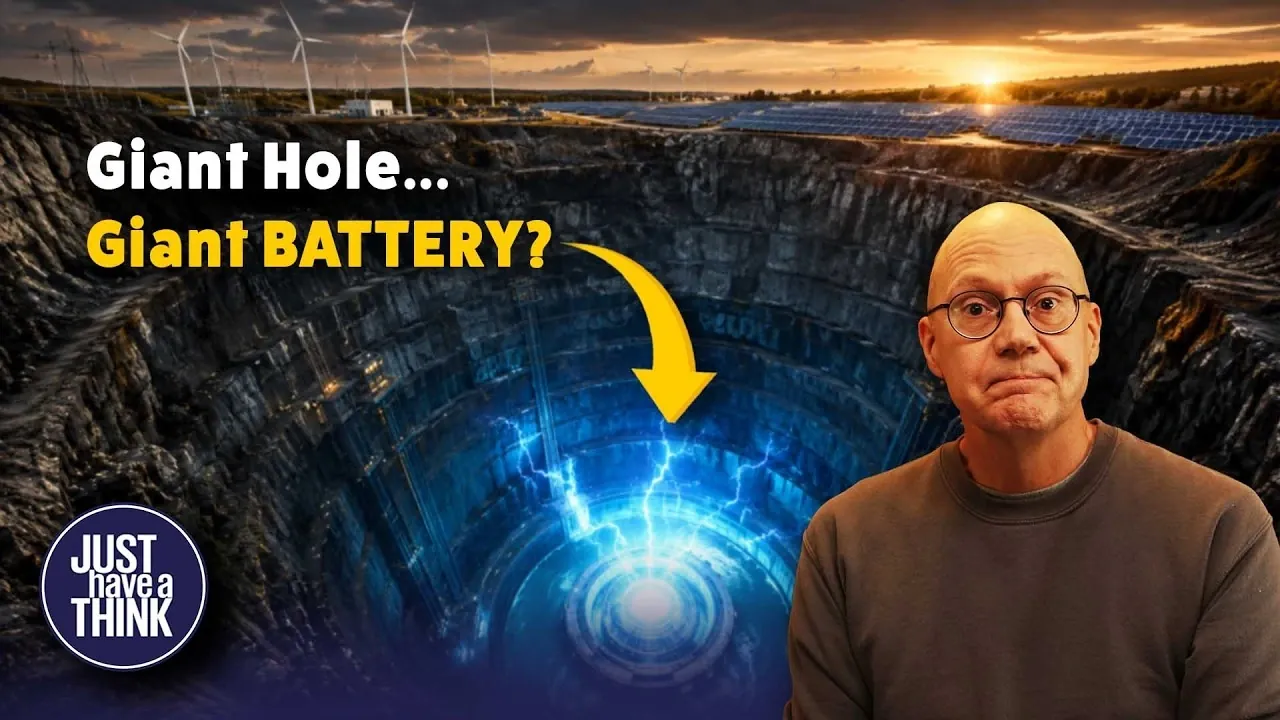
Repurposing abandoned coal mines as large-scale energy storage facilities presents a compelling blend of engineering and sustainability. These mines, often equipped with existing infrastructure, could host technologies such as gravity storage, pumped hydro systems, or compressed air energy storage (CAES). Gravity storage, for example, involves raising and lowering heavy weights within mine shafts to store and release energy, offering a relatively simple and durable mechanism. However, as discussed by Just Have a Think, practical challenges like maintaining structural integrity and making sure economic viability complicate these proposals.
Explore the specific benefits and constraints of each energy storage method, from the geological demands of pumped hydro systems to the technical hurdles of CAES. Learn how gravity storage operates within the unique environment of mine shafts and examine the potential for geothermal heat extraction to provide sustainable heating for nearby communities. By diving into these approaches, you’ll gain a clearer understanding of the opportunities and obstacles involved in converting old coal mines into functional energy assets.
Gravity Storage: A Simple Concept with Complex Execution
TL;DR Key Takeaways :
- Abandoned coal mines present a unique opportunity for large-scale energy storage, using existing infrastructure for technologies like gravity storage, pumped hydro systems, compressed air energy storage (CAES), and geothermal heat repurposing.
- Gravity storage offers long lifespans and low operating costs but faces significant engineering and economic challenges for implementation and scalability.
- Pumped hydro systems are reliable and efficient but are limited by geological constraints and site-specific conditions, making them unsuitable for all mines.
- Compressed air energy storage (CAES) is innovative but suffers from thermodynamic inefficiencies, geological limitations and lower efficiency compared to other technologies.
- Geothermal heat repurposing provides a sustainable heating solution for nearby communities but is hindered by variable efficiency and high infrastructure costs, making it a complementary rather than primary energy storage method.
Gravity storage operates on a straightforward principle: energy is stored by lifting a heavy weight and released by lowering it. This method offers several advantages:
- Long operational lifespans with minimal energy loss over time, making it a durable solution.
- Low operating costs compared to other energy storage technologies.
- Potential cost savings by using existing mine shafts and infrastructure.
Despite its simplicity in theory, implementing gravity storage in old coal mines is a complex endeavor. The engineering challenges are significant, as systems must be designed to handle immense forces safely and efficiently. Retrofitting abandoned mines to accommodate this technology involves logistical hurdles, such as transporting materials and making sure structural integrity. Additionally, scaling gravity storage to meet global energy demands remains an economic uncertainty. While the concept is promising, further research and pilot projects are essential to evaluate its practicality and long-term viability.
Pumped Hydro Systems: Reliable but Limited by Location
Pumped hydro systems are a well-established energy storage technology. In the context of coal mines, these systems use underground shafts as reservoirs for water storage. During periods of low energy demand, water is pumped to a higher elevation. When energy is needed, the water flows downward, driving turbines to generate electricity.
This approach offers several benefits:
- Proven reliability and efficiency, with decades of successful implementation worldwide.
- Repurposing existing infrastructure, reducing the need for entirely new construction.
- Lower environmental impact compared to surface-level projects, as underground systems are less intrusive.
However, geological constraints present significant challenges. Issues such as water leakage, structural instability and the need for precise fluid dynamics management complicate implementation. Furthermore, not all mines are suitable for this technology, as site-specific conditions heavily influence feasibility. While pumped hydro systems are effective in the right circumstances, they are not a universal solution and require careful site evaluation.

Unlock more potential in energy by reading previous articles we have written.
- Solar Energy S 40,000 mAh retractable solar panel and power bank
- Primary Energy Fallacy Explained: Why Useful Energy Shows Faster Renewable Progress
- The Island is Shrinking: iPhone 18 Pro Max Leaks Confirm Apple’s Cleanest Display Ever
- The Best Camera Ever: Why the iPhone 18 Pro’s Variable Aperture is the Real Star of 2026
- Ultimate Apple Watch Accessory: EnergyLink Charging Watch Band
- Why NASA’s Mechanical Battery Could Be the Future of Energy Storage
- iPhone 18 Pro: What Apple Isn’t Telling You Yet
- Best Phone Battery Life 2025: OnePlus 15, vivo X300 Pro, & iPhone 17 Pro Max
- Airnergy Havester Battery Charges From Thin Air
- What Donut Labs Data Shows on Solid-State Battery Energy Density
Compressed Air Energy Storage: Innovative but Inefficient
Compressed air energy storage (CAES) involves storing energy by compressing air in underground spaces, such as mine shafts or caverns. When energy is needed, the compressed air is released to drive turbines. Modern advancements, such as adiabatic and isothermal compression techniques, aim to improve efficiency by minimizing energy losses during compression and expansion.
Despite its innovative potential, CAES faces notable challenges:
- Thermodynamic inefficiencies result in energy losses during operation, reducing overall effectiveness.
- Geological suitability is critical, as not all mines can safely store compressed air without risk of leakage or collapse.
- Lower efficiency compared to alternatives like lithium-ion batteries, limiting its appeal for widespread use.
While CAES represents an intriguing option, its reliance on specific geological and engineering conditions restricts its scalability. Continued innovation and investment in research are needed to address these limitations and enhance its viability as a large-scale energy storage solution.
Geothermal Heat Repurposing: A Complementary Opportunity
Abandoned coal mines also offer opportunities for low-carbon heating solutions. Mine water, often naturally heated by geothermal processes, can be harnessed to provide heat through systems of heat exchangers and pumps. This approach is particularly appealing for communities near old mining sites, offering a sustainable way to repurpose existing resources.
However, geothermal heat repurposing is not without its challenges:
- Variable efficiency: The temperature and volume of mine water can vary significantly between sites, affecting the effectiveness of heat extraction.
- High infrastructure costs: Building systems to transport and distribute heat to nearby communities can be expensive.
While geothermal heat repurposing is not a primary focus of energy storage efforts, it represents a valuable complementary technology. By integrating this approach with other energy storage methods, abandoned mines could serve multiple purposes, enhancing their overall utility.
Overarching Challenges and Broader Implications
Repurposing abandoned coal mines for energy storage is an ambitious concept, but it comes with significant challenges:
- Geological Uncertainty: The structural integrity of old mines varies widely, posing risks for large-scale projects.
- Economic Viability: Retrofitting mines and developing new technologies require substantial investment, which may not always yield profitable returns.
- Engineering Complexity: Operating in underground environments adds layers of difficulty to project implementation, from safety concerns to logistical constraints.
Despite these obstacles, the potential benefits are substantial. Abandoned mines represent an untapped resource for energy storage and community revitalization. By repurposing these sites, regions historically reliant on coal mining could play a pivotal role in the renewable energy transition. However, no single technology will serve as a universal solution. A combination of approaches, tailored to specific sites and conditions, will be necessary to meet global energy storage needs.
The transition to sustainable energy will require ongoing research, innovation and investment. While the concept of using abandoned coal mines as energy storage facilities is complex, it represents an important step toward a more sustainable and resilient energy future. By addressing the technical and economic barriers, these projects could transform former industrial sites into valuable assets for the renewable energy era.
Media Credit: Just Have a Think
Disclosure: Some of our articles include affiliate links. If you buy something through one of these links, Geeky Gadgets may earn an affiliate commission. Learn about our Disclosure Policy.
