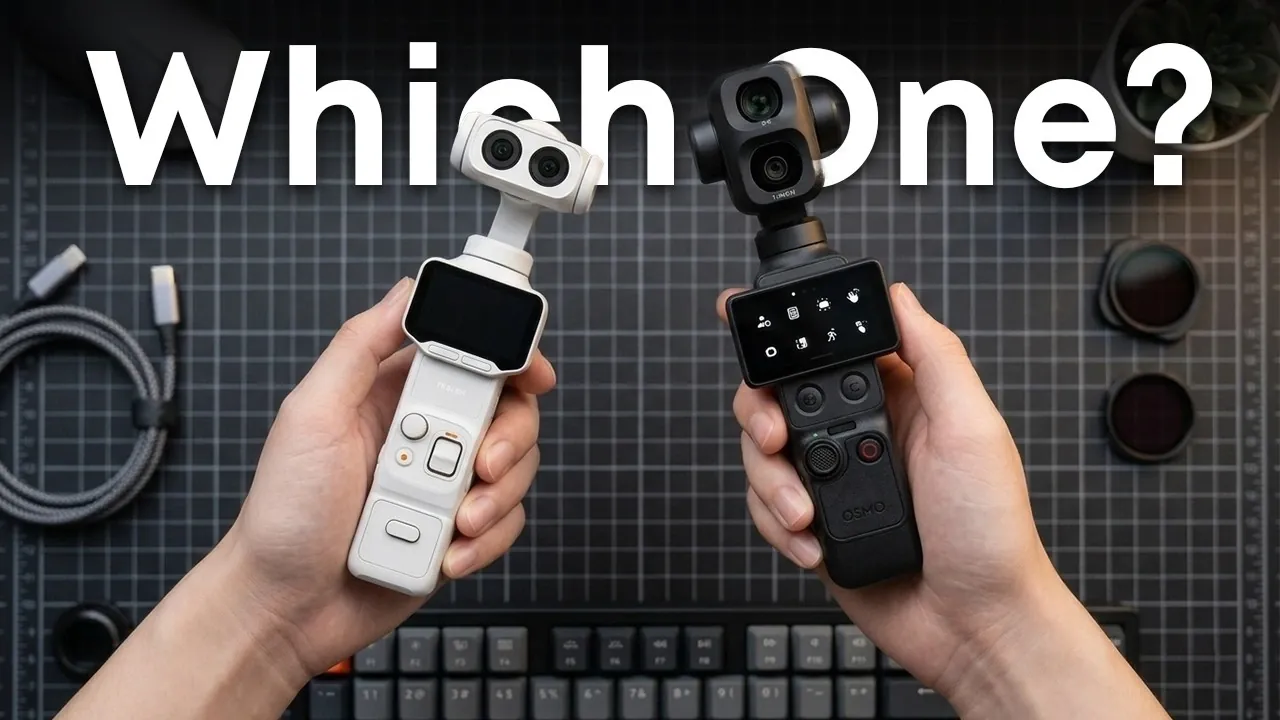
The DJI Osmo Pocket 4P and Insta360 Luna Ultra are compact cameras designed for creators who need high-quality visuals in a portable format. According to TechAvid, the Pocket 4P focuses on a streamlined design, featuring a dual-camera gimbal system and 6K video recording at 60fps, which suits those prioritizing reliability and professional-grade output. In contrast, the Luna Ultra offers 8K video recording, Leica-tuned optics, and a detachable wireless display, appealing to users who value modularity and advanced customization.
Dive into the key distinctions between these two vlogging cameras, including how the Pocket 4P’s variable aperture control compares to the Luna Ultra’s Dolby Vision support. Gain insight into their differing audio setups, storage capabilities and design approaches to see how each fits into various creative workflows. This guide will provide the clarity you need to evaluate which camera aligns best with your specific requirements.
DJI vs Insta360
TL;DR Key Takeaways :
- The DJI Osmo Pocket 4P and Insta360 Luna Ultra are innovative compact cameras, each catering to different creative needs, Pocket 4P focuses on reliability and performance, while Luna Ultra emphasizes modularity and innovation.
- Both cameras feature advanced 1-inch sensors with 20mm equivalent lenses, offering exceptional image quality and up to 6x lossless zoom, with DJI prioritizing consistent image quality.
- The DJI Osmo Pocket 4P supports 6K video at 60fps, 4K at 240fps and features a dual-camera gimbal system, variable aperture lens and 17 stops of dynamic range for versatile shooting conditions.
- The Insta360 Luna Ultra offers 8K video at 30fps, 4K at 240fps, Leica-tuned optics, Dolby Vision support and a modular design with a detachable wireless display and microphone for flexibility.
- Target audiences differ: the Luna Ultra is ideal for experimental creators and vloggers, while the Pocket 4P suits professionals seeking dependable, polished performance and high-quality results.
Both cameras are equipped with advanced technology designed to deliver exceptional image quality. Central to their capabilities are 1-inch main sensors paired with 20mm equivalent primary lenses, making sure sharp and vibrant visuals even in challenging lighting conditions. Additionally, both models support up to 6x lossless zoom, though DJI appears to prioritize consistent image quality over extreme zoom capabilities.
– DJI Osmo Pocket 4P: This camera is expected to feature a dual-camera gimbal system, offering 6K video recording at 60fps and 4K at 240fps for slow-motion footage. With 17 stops of dynamic range supported by the DLOG 2C color profile, it captures intricate details in both highlights and shadows. A rumored variable aperture lens (f/1.7–f/2.8) provides enhanced control over depth of field and low-light performance, making it a versatile tool for diverse shooting conditions.
– Insta360 Luna Ultra: The Luna Ultra is rumored to push boundaries with 8K video recording at 30fps and 4K at 240fps for slow motion. Its Leica-tuned optics and Dolby Vision support promise cinematic-quality visuals, while advanced post-production compatibility makes it an appealing choice for creators who demand precision and flexibility in editing.
Design and Innovation
The design philosophies of the DJI Osmo Pocket 4P and Insta360 Luna Ultra reflect their distinct priorities, catering to different types of users.
– Insta360 Luna Ultra: This camera embraces modularity, featuring a detachable wireless display and control module. This design allows for remote operation and greater flexibility during shoots. Additionally, its modular system integrates a wireless microphone, making it particularly suitable for vloggers and creators who require adaptability and portability.
– DJI Osmo Pocket 4P: In contrast, the Pocket 4P adopts a more traditional pocket camera design, prioritizing ease of use and professional workflows. Its streamlined form factor is ideal for creators who value reliability and polished performance over experimental features, making sure a seamless shooting experience.
Below are more guides on pocket cameras from our extensive range of articles.
- Before You Wait for the DJI Pocket 4, See What the Insta360 Luna Ultra is Packing
- The Insta360 Luna Ultra Feature That Could Outsmart the DJI Pocket 4
- Why Insta360’s Luna Ultra Might Make You Skip the DJI Pocket 4
- Why the DJI Osmo Pocket 4P is Launching Under a Completely Different Name in the U.S.
- Ordro M5 5K vlogging camera with 3-axis stabilizer
- DJI Osmo Pocket 4 vs Insta 360 Luna Ultra : Everything You Need to Know
- Everything We Know About the DJI Pocket 4 Pro Sensor Upgrade
- DJI Pocket 4 “Blind” Pre-Orders Are Live : Should You Risk It?
- DJI Pocket 4 Arriving April 2026: Pricing, Specs & Key Features
- Insta360 Luna Pro and Ultra: Full Specs, Features, and Market Analysis
Audio Capabilities
High-quality audio is a critical component of content creation and both cameras address this need with distinct approaches.
– Insta360 Luna Ultra: Equipped with advanced onboard microphones, the Luna Ultra also integrates wireless audio capabilities through its detachable module system. This setup is particularly advantageous for capturing clear and dynamic sound in various environments, making it a strong choice for vloggers and on-the-go creators.
– DJI Osmo Pocket 4P: The Pocket 4P uses DJI’s Osmo Audio ecosystem, which enables seamless multi-device recording. This ensures consistent and professional-grade audio quality across different scenarios, making it a dependable option for creators focused on delivering polished productions.
Storage Options
Storage capacity plays a significant role in determining a camera’s practicality, especially for high-resolution recording.
– DJI Osmo Pocket 4P: Rumored to include 107GB of internal storage, the Pocket 4P also features a microSD slot for expandability. This combination minimizes the need for frequent file transfers, making it a convenient choice for creators who work with large video files.
– Insta360 Luna Ultra: While specific storage details for the Luna Ultra remain undisclosed, it is expected to rely on external storage solutions. This approach may appeal to users who prioritize flexibility and prefer to customize their storage options based on their specific needs.
Who Are These Cameras For?
The target audiences for the DJI Osmo Pocket 4P and Insta360 Luna Ultra reflect their respective design philosophies and feature sets.
– Insta360 Luna Ultra: Designed for advanced creators, vloggers and those seeking innovative tools, the Luna Ultra’s modular design and innovative capabilities make it an excellent choice for experimental and dynamic content creation. Its flexibility and adaptability cater to users who value creative freedom and versatility.
– DJI Osmo Pocket 4P: Geared toward creators who prioritize dependability and professional-grade results, the Pocket 4P offers refined image quality and robust performance. Its practical functionality and polished design make it a reliable option for those who need a production-ready camera for consistent and high-quality output.
Making the Right Choice
Selecting between the DJI Osmo Pocket 4P and Insta360 Luna Ultra ultimately depends on your creative priorities and workflow requirements. If you value innovation, flexibility and modular features, the Luna Ultra stands out as a compelling option. On the other hand, if your focus is on reliability, polished performance and professional-grade results, the Pocket 4P offers a dependable and refined solution. Both cameras represent significant advancements in compact camera technology, providing creators with powerful tools to bring their visions to life.
Media Credit: TechAvid
Disclosure: Some of our articles include affiliate links. If you buy something through one of these links, Geeky Gadgets may earn an affiliate commission. Learn about our Disclosure Policy.
