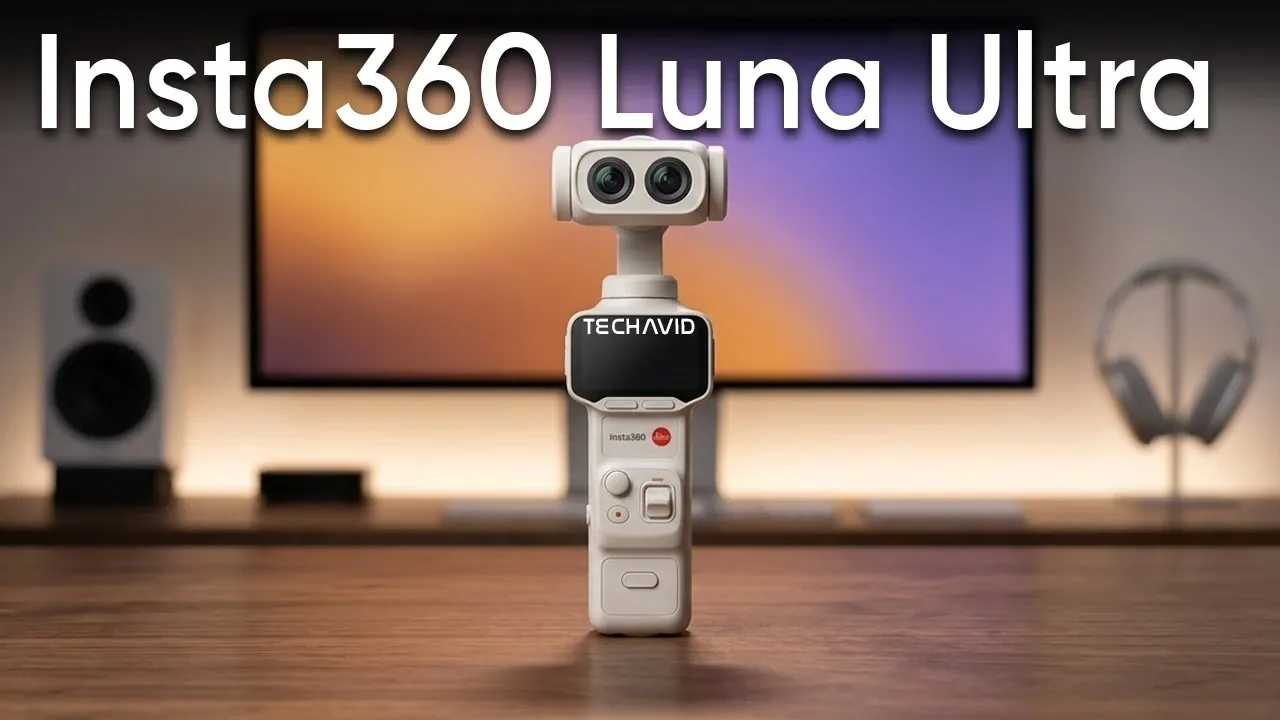
DJI’s dominance in the pocket camera market may face a new challenge as Insta360 prepares to launch its Luna Ultra. According to TechAvid, the Luna Ultra introduces a modular design that allows users to detach the camera from its handle, offering unprecedented flexibility for capturing unique angles and tight spaces. This feature, combined with a rumored 6x optical zoom, positions the Luna Ultra as a versatile option for creators who demand adaptability in their gear. Meanwhile, DJI’s regulatory delays in the U.S. could give Insta360 a critical window to attract attention and gain market share.
Explore how these competing approaches could shape the future of portable cameras. You’ll gain insight into DJI’s focus on dual-camera systems and stabilization improvements, alongside Insta360’s emphasis on creative flexibility and user-centric features. Whether you’re a professional seeking precision or a hobbyist looking for versatility, this feature breaks down the key advancements and market dynamics that are driving innovation in the pocket camera space.
TL;DR Key Takeaways :
- DJI’s Osmo Pocket 4 introduces improved stabilization and better image quality but faces U.S. regulatory delays, potentially weakening its market position.
- The rumored DJI Pocket 4P may feature a vertical dual-camera system for enhanced depth perception and low-light performance, targeting professional-grade results.
- Insta360’s Luna Ultra emphasizes modularity, allowing users to detach the camera for versatile shooting scenarios, appealing to content creators seeking flexibility.
- The Luna Ultra is rumored to include a 6x optical zoom, offering superior image clarity and setting a new benchmark for portable cameras.
- Regulatory delays for DJI create a strategic opportunity for Insta360 to capture market share by focusing on user-centric innovations like modularity and creative adaptability.
DJI Osmo Pocket 4 and Pocket 4P: Refining the Formula
DJI’s Osmo Pocket 4 has already launched in Europe, but its U.S. debut has been delayed, likely due to regulatory challenges. This delay could weaken DJI’s foothold in a highly competitive market, especially as rivals like Insta360 aim to capitalize on the gap. The Pocket 4 introduces key enhancements, including improved stabilization and better image quality, catering to users who prioritize reliable performance for everyday shooting.
The real intrigue, however, lies in the rumored Pocket 4P. This model is expected to feature a vertical dual-camera system, a design shift that could enhance versatility by improving depth perception and low-light performance. Such upgrades are aimed at attracting users who demand professional-grade results in a compact form. Yet, the delay in its release may provide Insta360 with a critical advantage, allowing it to capture the attention of consumers in key regions before DJI can fully establish its presence.
Insta360 Luna Ultra: Redefining Portability with Modularity
Insta360 is positioning its Luna Ultra as a standout contender in the pocket camera market. Leaks suggest that the Luna Ultra will introduce modularity, allowing users to detach the camera from its handle. This feature could appeal to content creators seeking flexibility for diverse shooting scenarios, such as mounting the camera in tight spaces or capturing dynamic point-of-view (POV) footage. By offering this level of adaptability, Insta360 is addressing the growing demand for tools that can handle a variety of creative challenges.
Another rumored feature is the 6x optical zoom, a rarity in pocket cameras. Unlike digital zoom, optical zoom preserves image clarity, making it ideal for capturing detailed shots from a distance. When combined with modularity, this innovation could set a new benchmark for portable cameras, offering both precision and creative freedom. These features position the Luna Ultra as a versatile tool for professionals and hobbyists alike, catering to a wide range of shooting styles and preferences.

Here are additional guides from our expansive article library that you may find useful on action camera.
- SJCAM C400 Review: The 3-in-1 4K Action Camera Built for Creators
- GoPro Hero12 action camera with HyperSmooth 6.0 stabilization
- GoPro HERO 6 Action Camera External Power Kit (video)
- Snap Wearable 4K Action Camera
- Ordro M5 5K vlogging camera with 3-axis stabilizer
- Xtra Atto Is a Tiny 4K Wearable Action Camera With Big Features
- Panasonic HX-A1 Action Camera (video)
Market Dynamics: Insta360’s Strategic Opportunity
The regulatory delays affecting DJI in the U.S. create a significant opening for Insta360 to gain a competitive edge. While DJI focuses on refining its dual-camera systems and stabilization technologies, Insta360 is taking a different approach by emphasizing modularity and creative flexibility. These contrasting strategies reflect the diverse needs of the pocket camera market, where users increasingly value adaptability and customization.
Insta360’s modular design aligns with broader trends favoring user-centric innovation. Features like detachable cameras and advanced zoom capabilities cater to content creators who require versatile tools for remote shooting and unique perspectives. By addressing these needs, Insta360 has the potential to attract a broader audience, including professionals seeking high-performance equipment and casual users looking for creative freedom. This strategic positioning could allow Insta360 to establish itself as a leader in the evolving pocket camera landscape.
Technological Innovations: Two Paths to Progress
The rivalry between DJI and Insta360 underscores their distinct approaches to innovation. DJI’s focus on technical refinement is evident in its dual-camera systems, which aim to deliver superior image quality and performance in challenging conditions. This strategy appeals to users who prioritize reliability and professional-grade results, making DJI a trusted choice for those seeking consistency in their content creation.
In contrast, Insta360 emphasizes user-centric features like modularity and optical zoom. These innovations expand creative possibilities, allowing users to experiment with framing, angles and remote setups. By prioritizing flexibility, Insta360 positions the Luna Ultra as a tool that enables creators to push boundaries, whether capturing cinematic shots or action-packed POV footage. This divergence in priorities highlights the dynamic nature of the pocket camera market, where both technical excellence and creative adaptability play crucial roles in shaping consumer preferences.
A Market in Transition
The competition between DJI and Insta360 reflects the rapid evolution of the pocket camera market. DJI continues to refine its technology with dual-camera systems and stabilization improvements, while Insta360 pushes boundaries with modularity and optical zoom. The regulatory delays faced by DJI in the U.S. provide Insta360 with a rare opportunity to gain traction and challenge the status quo.
As both companies prepare to launch their latest models, the market is poised for significant change. Whether you value professional-grade image quality or creative adaptability, the expanding range of pocket cameras offers more choices than ever before. This competition not only benefits consumers by driving innovation but also ensures that the future of portable cameras remains exciting and unpredictable. The coming months will reveal which approach resonates most with users, shaping the next chapter in the evolution of compact, high-performance cameras.
Media Credit: TechAvid
Disclosure: Some of our articles include affiliate links. If you buy something through one of these links, Geeky Gadgets may earn an affiliate commission. Learn about our Disclosure Policy.
