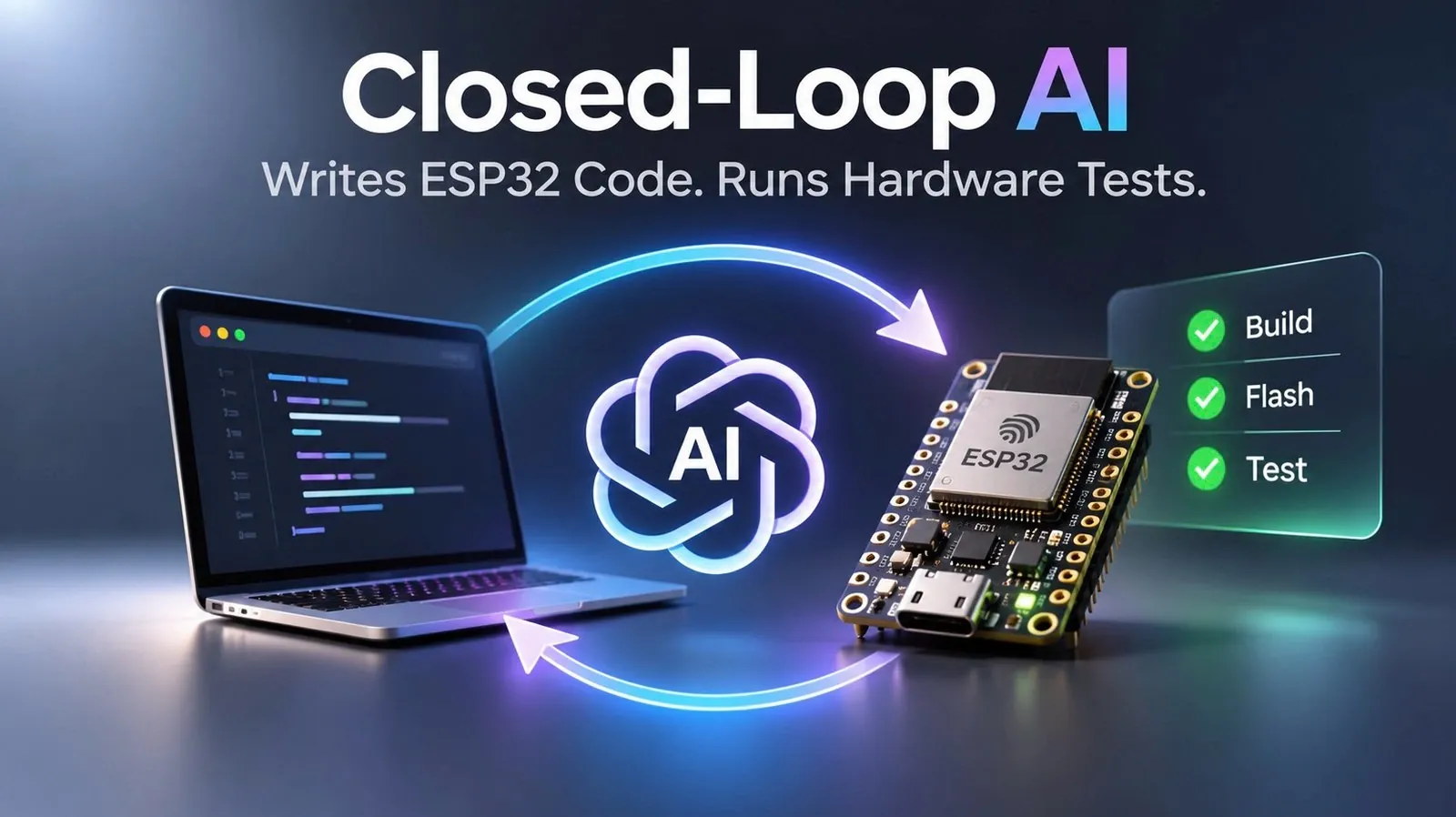
AI is changing how developers build embedded systems and Andreas Spiess demonstrates its application in creating a functional ESP32 device. Using the Embedded AI Harness, a framework that integrates AI with hardware and testing workflows, developers can automate tasks like code generation, debugging and testing. For instance, the framework connects to a Raspberry Pi testbench, allowing real-time validation of hardware performance under practical conditions. This method reduces manual intervention while maintaining consistent quality throughout development.
Discover how AI supports iterative improvements and structured testing processes, including host and field testing. Gain insight into the role of ESP-IDF in firmware development and how GitHub Actions can automate key steps in the workflow. This deep dive offers practical strategies for integrating automation into embedded system projects.
How AI Enhances Development
TL;DR Key Takeaways :
- AI-powered workflows significantly streamline ESP32 firmware development by automating coding, testing, debugging and deployment, reducing manual effort and human error.
- The Embedded AI Harness integrates AI, hardware and testing infrastructure, allowing real-time testing and validation through a Raspberry Pi testbench for reliable embedded system designs.
- Key tools like Linux containers, GitHub Actions and ESP-IDF enhance automation, making sure efficient development and seamless integration with AI workflows.
- A comprehensive four-tier testing framework (host, target, bench and field testing) ensures robust quality assurance, incorporating advanced techniques like fault injection and black-box testing.
- Automation accelerates development cycles, enhances quality assurance and simplifies complex projects, making it essential for modern IoT and embedded system development.
AI plays a pivotal role in automating the firmware development lifecycle, transforming how embedded systems are created and refined. By managing the process as a closed loop, AI generates initial code, executes rigorous testing and iteratively refines the firmware to meet predefined specifications. This ensures that the final product is both functional and reliable. As a developer, you can focus on high-level tasks such as defining system requirements and designing test cases, while the AI efficiently handles repetitive, time-intensive operations. This division of labor not only accelerates development but also reduces the likelihood of human error.
The Embedded AI Harness: A Framework for Automation
At the core of this workflow is the Embedded AI Harness, a specialized framework that seamlessly integrates AI, hardware and testing infrastructure. This framework connects directly to a Raspberry Pi testbench, allowing automated interaction with hardware components and real-time testing. By validating functionality under real-world conditions, the Embedded AI Harness provides a robust foundation for your embedded projects. Its ability to simulate and test hardware behavior ensures that your designs are both practical and reliable, reducing the need for extensive manual debugging.

Here are additional guides from our expansive article library that you may find useful on ESP32.
- $5 ESP32-S3 Super Mini Packs Wi-Fi and Bluetooth
- The $4 ESP32 S3 Super Mini Packs a 240 MHz Dual-Core Chip
- How an $8 ESP32 S3 Microcontroller Runs a 28.9M Parameter Local LLM
- 5 ESP32 Projects Worth Building in 2026: Such as an Apple HomeKit Controller
- $4 ESP32 Module Brings Wi-Fi and Bluetooth to IoT Projects
- Replacing Security Cameras with Three $10 ESP32S3 Wi-Fi Boards
- ESP32-S3 Super Mini Costs $5 and Packs Wi-Fi and Bluetooth
- Gemini 4 Argon Writes ESP Mosaico Firmware to Control RGB LEDs
- ESP32-S3 Super Mini Brings 240 MHz Dual-Core Power For $4
- ESP32 S31 Devkit Hands-on: 320 MHz RISC-V Chip Adds Wi-Fi 6
Key Tools for Implementation
Adopting this AI-driven workflow requires a set of essential tools designed to maximize efficiency and automation:
- Linux Containers or Virtual Machines: These environments isolate AI agents, making sure controlled and reproducible development conditions.
- GitHub Actions: A powerful tool for continuous integration and delivery (CI/CD), automating the compilation, testing and deployment processes.
- ESP-IDF: Espressif’s development framework for ESP32, providing precise control over hardware functionality and allowing seamless integration with AI workflows.
These tools work together to create a streamlined development environment, allowing you to focus on innovation while the system handles routine operations.
Comprehensive Testing Framework
A robust testing framework is essential for making sure the quality and reliability of embedded systems. The AI-powered testing framework operates through a structured, four-tier approach:
- Host Testing: Simulates code functionality in a controlled software environment, identifying potential issues early in the development process.
- Target Testing: Executes tests directly on the ESP32 hardware to validate performance under actual operating conditions.
- Bench Testing: Utilizes the Raspberry Pi testbench to replicate real-world scenarios, making sure the system behaves as expected in practical applications.
- Field Testing: Evaluates the system’s performance in real deployment environments, providing insights into its reliability and robustness.
In addition to these tiers, the framework incorporates advanced techniques such as fault injection testing, which simulates hardware or software failures and black-box testing, which evaluates the system’s input-output behavior without requiring knowledge of its internal workings. These methods ensure that the final product is thoroughly tested and ready for deployment.
Practical Application: Smart Meter Sensor
To illustrate the potential of this workflow, consider the development of a smart meter sensor. This system is designed to decode MBus data, integrate with MQTT for IoT communication and include a captive portal for simplified device setup. Over-the-air updates enable remote firmware upgrades, making sure the system remains up-to-date without manual intervention. Fault injection testing further enhances reliability by simulating challenging conditions, making sure the sensor performs consistently in real-world scenarios. This example highlights how AI-driven workflows can simplify complex projects while maintaining high standards of quality and functionality.
The Importance of Automation
Automation in embedded system development offers numerous advantages that directly impact efficiency and quality:
- Reduced Manual Effort: By automating repetitive tasks such as testing and debugging, developers can allocate more time to creative and strategic activities.
- Enhanced Quality Assurance: Automated regression testing ensures consistent performance and reliability over time, reducing the risk of undetected issues.
- Accelerated Development Cycles: With routine operations handled by AI, projects can move from concept to completion more quickly, allowing faster time-to-market.
These benefits make automation an invaluable asset for developers, particularly in the fast-paced world of IoT and embedded systems.
Steps to Implement the Embedded AI Harness
Getting started with the Embedded AI Harness involves a series of straightforward steps:
- Set up a Linux container or virtual machine equipped with an AI agent to manage the workflow.
- Clone the Embedded AI Harness repository from a version control platform such as GitHub.
- Connect a Raspberry Pi testbench to your network and link it to the target hardware for testing.
- Define your product concept and create a detailed functional specification to guide development.
- Run the harness to automatically generate the project structure and a comprehensive test plan.
- Commission the setup to validate the functionality of both the hardware and the testbench.
- Iterate through the build and testing process until all tests are successfully completed.
By following these steps, you can establish a reliable and efficient development workflow that uses the full potential of AI automation.
Advancing Embedded System Development
The Embedded AI Harness represents a significant advancement in the field of embedded system development. By combining AI, hardware integration and advanced testing frameworks, it automates the entire development process, delivering faster, more reliable and thoroughly tested results. Whether you are working on IoT devices, smart sensors, or other embedded systems, this approach enables you to achieve higher-quality outcomes with minimal manual effort. As technology continues to evolve, embracing AI-driven workflows will be essential for staying competitive and meeting the demands of modern development challenges.
Media Credit: “”
Disclosure: Some of our articles include affiliate links. If you buy something through one of these links, Geeky Gadgets may earn an affiliate commission. Learn about our Disclosure Policy.
