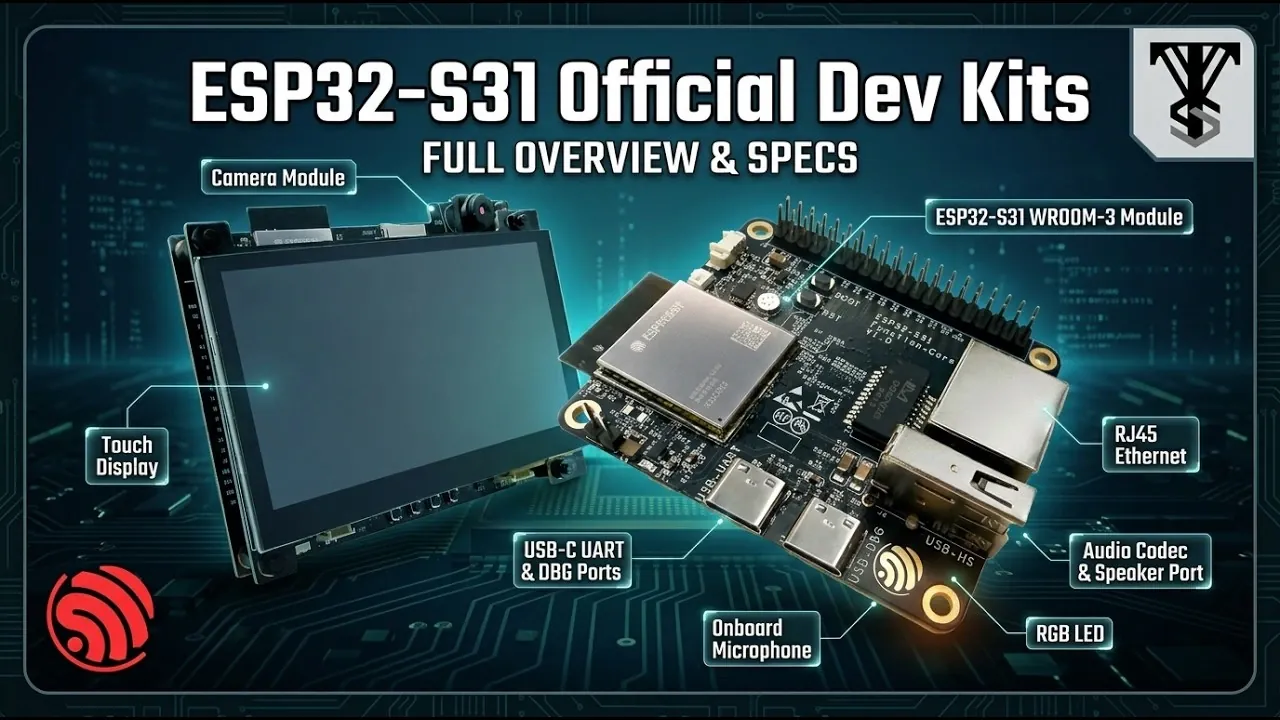
The ESP32 S31 Devkit features a dual-core RISC-V processor running at 320 MHz and is designed for IoT, maker and cybersecurity applications. Valleytech Custom Solutions examines this microcontroller, noting its Wi-Fi 6 (2.4 GHz) and Bluetooth 5.4 capabilities, which support reliable connectivity for a range of modern use cases. However, the absence of dual-band Wi-Fi (5 GHz) may limit its performance in environments requiring higher bandwidth or less network interference. This hands-on review evaluates how the S31 balances its technical strengths with practical limitations.
Explore the ESP32 S31’s hardware specifications, such as its 60 GPIO pins and dual I²S audio controllers, which enable flexibility for various projects. Learn about its integrated security features, including secure boot and flash encryption, which are critical for protecting sensitive data. The review also covers the Corvo variant, which adds a touchscreen display and built-in camera, expanding its potential for interactive and visual applications.
Performance: A Leap in Processing Power
TL;DR Key Takeaways :
- The ESP32 S31 features a dual-core RISC-V processor clocked at 320 MHz, offering significant performance improvements for complex tasks like real-time data processing and multimedia applications.
- Connectivity options include Wi-Fi 6 (2.4 GHz only), Bluetooth 5.4, Matter, Zigbee, Thread protocols and Gigabit Ethernet, though the lack of dual-band Wi-Fi (5 GHz) is a notable limitation.
- Hardware highlights include 60 GPIO pins, dual I²S audio controllers, USB-A 2.0, dual USB-C ports and robust security features like secure boot and flash encryption.
- The Corvo model enhances the S31 with a touchscreen display, built-in camera and additional control buttons, but lacks a Gigabit Ethernet port and offers only basic camera performance.
- Applications span IoT gateways, smart home dashboards, Edge AI devices, cybersecurity projects and DIY USB tools, showcasing the platform’s versatility for developers and makers.
At the heart of the ESP32 S31 lies a dual-core RISC-V processor clocked at 320 MHz, marking a significant improvement over the 240 MHz processor found in its predecessor, the ESP32 S3. This enhanced processing power enables the S31 to handle complex tasks such as real-time data processing, multitasking and multimedia applications with ease. Whether you are building a smart home dashboard, deploying an Edge AI solution, or working on a cybersecurity project, the S31 provides the computational strength required for seamless and efficient operation. Its ability to manage resource-intensive applications makes it a valuable asset for developers seeking high performance.
Connectivity: Broad Options with a Key Limitation
The ESP32 S31 excels in connectivity, offering a wide array of wireless and wired options to accommodate diverse project requirements. Key connectivity features include:
- Wi-Fi 6 (2.4 GHz only), making sure reliable and efficient wireless communication.
- Bluetooth 5.4, providing low-energy and high-speed device pairing capabilities.
- Support for Matter, Zigbee and Thread protocols, making sure compatibility with modern IoT ecosystems.
- Gigabit Ethernet, delivering high-speed wired connections ideal for applications requiring stable and fast data transfer.
While these features make the S31 a versatile choice for IoT and maker projects, the lack of dual-band Wi-Fi (5 GHz) is a notable drawback. This limitation may affect users who require higher wireless bandwidth or reduced interference, particularly in environments with crowded networks.
Learn more about ESP32 with other articles and guides we have written below.
- $5 ESP32-S3 Super Mini Packs Wi-Fi and Bluetooth
- How an $8 ESP32 S3 Microcontroller Runs a 28.9M Parameter Local LLM
- $4 ESP32 Module Brings Wi-Fi and Bluetooth to IoT Projects
- Build a DIY Open-Source Flipper Zero Using a ESP32-DIV
- ESP32-S3 Automation System Packs 16 Relays for Smart Homes
- $5 ESP32 S3 Board Packs a 240 MHz Dual-Core Chip
- Optimize ESP32 Battery Life Using 10 Lesser-Known Features
- Espressif Solved Expensive IoT Wi-Fi with the Dual-Core ESP32
- ESP32 Lineup Compared: S3 Handles AI While C6 Tackles Matter
- Build a Sonos Rival with the $30 AUD Louder ESP32 Board
Hardware: Built for Versatility
The ESP32 S31 is designed with hardware features that cater to a wide range of applications, making it a flexible and powerful tool for developers. Some of its standout specifications include:
- 60 GPIO pins, offering extensive input/output configurations for various peripherals.
- Dual I²S audio controllers, a built-in microphone and 2-W speaker support, making it ideal for audio-centric projects.
- Multiple connectivity options, including USB-A 2.0, dual USB-C ports, and 40-pin headers (note: headers are not Raspberry Pi compatible).
- Integrated security features such as secure boot, flash encryption, and cryptographic accelerators (AES, RSA), making sure robust protection for sensitive applications.
These hardware capabilities make the S31 suitable for a wide range of projects, from simple DIY tools to sophisticated IoT systems. Its versatility ensures that both beginners and experienced developers can use its features to create innovative solutions.
Corvo Model: Enhanced Features for Interactive Applications
The Corvo model builds upon the foundation of the ESP32 S31, introducing features specifically tailored for interactive and multimedia applications. Key enhancements include:
- A touchscreen display, allowing the creation of user-friendly interfaces for interactive projects.
- A built-in camera, suitable for basic imaging tasks such as object detection or video streaming.
- Additional control buttons, improving usability and offering more options for input.
However, the Corvo model has its limitations. It lacks a Gigabit Ethernet port, which may restrict its use in applications requiring high-speed wired connectivity. Additionally, the built-in camera offers only basic performance, comparable to older smartphone technology, making it more suitable for entry-level imaging needs rather than advanced photography or video applications.
Applications: Where the ESP32 S31 Shines
The ESP32 S31 and its Corvo variant are versatile platforms with applications spanning multiple domains. Their combination of performance, connectivity and hardware features makes them particularly appealing for the following use cases:
- IoT gateways, allowing the management of connected devices in smart homes or industrial environments.
- Smart home dashboards, providing real-time monitoring and control of appliances.
- Edge AI devices, facilitating real-time data analysis and decision-making at the edge of networks.
- Cybersecurity projects, using built-in cryptographic accelerators to enhance data protection.
- DIY USB tools, enabled by HID support for creating custom peripherals and interfaces.
These applications highlight the versatility and potential of the ESP32 S31, making it a valuable tool for developers working on innovative solutions in IoT, home automation and beyond.
Limitations and Future Prospects
Despite its many strengths, the ESP32 S31 is not without its shortcomings. The most significant limitation is the absence of dual-band Wi-Fi (5 GHz), which could deter users who require higher wireless speeds or reduced interference. Additionally, the Corvo model’s camera performance is modest, limiting its appeal for advanced imaging applications. These areas of improvement provide opportunities for future iterations to address current gaps.
Looking ahead, the anticipated E22 model is rumored to feature tri-band Wi-Fi, potentially resolving the wireless limitations of the S31. If these enhancements materialize, they could further solidify the ESP32 series as a leading choice for developers seeking innovative microcontroller solutions.
A Platform for Innovation
The ESP32 S31 Devkit and Corvo model stand out as impressive additions to the microcontroller market. Their combination of processing power, connectivity options and security features makes them a strong contender for IoT and maker projects. While the absence of dual-band Wi-Fi and the Corvo model’s modest camera performance are notable drawbacks, the overall capabilities of these devices position them as valuable tools for developers. Whether you are a hobbyist exploring new ideas or a professional working on advanced solutions, the ESP32 S31 offers a platform for innovation and creativity, paving the way for impactful projects in the years to come.
Media Credit: Valleytech Custom Solutions
Disclosure: Some of our articles include affiliate links. If you buy something through one of these links, Geeky Gadgets may earn an affiliate commission. Learn about our Disclosure Policy.
