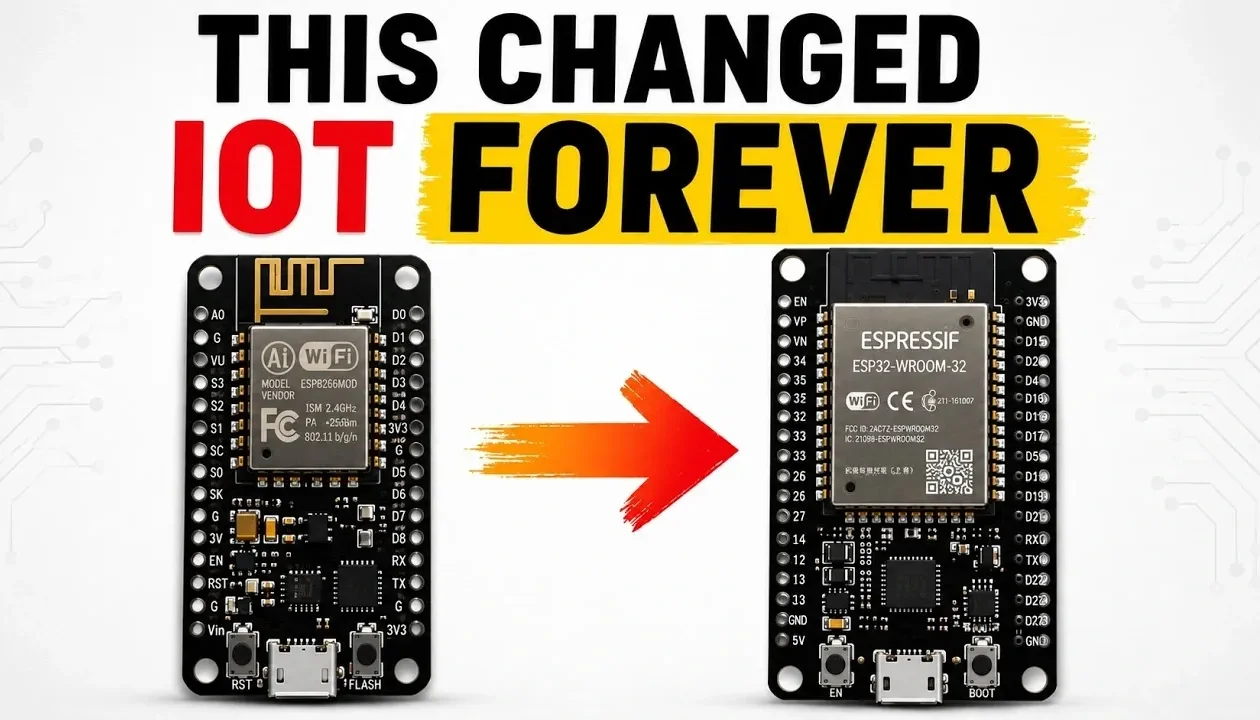
The ESP32, developed by Espressif Systems, has become a cornerstone of modern IoT development by addressing the challenges that once hindered the field. Before its introduction, integrating wireless connectivity into devices was both expensive and technically demanding, often requiring advanced expertise and significant resources. The ESP32 changed this by combining Wi-Fi and Bluetooth capabilities into a single, cost-effective microcontroller, making IoT development more accessible to a broader audience. As highlighted by ToP Projects Compilation, this breakthrough not only simplified the creation of connected devices but also bridged the gap between hobbyist projects and large-scale industrial applications.
In this feature, you’ll explore how the ESP32’s versatility has enabled applications ranging from smart home automation to industrial controllers. Gain insight into the specific advancements, such as its dual-core processing and enhanced security features, that have made it a go-to solution for developers. Additionally, learn about the diverse ESP32 chip family, including models like the ESP32-S3 for AI tasks and the ESP32-C6 with Wi-Fi 6 support and how they cater to specialized IoT needs. This breakdown offers a clear view of how the ESP32 has shaped the IoT landscape and continues to drive innovation across industries.
The Challenges of Early IoT Development
TL;DR Key Takeaways :
- The ESP32, developed by Espressif Systems, transformed IoT by making wireless connectivity affordable, accessible and easy to integrate, fostering global IoT adoption across industries.
- Before the ESP32, integrating wireless connectivity into embedded systems was costly and complex, hindering IoT innovation and adoption.
- Espressif’s earlier success with the ESP8266 in 2014 paved the way for the ESP32, which launched in 2015-2016 with integrated Wi-Fi, Bluetooth, dual-core processing and enhanced security, making it suitable for both hobbyists and professionals.
- The ESP32 family includes specialized chips like the ESP32-S2, S3, C3, C6 and H Series, catering to diverse IoT needs such as AI, low-power applications and advanced connectivity protocols like Wi-Fi 6 and Thread.
- The ESP32 ecosystem, including development boards and the ESP-IDF framework, has democratized IoT development, allowing a wide range of applications from smart homes to industrial automation and wearables.
Before the ESP32, integrating wireless connectivity into embedded systems was both costly and technically challenging. In the late 2000s, Wi-Fi modules were prohibitively expensive and required advanced expertise to implement effectively. Developers faced significant hurdles, including limited hardware options, complex integration processes and high development costs. As IoT began to gain momentum, the need for simpler and more affordable solutions became increasingly clear. The tools available at the time were far from ideal, leaving a gap between traditional embedded systems and the emerging world of connected devices. This gap hindered innovation and slowed the adoption of IoT technologies across industries.
Espressif’s Beginnings
Espressif Systems, founded in 2008 by Teo Swee Ann, set out to simplify wireless communication and make it more accessible. The company’s initial product, the ESP8089 Wi-Fi chip, targeted tablet manufacturers but struggled to gain significant traction in the market. Despite this early setback, Espressif remained committed to its vision of transforming wireless connectivity. This persistence laid the groundwork for future breakthroughs, as the company continued to refine its approach and develop solutions that would eventually transform IoT development.

Learn more about ESP32 with other articles and guides we have written below.
- Optimize ESP32 Battery Life Using 10 Lesser-Known Features
- Build a Sonos Rival with the $30 AUD Louder ESP32 Board
- Arduino Nano ESP32 handheld console with round color display
- T-Display AMOLED Touch ESP32 board binary converter project
- Super Tiny RP2040/ESP32 Board Display for IoT and DIY Projects
- Tiny Holo Cubic display features a 1.3-inch TFT IPS and ESP32 microcontroller
- LilyGo T Watch Keyboard C3 mini computer kit
- These Hidden Apple Maps Settings Will Completely Upgrade Your CarPlay
- Track Room Occupancy Without Cameras Using ESP32 Wi-Fi Drops
- New CodeCell C6 IoT ESP32 Board : Same Price, Improved Low-Power Design
The Turning Point: ESP8266
In 2014, Espressif introduced the ESP8266, a low-cost Wi-Fi chip designed to complement microcontrollers. Its affordability and flexibility quickly attracted developers worldwide, sparking a wave of innovation. Although initial documentation and support were limited, an enthusiastic community of developers emerged, sharing knowledge and resources to unlock the chip’s potential. The ESP8266 became a powerful development platform, demonstrating the demand for accessible wireless solutions. This success marked a turning point for Espressif, proving that there was a global appetite for affordable and easy-to-use IoT hardware. It also set the stage for the company’s next major innovation.
ESP32: A New Era for IoT
Building on the momentum of the ESP8266, Espressif launched the ESP32 in 2015-2016. Unlike its predecessor, the ESP32 was a standalone microcontroller with integrated Wi-Fi and Bluetooth capabilities. It featured dual-core processing, increased memory, enhanced security and support for a wide range of IoT applications. These advancements made the ESP32 suitable for both beginners and professionals, driving its rapid adoption across industries such as smart homes, industrial automation, and wearable technology. The ESP32’s versatility and performance bridged the gap between hobbyist projects and commercial applications, making it a cornerstone of modern IoT development.
The ESP32 Chip Family
Espressif expanded the ESP32 into a family of chips, each tailored to specific use cases. This diversification ensured the platform could meet the evolving demands of IoT development:
- ESP32-S2: Added USB connectivity and advanced security features for secure data transfer.
- ESP32-S3: Focused on AI acceleration, allowing edge computing and machine learning tasks.
- ESP32-C3: Transitioned to the RISC-V architecture, offering improved efficiency and compatibility.
- ESP32-C6: Introduced support for Wi-Fi 6 and the Thread protocol, enhancing performance and interoperability.
- ESP32-H Series: Specialized in low-power wireless technologies like Zigbee and Bluetooth LE, ideal for energy-efficient applications.
This diverse lineup allowed developers to select the most appropriate chip for their specific needs, whether they were building low-power sensors, AI-enabled devices, or high-performance IoT systems.
Building a Thriving Ecosystem
The ESP32’s success is closely tied to the ecosystem that has grown around it. Development boards like NodeMCU and Wemos D1 Mini simplified prototyping, making it easier for developers to test and iterate on their ideas. Espressif’s ESP-IDF software framework provided robust tools for programming and debugging, further enhancing the development experience. Additionally, the platform’s support for IoT protocols such as Matter and RainMaker enabled seamless integration into smart home and industrial systems. This thriving ecosystem not only accelerated development but also lowered the barrier to entry for IoT innovation, empowering a new generation of developers to bring their ideas to life.
Transforming IoT Development
The ESP32 has had a profound impact on IoT development. It has enabled the creation of a diverse range of devices, including smart home products, industrial controllers, wearables, and environmental sensors. By bridging the gap between hobbyist projects and commercial applications, the ESP32 has democratized IoT development, making it accessible to a global audience. Its affordability and versatility have empowered countless developers to turn their concepts into reality, fostering innovation across industries and applications.
A Legacy of Innovation
Espressif’s success with the ESP32 is rooted in its philosophy of affordability, simplicity and empowerment. By continuously innovating to meet the evolving demands of IoT, the company has turned wireless connectivity into a cornerstone of modern electronics. The ESP32’s legacy is one of allowing creativity, fostering collaboration and driving progress in the connected world. Its impact on IoT development will continue to shape the future of technology for years to come, making sure that wireless connectivity remains a fundamental enabler of innovation and growth.
Media Credit: ToP Projects Compilation
Disclosure: Some of our articles include affiliate links. If you buy something through one of these links, Geeky Gadgets may earn an affiliate commission. Learn about our Disclosure Policy.
