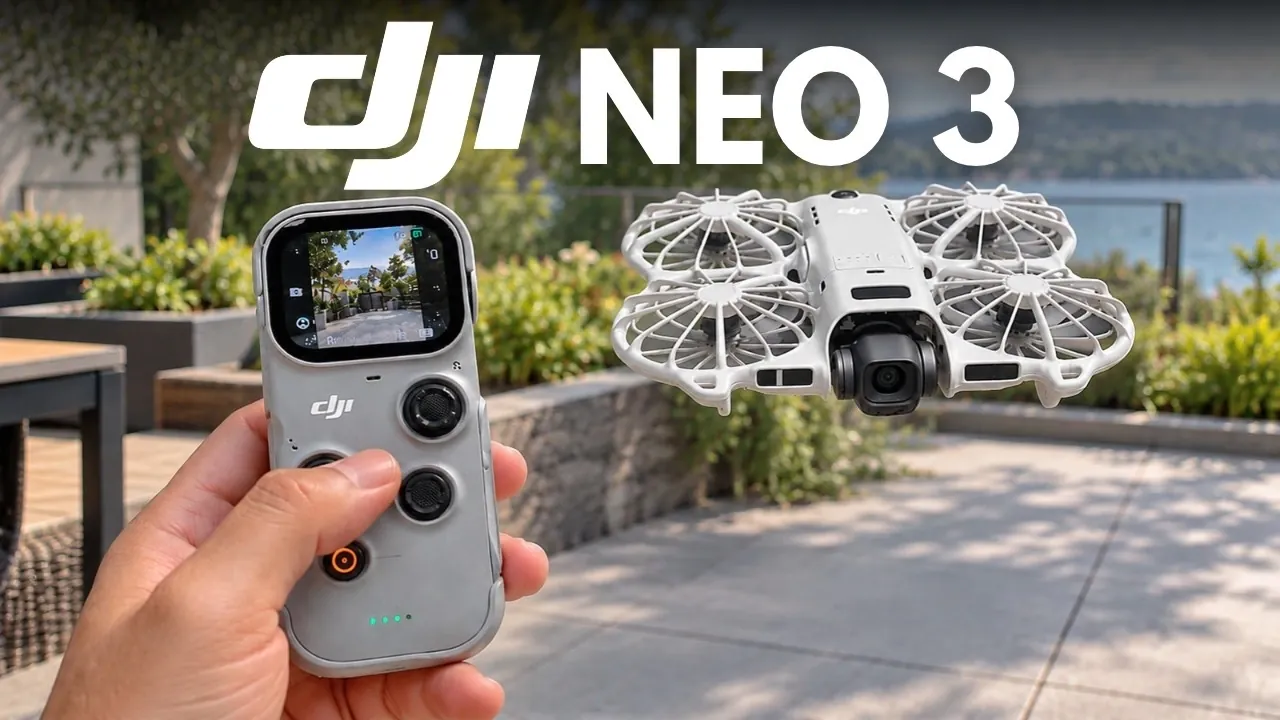
The DJI Neo 3 is shaping up to be a noteworthy addition to the compact drone market, blending advanced features with practical upgrades. As highlighted by Tech Court, one of the standout improvements is the inclusion of a 1.1-inch square camera sensor, which supports true vertical shooting and enhances low-light performance. This upgrade, combined with 2x lossless zoom, positions the Neo 3 as a strong contender for content creators seeking sharper, more versatile imaging options. Additionally, the drone introduces a redesigned pusher propeller system, aimed at improving flight stability in challenging conditions.
Dive into this explainer to uncover how the Neo 3’s 64% increase in battery capacity translates to longer flight times and what the shift to a new battery system means for existing DJI users. You’ll also gain insight into the RC Mini controller, which eliminates the need for a smartphone and the advanced obstacle avoidance system designed for safer navigation in complex environments. Whether you’re a hobbyist or a professional, this breakdown offers a clear view of what to expect from DJI’s latest compact drone.
DJI Neo 3 Release Date Speculation
TL;DR Key Takeaways :
- The DJI Neo 3 has not been officially announced yet, though extensive leaks point to a launch window sometime in October or November 2026.
- The DJI Neo 3 features a 1.1-inch square camera sensor with 2x lossless zoom, offering improved image quality, low-light performance and true vertical shooting for content creators.
- A 64% increase in battery capacity provides an estimated flight time of 14-16 minutes, though the new battery system is incompatible with Neo 2 batteries.
- Refinements include a pusher propeller design for better aerodynamics, redesigned propeller guards and a simplified replacement mechanism for easier maintenance.
- The RC Mini controller introduces a built-in screen, eliminating the need for a smartphone, while potential integrated transmission hardware may enhance signal reliability.
- Advanced omnidirectional obstacle avoidance, including potential Laser-Assisted Ranging (LAR) sensors, ensures safer navigation in complex environments.
Enhanced Camera Capabilities
The Neo 3 introduces a 1.1-inch square camera sensor, a significant upgrade designed to deliver sharper and more detailed images. This larger sensor supports true vertical shooting, making it an ideal tool for content creators targeting social media platforms like Instagram and TikTok. The addition of 2x lossless zoom further enhances its versatility, allowing users to capture tighter, high-quality shots without sacrificing image clarity.
Low-light performance has also been prioritized. The upgraded sensor is expected to outperform the Neo 2 in dimly lit environments, making it a reliable choice for photographers and videographers who require precision in challenging conditions. These improvements position the Neo 3 as a compelling option for those seeking a drone that combines adaptability with professional-grade imaging capabilities.
Battery Upgrades and Compatibility Challenges
One of the standout features of the Neo 3 is its 64% increase in battery capacity, which translates to an estimated flight time of 14 to 16 minutes under typical conditions. This improvement is powered by a new three-cell system, offering extended flight durations that cater to users who need more time in the air for capturing footage or exploring.
However, this advancement comes with a trade-off. The Neo 3’s battery is incompatible with Neo 2 batteries due to differences in voltage and size. For existing Neo 2 users, this lack of backward compatibility may pose an inconvenience, especially for those who have invested in additional batteries. While the increased capacity is a welcome upgrade, the transition to a new battery system highlights the balance between innovation and user convenience.

Find more information on DJI Neo 3 by browsing our extensive range of articles, guides and tutorials.
- Rumoured DJI Neo 3 Drone Targets a November 2026 Launch
- DJI Neo 3 64% Larger Battery, 193g and 16-Minute Flight Time
- Leaked DJI Neo 3 May Feature a 1/1.1-Inch Square Sensor
- DJI Neo 3 FlyMore Combo Unboxed: Includes 3 Drone Batteries
- DJI Neo 3 Unboxing Reveals a 1/1.1-Inch Camera Sensor
- DJI Neo 3 Leak Reveals a Likely Upward Obstacle Detection Sensor
- Leaked DJI Neo 3 May Feature a 1/1.3-Inch Sensor Upgrade
- Leaked DJI Neo 3 May Integrate Transceiver vs Neo 2 Module
- Expected DJI Neo 3 Drone Offers 2X Lossless Camera Zoom
- Unidentified Upward Sensor Clouds the DJI Neo 3 Box Leak
Refined Design and Usability
The Neo 3 introduces a pusher propeller arrangement, with the propellers positioned beneath the drone. This design aims to enhance aerodynamics and improve flight stability, particularly in windy conditions. Additionally, the drone features redesigned propeller guards and a simplified replacement mechanism, making maintenance more straightforward for users.
These design refinements reflect DJI’s commitment to creating a drone that is not only powerful but also practical. By focusing on user-friendly features, the Neo 3 ensures that both beginners and experienced pilots can operate it with ease.
Controller Innovations and Connectivity
The debut of the RC Mini controller marks a significant step forward in usability. This compact controller is equipped with physical controls and a built-in screen, eliminating the need for a smartphone during operation. This streamlined approach reduces setup time and enhances the overall flying experience.
There is also speculation that the Neo 3 may feature integrated transmission hardware, potentially improving signal reliability and reducing latency. If true, this advancement would further solidify the Neo 3’s position as a user-friendly and efficient drone, catering to those who value seamless connectivity and control.
Advanced Obstacle Avoidance for Safer Flights
Safety and reliability are key priorities for the Neo 3, as evidenced by its advanced omnidirectional obstacle avoidance system. Equipped with innovative sensors, the drone is designed to navigate complex environments with precision.
One notable feature is the potential inclusion of front-facing Laser-Assisted Ranging (LAR) sensors, which enhance the drone’s ability to detect and avoid obstacles. Whether flying through dense forests, urban landscapes, or other challenging terrains, these upgrades promise a safer and more reliable flight experience.
Portability and Lifestyle Integration
Weighing in as a compact and lightweight device, the Neo 3 is tailored for users who value portability. Its design makes it an excellent companion for outdoor enthusiasts, whether you’re hiking, cycling, or traveling. Features such as palm launch and autonomous follow modes further enhance its functionality, allowing users to focus on their activities while the drone captures dynamic footage.
This emphasis on portability and ease of use underscores DJI’s dedication to creating a drone that seamlessly integrates into a variety of lifestyles, making it a versatile tool for both personal and professional use.
Unanswered Questions and Anticipation
While the Neo 3’s features are undeniably impressive, several questions remain unanswered, leaving potential buyers eager for more information. Key areas of curiosity include:
- Will the real-world battery performance align with DJI’s claims?
- How effective will the upgraded tracking and obstacle avoidance systems be in dynamic environments?
- Can the camera truly deliver exceptional results in low-light conditions?
- What will the final pricing and release date be?
These uncertainties highlight the importance of hands-on testing and detailed reviews to fully assess the Neo 3’s capabilities.
Looking Ahead
The DJI Neo 3 represents a significant evolution in compact drone technology, offering a range of upgrades that cater to a diverse audience. From its enhanced camera and extended battery life to its refined design and advanced obstacle avoidance, the Neo 3 has the potential to meet the needs of content creators, hobbyists and professionals alike.
As the release date approaches, anticipation continues to build. Whether you’re looking to elevate your aerial photography or simply explore the possibilities of drone technology, the Neo 3 promises to deliver a compelling blend of performance, portability and innovation. For those considering their next drone investment, the Neo 3 is undoubtedly a model worth watching.
Media Credit: Tech Court
Disclosure: Some of our articles include affiliate links. If you buy something through one of these links, Geeky Gadgets may earn an affiliate commission. Learn about our Disclosure Policy.
