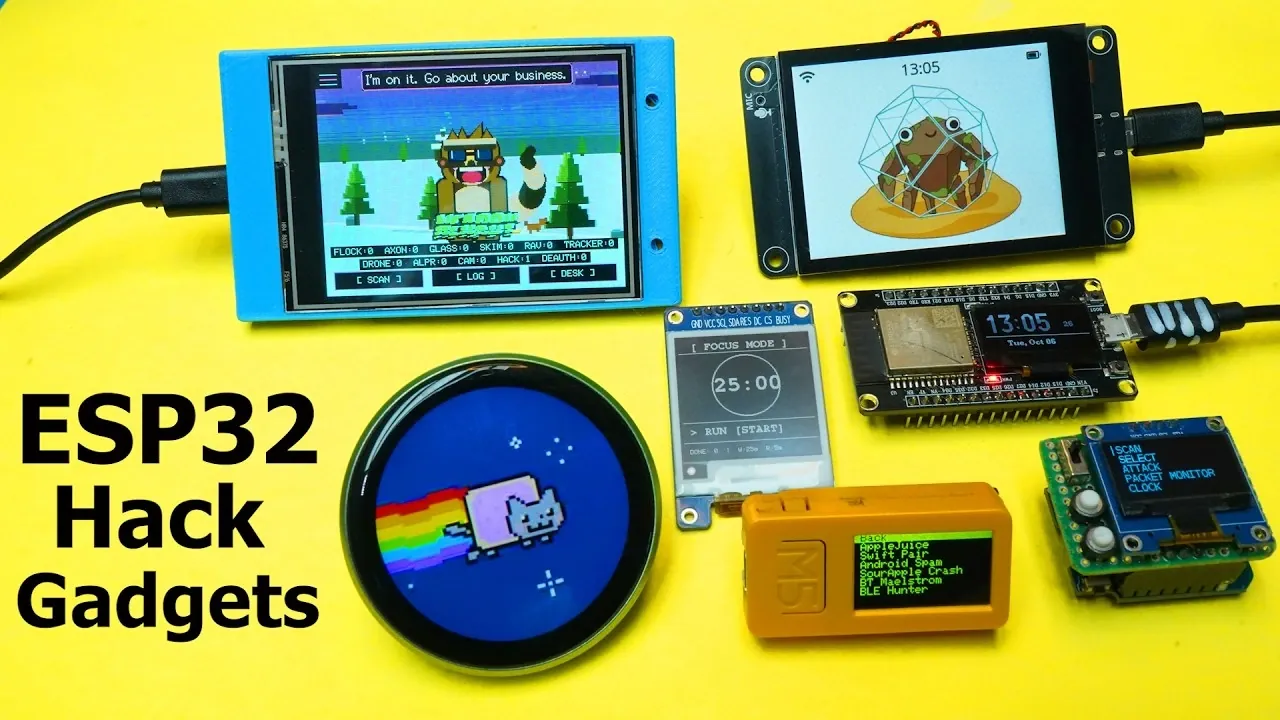
The ESP32 microcontroller is a versatile platform for electronics projects, combining features like Wi-Fi, Bluetooth and support for various display technologies. Hacktuber highlights its potential through examples such as the ESP32-S3 Development Board, which includes a built-in microphone and speaker. This makes it well-suited for applications like voice-controlled systems or audio-based projects, showcasing how specific hardware configurations can expand its functionality.
Explore how the ESP32 can drive projects like energy-efficient E-Ink displays, wearable electronic badges and custom cyber decks. Learn about its compatibility with OLED screens for compact data visualization or how the CYD GPL Display uses ESP-Now communication for enhanced network diagnostics. This overview provides practical insights into using the ESP32 for both creative and technical applications.
ESP32-S3 Development Board: A Hub for Advanced Projects
TL;DR Key Takeaways :
- The ESP32 microcontroller is a versatile platform supporting a wide range of applications, from AI chatbots to network scanners, making it ideal for hobbyists, developers and engineers.
- The ESP32-S3 Development Board offers advanced features like a built-in microphone, speaker, Wi-Fi and Bluetooth, allowing projects such as voice-controlled systems and smart home assistants.
- ESP32-powered devices like electronic badges, OLED displays and E-Ink screens provide customizable, energy-efficient and cost-effective solutions for IoT and portable applications.
- Specialized tools like the CYD GPL Display and M5 Stick Plus 2 enhance network diagnostics and portable device development, showcasing the ESP32’s adaptability for professional and creative projects.
- The ESP32 ecosystem supports innovative DIY projects, including Wi-Fi scanners, cyber decks and smart displays, empowering users to transform ideas into functional and creative devices.
The ESP32-S3 Development Board is a feature-rich platform designed to support complex and demanding projects. It comes equipped with a built-in microphone and speaker, making it ideal for audio-based applications such as AI chatbots, voice-controlled systems, or even smart home assistants. Its dual wireless connectivity, Wi-Fi and Bluetooth, ensures seamless communication with other devices, allowing the creation of smart and interconnected systems. Developers can use this board to integrate natural language processing, making it a strong candidate for projects requiring voice recognition or real-time audio interaction. Whether you’re building a home automation system or experimenting with AI, the ESP32-S3 offers the tools to make it happen.
Electronic Badges: Portable and Programmable
Electronic badges powered by the ESP32 are gaining popularity due to their portability and customizability. These wearable devices often feature small displays capable of showcasing GIFs, videos, or text, along with sound capabilities and rechargeable batteries. They are widely used at conferences, events, or as personal identification tools, offering a unique combination of functionality and sustainability. With the ESP32, you can design badges tailored to specific needs, such as interactive displays, dynamic name tags, or even small-scale gaming devices. Their compact size and programmability make them an excellent choice for creative and practical applications.
Low-Cost ESP32 with OLED Display: Compact and Efficient
For projects where budget constraints are a concern, the ESP32 with a built-in OLED display is an affordable yet powerful solution. The 128×64 pixel monochrome screen provides a clear interface for displaying essential information, such as weather updates, system statuses, or real-time data. Additionally, the integrated LiPo charger ensures convenient battery management, making it ideal for portable devices. With built-in Wi-Fi and Bluetooth capabilities, this version of the ESP32 is particularly well-suited for Internet of Things (IoT) applications. Whether you’re creating a weather monitor, a crypto price tracker, or a compact data visualization tool, this cost-effective option delivers both functionality and efficiency.

Here are more guides from our previous articles and guides related to ESP32 that you may find helpful.
- $5 ESP32-S3 Super Mini Packs Wi-Fi and Bluetooth
- How an $8 ESP32 S3 Microcontroller Runs a 28.9M Parameter Local LLM
- 5 ESP32 Projects Worth Building in 2026: Such as an Apple HomeKit Controller
- $4 ESP32 Module Brings Wi-Fi and Bluetooth to IoT Projects
- Replacing Security Cameras with Three $10 ESP32S3 Wi-Fi Boards
- ESP32-S3 Super Mini Costs $5 and Packs Wi-Fi and Bluetooth
- ESP32-S3 Super Mini Brings 240 MHz Dual-Core Power For $4
- ESP32 S31 Devkit Hands-on: 320 MHz RISC-V Chip Adds Wi-Fi 6
- $4 ESP32-S3 Super Mini Packs a 0.96-Inch IPS TFT Screen
- Build a DIY Open source Flipper Zero Using a ESP32-DIV
CYD GPL Display: Enhanced Visuals for Network Applications
The CYD GPL Display, powered by the ESP32, features a larger 3.2-inch screen, making it suitable for projects requiring detailed visual outputs. When paired with Sasquatch software, it becomes a robust tool for Bluetooth and Wi-Fi scanning, offering a comprehensive solution for network diagnostics. The integration of ESP-Now technology allows for device-to-device communication without the need for internet access, allowing the creation of secure and localized networks. This setup is particularly useful for network administrators or security professionals who need reliable tools for troubleshooting and monitoring. The CYD GPL Display demonstrates how the ESP32 can be used to enhance both functionality and user experience in network-related applications.
E-Ink/E-Paper Displays: Energy-Efficient and Long-Lasting
E-Ink and E-Paper displays are renowned for their energy efficiency and readability, and when combined with the ESP32, they unlock new possibilities for low-power applications. These displays can retain static graphics for months without power, consuming minimal current and voltage. This makes them ideal for projects such as digital signage, e-readers, or smart labels. Their ability to display content without continuous power input is a significant advantage for devices requiring minimal maintenance. Whether you’re designing a long-lasting information board or a portable e-reader, the combination of E-Ink technology and the ESP32 ensures a reliable and efficient solution.
M5 Stick Plus 2: A Compact Development Powerhouse
The M5 Stick Plus 2 is a small yet versatile development tool powered by the ESP32. It includes a built-in battery, microphone and infrared sensor, making it suitable for a variety of applications, from wearable devices to portable diagnostic tools. Pre-installed software for Bluetooth and Wi-Fi scanning allows it to function as a network diagnostic tool right out of the box. Its compact size and wide-ranging features make it an excellent choice for developers looking to create portable and multifunctional devices. Whether you’re building a wearable gadget or a compact network scanner, the M5 Stick Plus 2 offers the flexibility and functionality needed to succeed.
DIY Wi-Fi and Network Scanner: A Rewarding Project
Creating a DIY Wi-Fi and network scanner with an ESP8266 board is a practical and engaging project for electronics enthusiasts. By integrating an OLED display and a rechargeable battery, you can build a portable device capable of scanning and monitoring networks. This tool is particularly useful for network administrators or security professionals who require a compact, reliable solution for diagnostics and troubleshooting. The project not only enhances your technical skills but also provides a functional device that can be used in real-world scenarios.
Custom Cyber Deck: A Showcase of Creativity
A custom cyber deck is an excellent way to demonstrate the capabilities and versatility of the ESP32. By using 3D printing, you can design a unique case to house multiple programs, such as a clock, weather monitor, crypto tracker, or visual effects. One popular addition is the “Game of Life” simulation, which showcases complex algorithms and patterns. This project combines functionality with aesthetic appeal, making it a favorite among DIY enthusiasts and makers. The cyber deck not only serves as a practical tool but also as a creative expression of your technical expertise.
Endless Possibilities with the ESP32
The ESP32 microcontroller continues to be a driving force in modern electronics, offering a rich feature set and adaptability that supports a wide variety of projects. With capabilities like Wi-Fi, Bluetooth and compatibility with various display technologies, the ESP32 enables developers and hobbyists alike to create devices ranging from simple tools to sophisticated systems. Its growing ecosystem and active community provide a wealth of resources and inspiration, making sure that the possibilities for innovation remain limitless. Whether you’re building an AI chatbot, a network scanner, or a custom cyber deck, the ESP32 is the platform that can turn your ideas into reality.
Media Credit: Hacktuber
Disclosure: Some of our articles include affiliate links. If you buy something through one of these links, Geeky Gadgets may earn an affiliate commission. Learn about our Disclosure Policy.
