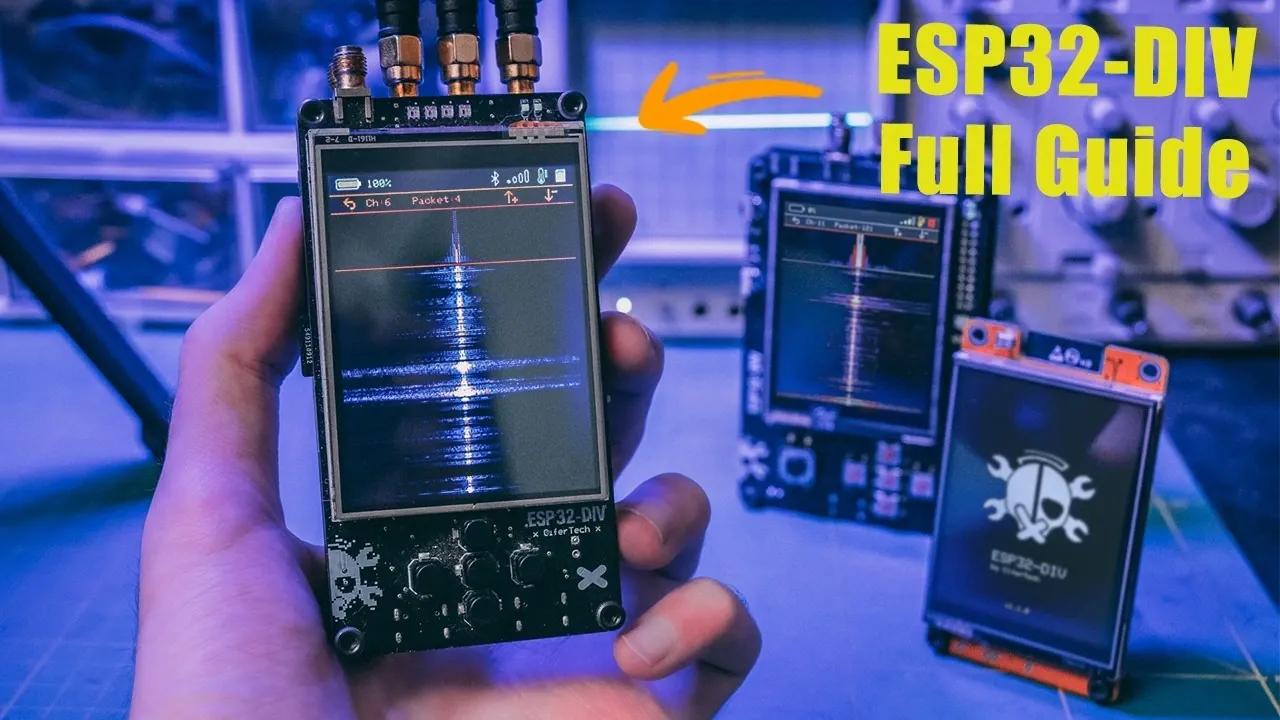
The ESP32-DIV is an open source platform designed for wireless experimentation and signal analysis, built on the ESP32 and ESP32-S3 microcontrollers. It supports features such as Wi-Fi, Bluetooth, RFID, NFC, sub-GHz, and IR communication. According to CiferTech, the platform’s modular hardware design includes components like a TFT touchscreen, IP5306 battery management and WS2812 NeoPixel LEDs. With options ranging from the beginner-friendly CYD board to the advanced ESP32-S3 variant, the ESP32-DIV accommodates a wide range of user needs and technical expertise.
Explore how to perform tasks like firmware flashing, wireless network testing and signal manipulation using the ESP32-DIV. Learn about its firmware update methods, including a browser-based Web Flasher for ease of use and Arduino IDE for advanced customization. Discover how its GPS functionality supports applications such as war driving and satellite diagnostics and how its RFID and NFC capabilities enable cloning, decoding and security testing.
Hardware Overview
TL;DR Key Takeaways :
- The ESP32-DIV is a versatile open source hardware platform built around ESP32 and ESP32-S3 chips, offering advanced wireless connectivity features like Wi-Fi, Bluetooth, RFID, NFC, sub-GHz, GPS and IR capabilities.
- It comes in multiple versions (V1, V2, CYD) tailored for different user needs, with features like a TFT touchscreen, battery management, USB-to-serial communication and modular shield support for expanded functionality.
- Supports multiple firmware flashing methods, including Web Flasher, Desktop Flasher and Arduino IDE, making sure flexibility for beginners and advanced developers.
- Excels in wireless experimentation and signal manipulation, allowing tasks like network scanning, BLE spoofing, RFID cloning, IR signal replay and GPS-based applications like war driving and satellite diagnostics.
- As an open source project, it encourages community collaboration, offering access to hardware designs, firmware and documentation on GitHub for customization and innovation.
The ESP32-DIV is available in multiple versions, each tailored to meet different user needs and expertise levels. These versions ensure flexibility and scalability for a variety of applications:
- Version 1: A compact, all-in-one design featuring the ESP32 chip, delivering reliable performance for general use.
- Version 2: An enhanced version equipped with the ESP32-S3 chip, offering increased processing power and advanced functionality.
- CYD: A pre-assembled development board with a touchscreen interface, designed for beginners or users seeking quick deployment.
Each version integrates essential components to support its diverse functionalities:
- TFT display with touch controller: Provides an intuitive and interactive interface for seamless operation.
- IP5306 battery management: Ensures efficient power usage, making it ideal for portable applications.
- CP2102 USB-to-serial communication: Facilitates smooth data transfer and debugging processes.
- PCF8574 button control: Enables precise input handling for various operations and tasks.
- WS2812 NeoPixel LEDs: Offers visual feedback for system status and activity monitoring.
- Shield modules: Expand the platform’s capabilities with RF, RFID, NFC, GPS and IR functionalities.
This modular hardware design ensures that users can adapt the ESP32-DIV to a wide range of projects, from basic experimentation to complex signal manipulation tasks.
Firmware Flashing Options
The ESP32-DIV supports multiple firmware flashing methods, allowing users to select the most suitable approach based on their technical expertise and project requirements. These options ensure flexibility and ease of use:
- Web Flasher: A browser-based tool that simplifies firmware updates, making it accessible even for beginners.
- Desktop Flasher: A Python-based GUI application for Windows, offering a robust and user-friendly flashing experience.
- Arduino IDE: An advanced option for developers who wish to modify and compile source code to create custom functionalities.
These flashing methods empower users to keep their devices updated or customize the firmware to suit specific needs, making sure the platform remains adaptable and future-proof.

Gain further expertise in ESP32 by checking out these recommendations.
- How an $8 ESP32 S3 Microcontroller Runs a 28.9M Parameter Local LLM
- Optimize ESP32 Battery Life Using 10 Lesser-Known Features
- Build a Sonos Rival with the $30 AUD Louder ESP32 Board
- Arduino Nano ESP32 handheld console with round color display
- T-Display AMOLED Touch ESP32 board binary converter project
- Super Tiny RP2040/ESP32 Board Display for IoT and DIY Projects
- Tiny Holo Cubic display features a 1.3-inch TFT IPS and ESP32 microcontroller
- LilyGo T Watch Keyboard C3 mini computer kit
- These Hidden Apple Maps Settings Will Completely Upgrade Your CarPlay
- Track Room Occupancy Without Cameras Using ESP32 Wi-Fi Drops
Wireless Connectivity Features
The ESP32-DIV excels in wireless connectivity, using its Wi-Fi, Bluetooth, and sub-GHz spectrum capabilities to perform a variety of tasks. These features make it a powerful tool for wireless experimentation and research:
- Wi-Fi: Conduct network scanning, packet monitoring, beacon spamming, deauthentication attacks, captive portal creation and probe flooding.
- Bluetooth: Perform BLE scanning, sniffing, spoofing, jamming and use advanced tools like BLE Rubber Ducky and Sour Apple for testing and analysis.
- 2.4 GHz and Sub-GHz: Engage in spectrum analysis, protocol disruption, replay attacks and jamming for research and security testing purposes.
These wireless capabilities provide users with the tools to explore, analyze and test wireless networks and protocols in a controlled and customizable environment.
Signal Manipulation Capabilities
The ESP32-DIV supports advanced signal manipulation, making it an invaluable tool for working with RFID, NFC, and IR technologies. Its capabilities include:
- RFID and NFC: Read, clone, decode, erase and test the security features of RFID and NFC cards, allowing comprehensive analysis and experimentation.
- IR: Capture and replay infrared signals, save profiles and use the device as a universal remote control for various appliances.
These features allow users to explore the security and functionality of signal-based systems, making the ESP32-DIV a versatile platform for both research and practical applications.
GPS Functionality
The ESP32-DIV includes GPS capabilities, allowing users to engage in location-based applications and analysis. Its GPS features include:
- War driving: Log GPS-tagged data to map wireless networks in real time, providing valuable insights into network distribution and coverage.
- Satellite diagnostics: Analyze satellite signals to improve navigation and positioning accuracy for advanced applications.
These GPS functionalities expand the platform’s versatility, making it suitable for projects that require precise location tracking and data analysis.
System Tools and Customization
The ESP32-DIV offers a range of tools and customization options to enhance its usability and adaptability. These features ensure that users can tailor the platform to their specific needs:
- File management: Organize and access stored data efficiently, streamlining workflows and project management.
- Touchscreen calibration: Ensure precise input control for smooth and accurate operation.
- Customizable settings: Adjust themes, brightness and scanning behavior to match user preferences and project requirements.
These tools and settings make the ESP32-DIV a user-friendly and highly customizable platform for a wide range of applications.
Open source Development
As an open source project, the ESP32-DIV thrives on community collaboration and contributions. Developers can access hardware designs, firmware files and documentation on GitHub, allowing them to customize and innovate further. This collaborative approach fosters continuous improvement and ensures that the platform remains a valuable resource for professionals and hobbyists alike.
By embracing open source principles, the ESP32-DIV enables users to contribute to its development, share knowledge and create new applications, making it a dynamic and evolving tool in the field of wireless and signal manipulation.
Media Credit: CiferTech
Disclosure: Some of our articles include affiliate links. If you buy something through one of these links, Geeky Gadgets may earn an affiliate commission. Learn about our Disclosure Policy.
