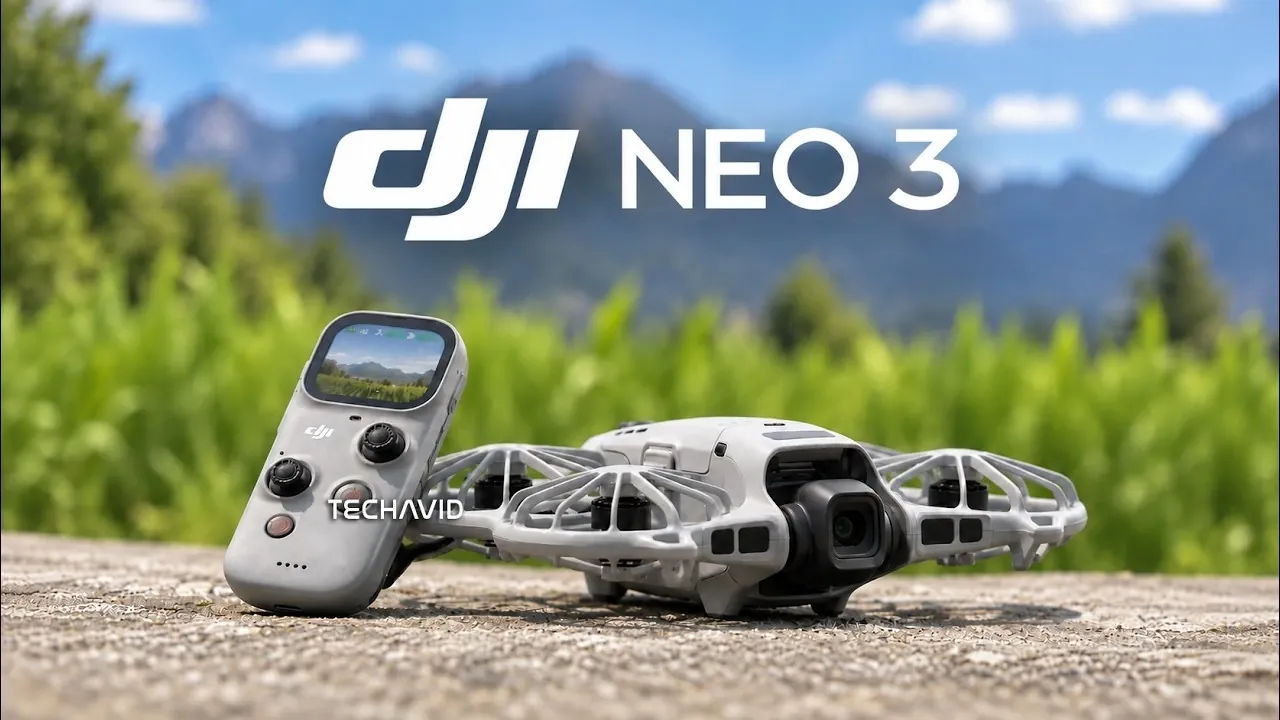
Leaked details about the DJI Neo 3 have sparked significant interest, particularly regarding its potential design and functionality shifts. TechAvid’s analysis highlights one notable change: the apparent integration of the digital transceiver directly into the drone, a departure from the detachable module used in the Neo 2. This design choice could simplify setup and improve reliability, though it raises questions about adaptability and upgrade options. Additionally, the packaging hints at a near-final product, with standards and copyrights dated 2025 and 2026, suggesting the Neo 3 may be close to launch.
Explore how the Neo 3’s rumored RC Mini controller could enhance long-range usability, with its potential to match the RC Mini AG’s 10-kilometer transmission range and three-hour battery life. Gain insight into the redesigned propeller guards and ventilation system, which may address safety and overheating concerns. Finally, decode the mystery of the top-mounted module, speculated to house advanced obstacle avoidance technology and consider its implications for navigation precision. These elements collectively paint a picture of a drone poised to refine user experience while leaving room for further revelations.
Integrated Digital Transceiver: A Streamlined Design?
TL;DR Key Takeaways :
- The DJI Neo 3 may feature an integrated digital transceiver, simplifying setup and improving reliability, though raising concerns about adaptability and component upgrades.
- The RC Mini controller, expected to accompany the Neo 3, could offer advanced features like a 10-kilometer video transmission range, three-hour battery life and a bright 1.97-inch display, though its exact specifications remain unverified.
- A mysterious top-mounted module on the Neo 3 sparks speculation about a potential new obstacle avoidance sensor, though its purpose is not yet confirmed.
- Design updates include enhanced propeller guards for safety, a new ventilation system for better cooling and an updated camera housing, hinting at possible imaging improvements.
- Packaging details suggest the Neo 3 is nearing retail readiness, with Chinese GB standards dated 2025 and a 2026 copyright line, though the official release timeline remains unknown.
One of the most notable revelations from the leaks is the apparent absence of a detachable digital transceiver in the Neo 3’s packaging. This suggests that DJI may have chosen to integrate the transceiver directly into the drone, a design decision reminiscent of the original Neo model.
In contrast, the Neo 2 relied on a detachable module for its transmission hardware. If this integration is confirmed, it could simplify the setup process, reduce potential points of failure and potentially improve transmission reliability. However, this design choice raises questions about its impact on the drone’s adaptability and whether it limits the ability to upgrade or replace components. Without official confirmation from DJI, the implications of this change remain speculative.
RC Mini Controller: Familiar Yet Unverified
The Neo 3 is expected to feature an RC Mini controller, which appears to share similarities with the RC Mini AG. Known for its robust performance, the RC Mini AG offers several impressive features:
- A video transmission range of up to 10 kilometers, powered by OcuSync 4 technology.
- A battery life of approximately three hours, making sure extended usability.
- A 1.97-inch display with 800 nits of brightness, providing clear visibility even in bright outdoor conditions.
If the Neo 3’s controller matches or surpasses these specifications, it could significantly enhance the user experience, particularly for long-range operations and professional applications. However, the exact capabilities of the Neo 3’s RC Mini controller remain unverified, leaving room for speculation about its potential improvements or limitations.

Uncover more insights about DJI Neo in previous articles we have written.
- Rumoured DJI Neo 3 Drone Targets a September 2026 Launch
- Leaked DJI Neo 3 May Feature a 1/1.3-Inch Sensor Upgrade
- Unidentified Upward Sensor Clouds the DJI Neo 3 Box Leak
- DJI Neo 3 Leak Reveals a Likely Upward Obstacle Detection Sensor
- DJI Neo 3 Could Extend the Neo 2’S 19-Minute Flight Time
- DJI Neo 3 vs DJI Neo 2: the 11-Minute Battery Flaw Explained
- How to Connect Your DJI Neo 2 to the Meta Quest 3
- DJI Neo 2 vs Lito Series: the Best Sub-$500 Drone Guide
- Insta360 May Challenge DJI Neo 2 with Rumored 360-Degree Drone
- Why the RayNeo Air 4 Pro is the Perfect DJI Neo 2 Upgrade
The Enigma of the Top-Mounted Module
A raised black module on the top of the Neo 3 has sparked considerable curiosity among drone enthusiasts. Speculation suggests that this component could house a new obstacle avoidance sensor, potentially enhancing the drone’s ability to navigate complex environments with greater precision.
However, the leaked images and packaging provide no definitive information about its purpose. Whether this module represents a significant technological advancement or serves a more conventional function remains unclear. Its presence adds an element of intrigue to the Neo 3’s design, leaving enthusiasts eager for further details.
Redesign Highlights: Enhanced Safety, Cooling and Imaging
The Neo 3’s design incorporates several visible updates that suggest a focus on improving performance, safety and reliability. Key changes include:
- Redesigned propeller guards, likely aimed at enhancing safety and durability during operation.
- A new ventilation system, which could improve cooling efficiency and address potential overheating issues during extended flights or demanding conditions.
- An updated camera housing, hinting at possible internal upgrades to improve image or video quality.
These updates indicate that DJI has prioritized refining the drone’s functionality and addressing potential pain points from previous models. The new ventilation system, in particular, could be a response to user feedback, making sure better heat management for improved performance. However, without detailed specifications, the full extent of these enhancements remains speculative.
Packaging Insights: Clues to the Neo 3’s Readiness
The Neo 3’s packaging offers subtle hints about its development status. Notably, it includes Chinese GB standards dated 2025 and a 2026 copyright line, suggesting that the product is nearing retail readiness. This implies that DJI has likely completed the design and testing phases, positioning the Neo 3 for an imminent launch.
However, the absence of an official announcement leaves questions about the exact timeline for its release. The packaging details, while promising, stop short of confirming when consumers can expect to see the Neo 3 on store shelves.
Unanswered Questions and Speculations
Despite the insights provided by the leaks, several critical questions about the Neo 3 remain unresolved. These include:
- What specific improvements have been made to the camera’s performance and how do they compare to previous models?
- What is the expected flight duration and battery life and how does it align with user expectations for extended operations?
- What is the precise function of the top-mounted module and does it represent a significant technological advancement?
- How does the redesigned ventilation system improve the drone’s performance under challenging conditions?
These unanswered questions highlight the gaps in the current understanding of the Neo 3’s capabilities. As the drone community eagerly awaits further leaks or an official announcement from DJI, speculation continues to grow. The Neo 3 appears to blend familiar features with intriguing new elements, potentially setting a new benchmark for consumer and professional drones. However, only time will reveal the full scope of its innovations and how it compares to its predecessors.
Media Credit: TechAvid
Disclosure: Some of our articles include affiliate links. If you buy something through one of these links, Geeky Gadgets may earn an affiliate commission. Learn about our Disclosure Policy.
