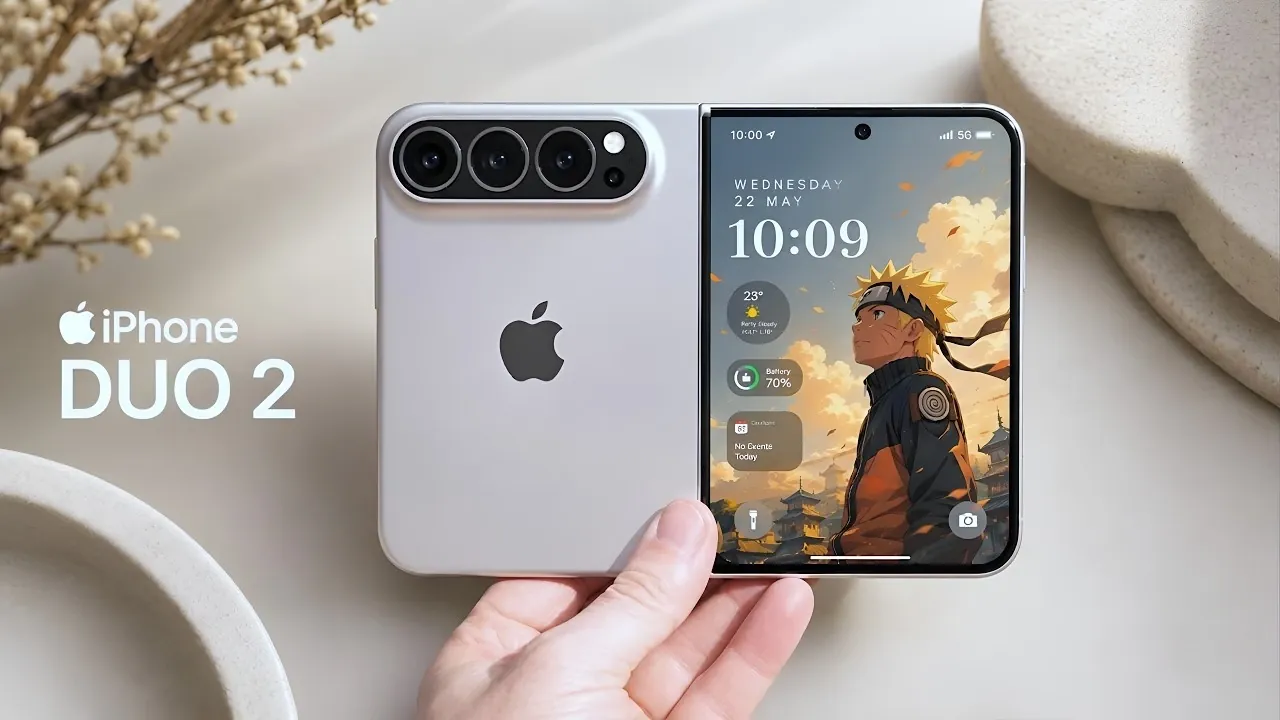
Apple’s rumored second-generation foldable iPhone, the iPhone Duo 2, has already captured the attention of tech enthusiasts and industry watchers alike. Early prototype leaks suggest the device could feature a triple-camera system and under-display Face ID, signaling major advancements over the original model. Here is a complete breakdown of what to expect ahead of its rumored 2027 window.
- Under-Display Face ID: Apple is reportedly testing prototypes that embed Face ID hardware beneath the cover display to replace side-mounted Touch ID.
- Triple-Camera Upgrade: Early indications point to the addition of a dedicated telephoto zoom lens to rival competitors like Samsung.
- A21 Pro Integration: Expected to leverage Apple’s next-generation 2nm silicon for enhanced speed and on-device AI efficiency.
- Design Evolution: Anticipated to maintain a familiar form factor while addressing key hardware compromises of the first-gen device.

Triple-Camera System: Redefining Mobile Photography
One of the most anticipated features of the iPhone Duo 2 is its rumored triple-camera system, which could elevate mobile photography to new heights. This advanced setup is expected to include:
- A telephoto lens for optical zoom, allowing users to capture distant subjects with clarity.
- A wide-angle lens designed for versatile, everyday photography.
- An ultrawide lens ideal for expansive landscapes and group shots.
If these rumors hold true, the iPhone Duo 2 would address a key limitation of the first-generation foldable iPhone, which lacked the zoom versatility offered by competitors. For instance, Samsung’s flagship foldables have set a high bar with high-resolution sensors and optical zoom, making them formidable rivals. By integrating a triple-camera system, Apple could close that gap and establish itself as a leader in foldable mobile photography.
Under-Display Face ID: Advancing Biometric Security
Another new feature rumored for the iPhone Duo 2 is under-display Face ID, which could replace the current side-mounted Touch ID. This technology would embed Face ID sensors beneath the screen, eliminating the need for visible notches or cutouts on the cover display. The result would be a seamless, immersive screen that enhances the overall user experience.
However, implementing under-display Face ID in a foldable device presents unique engineering challenges. Foldable smartphones are inherently thin, leaving limited space for the intricate depth-sensing hardware required for reliable biometric authentication. Apple will need to pioneer innovative layout solutions to ensure the system is both accurate and secure. If successful, this feature could set a new benchmark for biometric security in foldable devices.
Competing with Rivals: Aiming for Market Leadership
Apple’s rumored upgrades for the iPhone Duo 2 appear to be a direct response to a fiercely competitive foldable smartphone market. Competitors have consistently pushed the boundaries of what foldable devices can achieve, excelling in areas such as camera performance, hinge durability and slim profiles.
To compete effectively, Apple must not only match but potentially surpass these benchmarks. The inclusion of a triple-camera system and under-display Face ID demonstrates Apple’s intent to challenge market leaders. However, whether these features will be enough to shift market dynamics depends on Apple’s ability to deliver a device that combines innovation, reliability and user-centric design.
Design Challenges and the Path to Launch
The iPhone Duo 2 is expected to debut in late 2027, but its final design and feature set are still under development. Creating a foldable device that incorporates advanced technologies like a triple-camera system and under-display Face ID is no small feat. Engineers face the daunting task of balancing performance, durability and aesthetics within the constraints of an ultra-thin foldable form factor.
Foldable devices present unique challenges in hardware integration. The limited internal space makes it difficult to include advanced components without compromising reliability or battery life. Apple’s ability to overcome these obstacles will be critical to the iPhone Duo 2‘s success in the market.
The Future of Foldable Innovation
The iPhone Duo 2 represents Apple’s ambitious vision for the future of foldable smartphones. By addressing the limitations of its predecessor and introducing next-generation features, Apple aims to redefine what users can expect from a foldable device. As the anticipated 2027 launch approaches, the tech world will be watching closely to see how Apple delivers on its promises and whether the iPhone Duo 2 can set a new standard for foldable technology.
Unlock more potential in iPhone Duo 2 by reading previous articles we have written.
- Early iPhone Duo 2 Leaks Reveal Major Hardware Upgrades
- Apple’s iPhone Duo 2 Just Leaked: Everything Changing With the Next Foldable
- Apple’s Secret iPhone Duo 2 Upgrades Look Absolutely Insane
- iPhone Duo: 5 Features That Make It Worth the Price
- Rumored iPhone Duo 2 Upgrades: 5 Changes Expected In 2027
Source & Image Credit: Demon’s Tech
Disclosure: Some of our articles include affiliate links. If you buy something through one of these links, Geeky Gadgets may earn an affiliate commission. Learn about our Disclosure Policy.
