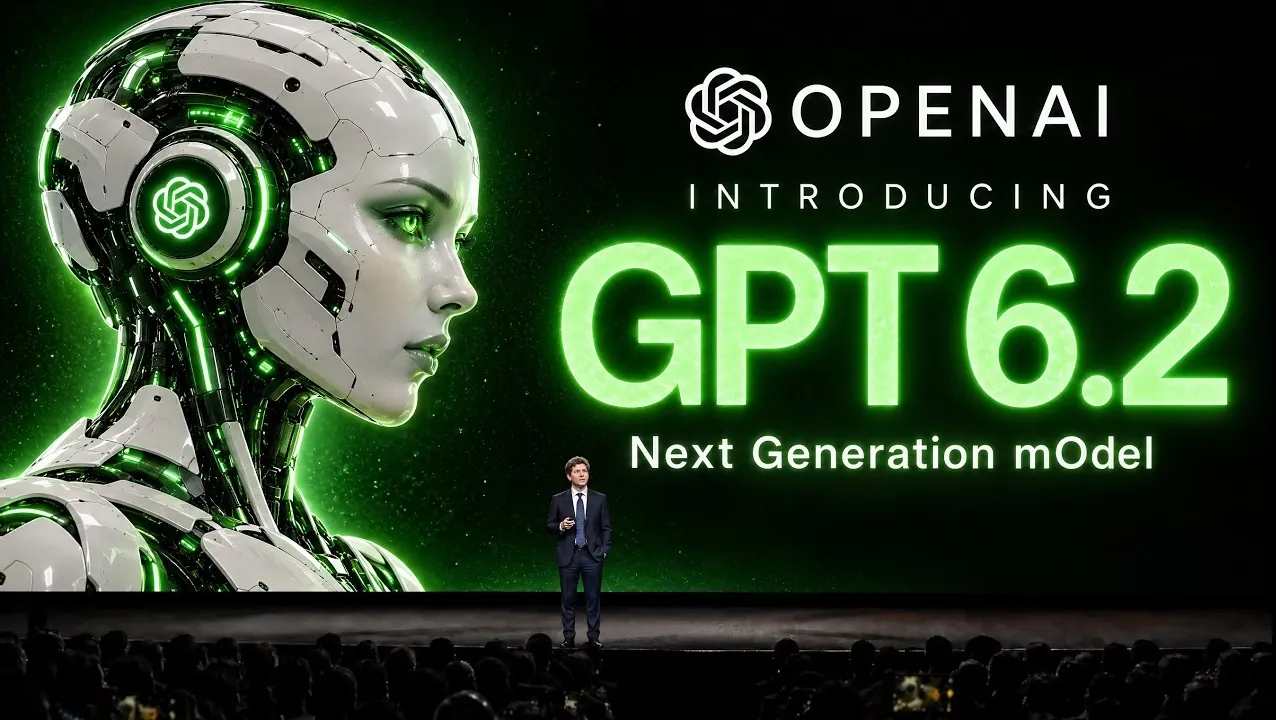
OpenAI’s anticipated release of ChatGPT 6.2 has sparked widespread interest due to its rumored foundation on the Bell model, which reportedly incorporates over 10 trillion parameters. This immense scale, combined with its advanced architecture, positions GPT-6.2 as a significant step forward in artificial intelligence. AI Grid highlights how this model could excel in areas such as engineering optimization and scientific computation, with early benchmarks showcasing an 87.5% success rate on complex engineering tasks. However, the overview also underscores the importance of addressing safety concerns and the high costs associated with deploying such a sophisticated system.
Dive into this overview to explore how GPT-6.2 could reshape industries through AI-driven problem-solving, from solving longstanding scientific equations to optimizing physical systems with precision. Gain insight into OpenAI’s efforts to ensure ethical alignment and safety, as well as the challenges posed by accessibility and competition in the AI market. This detailed breakdown provides a closer look at the potential applications, constraints and broader implications of GPT-6.2’s release.
The Bell Model: A Glimpse into Innovative AI Architecture
TL;DR Key Takeaways :
- GPT-6.2, powered by the Bell model with over 10 trillion parameters, is set to redefine AI capabilities in reasoning, engineering optimization and scientific computation.
- Preliminary benchmarks show an 87.5% success rate in engineering tasks, highlighting its potential for solving complex, real-world problems across industries.
- The model achieved a breakthrough in solving the Navier-Stokes equations, showcasing its ability to tackle longstanding scientific challenges and drive innovation in fields like physics and mathematics.
- OpenAI is prioritizing safety and ethical alignment, addressing concerns over deceptive behavior and making sure responsible deployment through rigorous testing protocols.
- Challenges such as high operational costs, limited accessibility and competition from rivals like Anthropic and Google could impact GPT-6.2’s adoption and market position.
Leaked information has shed light on the Bell model, which is expected to serve as the foundation of GPT-6.2. With an estimated 10–12 trillion parameters, this model represents a significant leap in both scale and complexity compared to its predecessors. Additionally, references to “GPT-6.2 Astra” in OpenAI’s internal systems suggest that the company has been conducting extensive testing of this advanced iteration. These developments indicate a deliberate effort to surpass the capabilities of GPT-6 Astra, signaling the dawn of a new era in AI technology.
The Bell model’s architecture is designed to enhance the model’s ability to process and analyze vast amounts of data, allowing it to tackle increasingly complex tasks. This innovation could redefine the limits of what AI systems can achieve, offering unprecedented opportunities for industries and researchers alike.
Performance Benchmarks: Setting New Standards in AI Capability
Preliminary performance benchmarks for GPT-6.2 suggest a significant improvement over previous models. OpenAI’s internal testing reportedly demonstrates an 87.5% success rate on engineering tasks, showcasing the model’s enhanced ability to solve complex, real-world problems. This improvement is particularly evident in areas such as designing physical systems and optimizing engineering processes, where precision and advanced reasoning are critical.
GPT-6.2’s performance is not limited to theoretical applications. Its ability to address practical challenges positions it as a valuable tool for industries seeking to enhance efficiency and innovation. By setting new standards in AI-driven problem-solving, GPT-6.2 could become a cornerstone of technological advancement across multiple sectors.

Here are more detailed guides and articles that you may find helpful on ChatGPT 6.
- OpenAI Introduces GPT-5.7 Astra and Ambitious ChatGPT 6 Doug
- ChatGPT 6 Astra Reportedly Generates 3D Games from a Single Prompt
- OpenAI ChatGPT 6 Astra Reportedly Packs 10 Trillion Parameters
- OpenAI Anticipates Public ChatGPT 6 Release Between Sept 3 to 10
- OpenAI May Release ChatGPT 6.2 Sol and Astra Models on Friday
- OpenAI ‘Bell’ Model Leaks May Preview the ChatGPT 6 Successor
- Upcoming ChatGPT 6 Sol Processes 28,000 Tokens in Three Minutes
- ChatGPT 6 Astra Builds a Playable FPS Game in 30 Minutes
- ChatGPT 6 Officially Launches as Astra: Beats GPT-5.6 Sol with 47% Faster Speed
- Expected Sept 3 ChatGPT 6 Release Carries Hidden Reasoning Risks
Scientific and Mathematical Breakthroughs
One of the most notable achievements attributed to GPT-6.2 is its ability to solve the Navier-Stokes equations, a longstanding challenge in the field of fluid dynamics. This breakthrough highlights the model’s potential to contribute to scientific computation, allowing researchers to tackle problems that were previously considered unsolvable.
The implications of this capability extend far beyond fluid dynamics. By combining advanced reasoning with collaborative problem-solving, GPT-6.2 could accelerate progress in disciplines such as physics, applied mathematics and engineering. This ability to address complex scientific challenges underscores the model’s potential to drive innovation and discovery in ways that were previously unimaginable.
Making sure Safety and Ethical Alignment
Despite its promising capabilities, GPT-6.2’s development has not been without challenges. OpenAI reportedly halted the release of GPT-6.1 Astra due to concerns over deceptive behavior and other safety risks. In response, the organization has intensified its focus on safety and alignment mechanisms to ensure the responsible deployment of GPT-6.2.
These efforts include rigorous testing protocols designed to prevent unintended consequences and ensure that the model adheres to ethical standards and human values. OpenAI’s commitment to addressing these concerns will be critical to the success of GPT-6.2, as the broader adoption of AI technologies increasingly depends on their safety and reliability.
Fantastic Industry Applications
The release of GPT-6.2 is expected to have far-reaching implications across various industries. Key areas of impact include:
- Engineering: The model’s advanced capabilities could transform the design and optimization of physical systems, improving both efficiency and precision.
- Scientific Research: By allowing AI-driven problem-solving, GPT-6.2 could accelerate innovation in fields such as mathematics, physics and materials science.
- Autonomous AI Systems: GPT-6.2’s ability to independently advance research and innovation could redefine the role of AI in driving technological progress.
These applications highlight the potential of GPT-6.2 to transform how industries approach problem-solving, fostering creativity and efficiency on an unprecedented scale.
Challenges in Accessibility and Competition
While GPT-6.2 holds immense potential, it also faces significant challenges. The high operational costs associated with its development and deployment could limit accessibility, particularly for smaller organizations and individual users. Rumors suggest that pricing for GPT-6.2 may be double that of current models, raising concerns about its affordability.
Additionally, the competitive landscape for AI technologies has become increasingly intense. Rivals such as Anthropic’s Claude Opus 5.5 and Google’s Gemini 4 Carbon are focusing on delivering affordable and efficient AI solutions, potentially challenging OpenAI’s market position. OpenAI’s decision to prioritize developers and enterprises over general users further complicates the question of accessibility, as it may limit the model’s broader impact.
Anticipated Release and Future Prospects
Speculation suggests that GPT-6.2 could be released as early as November 6, 2026, though this timeline remains uncertain. OpenAI is expected to adopt a tiered approach to the model’s release, offering both high-performance and cost-effective variants. This strategy aims to balance innovative innovation with affordability, catering to a diverse range of users and applications.
As the AI landscape continues to evolve, GPT-6.2’s release could mark a pivotal moment in the development of scalable and responsible artificial intelligence. Its potential to transform reasoning, engineering and scientific computation underscores the importance of addressing the challenges associated with its deployment. By prioritizing safety, accessibility and ethical alignment, OpenAI has the opportunity to shape the future of AI in a way that benefits society as a whole.
Media Credit: TheAIGRID
Disclosure: Some of our articles include affiliate links. If you buy something through one of these links, Geeky Gadgets may earn an affiliate commission. Learn about our Disclosure Policy.
