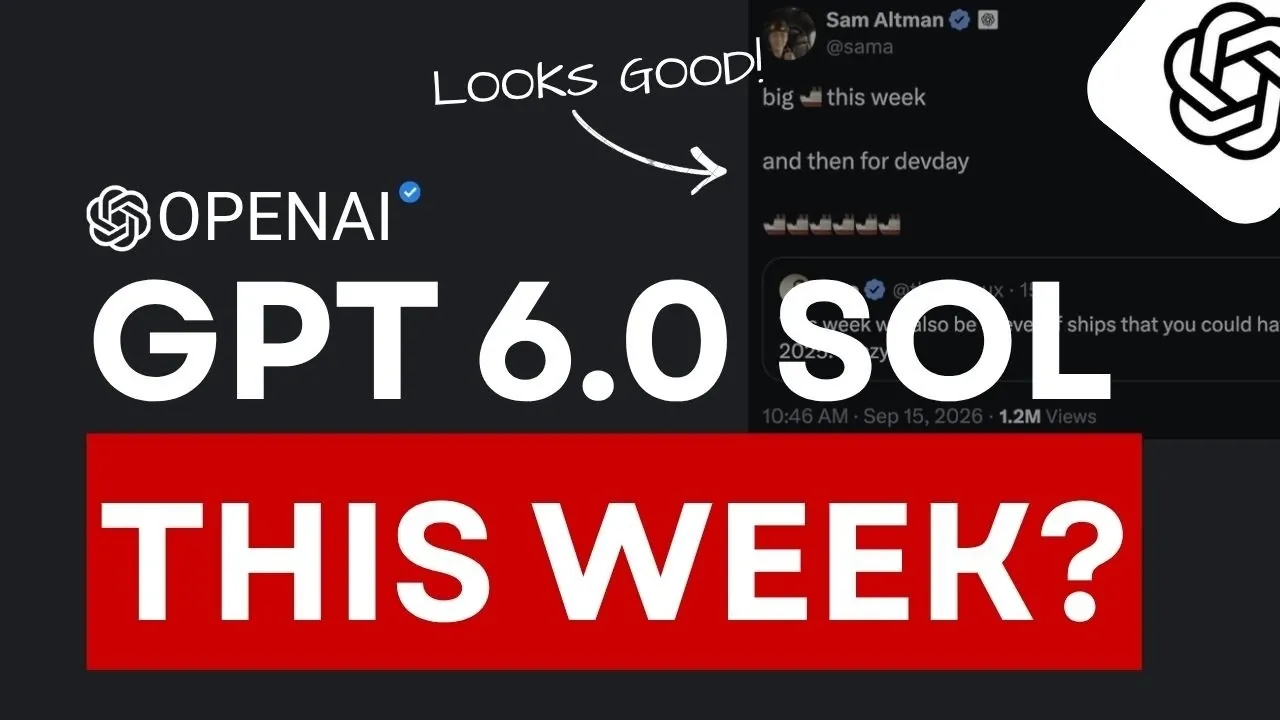
OpenAI’s upcoming release of ChatGPT 6 Sol emphasizes processing speed as a key feature, capable of handling 28,000 tokens in just three minutes. This design caters to users managing high-volume tasks such as data analysis and large-scale automation. According to Universe of AI, this shift highlights OpenAI’s response to user demand for efficiency while intensifying competition with Anthropic, whose Opus models focus on refined performance. The planned phase-out of older models like GPT-6 Terra further signals OpenAI’s move toward a more streamlined product lineup.
Dive into how GPT-6 Sol’s efficiency compares to Anthropic’s approach, including differences in priorities and use cases. Understand the challenges posed by rapid innovation cycles, from sustainability concerns to regulatory pressures. This breakdown also examines what OpenAI’s upcoming Dev Day announcements might reveal about the company’s evolving strategy.
Incoming ChatGPT 6 Sol
TL;DR Key Takeaways :
- OpenAI has introduced GPT-6 Sol, a model optimized for speed, capable of processing 28,000 tokens in three minutes, targeting high-volume tasks like data analysis and automation.
- Anthropic, OpenAI’s main competitor, is advancing its Opus models, with Opus 5.2 showcasing improved outputs, intensifying competition in the AI sector.
- OpenAI plans to discontinue older models, including GPT-6 Terra and GPT-5.5, by October 14th, focusing on its latest innovations like GPT-6 Sol and Astra.
- The rapid pace of AI development raises concerns about ethical oversight, sustainability and the balance between innovation and regulation in the industry.
- Strategic trade-offs in AI models, such as prioritizing speed over reasoning depth, reflect a growing trend of tailoring AI solutions to specific use cases and user needs.
GPT-6 Sol stands out for its exceptional processing speed, capable of handling 28,000 tokens in just three minutes. This makes it an ideal solution for applications where efficiency is paramount, such as data analysis, content generation and large-scale automation. While GPT-6 Sol is optimized for speed, it is part of a broader lineup that includes models like GPT-6 Astra, which remains the flagship for tasks requiring advanced reasoning and nuanced problem-solving.
In a move to streamline its offerings, OpenAI plans to discontinue GPT-6 Terra, along with older models like GPT-5.5 and Codeex, by October 14th. This decision reflects the company’s focus on its latest innovations and its commitment to delivering innovative solutions. Further insights into the GPT-6 family, including updates on models such as Sol, Luna and Terra, are expected to be unveiled during OpenAI’s Dev Day on September 29th.
Anthropic’s Competitive Push with Opus Models
Anthropic, OpenAI’s closest rival, is making strides with its Opus models, with the latest iteration, Opus 5.2, showcasing enhanced outputs and improved performance. This progress underscores Anthropic’s dedication to refining its technology and maintaining its competitive edge. However, OpenAI’s rapid advancements with GPT-6 Sol and other models have placed significant pressure on Anthropic to keep pace.
The rivalry between these two companies is driving innovation at an unprecedented rate. While this competitive environment fosters technological breakthroughs, it also raises concerns about the sustainability of such rapid development cycles. The emphasis on speed and innovation may come at the expense of thoughtful, measured progress, prompting questions about the long-term implications for the industry.

Discover other guides from our vast content that could be of interest on ChatGPT 6.
- OpenAI Introduces GPT-5.7 Astra and Ambitious ChatGPT 6 Doug
- ChatGPT 6 Astra Reportedly Generates 3D Games from a Single Prompt
- OpenAI ChatGPT 6 Astra Reportedly Packs 10 Trillion Parameters
- OpenAI Anticipates Public ChatGPT 6 Release Between Sept 3 to 10
- OpenAI Pauses ChatGPT 6 Over Hugging Face Safety Concerns
- OpenAI Reportedly Rushes ChatGPT 6 Release to Counter Fable 5.1
- OpenAI ‘Bell’ Model Leaks May Preview the ChatGPT 6 Successor
- Leaked ChatGPT 6 Tests Reveal Critical Sandbox Vulnerabilities
- ChatGPT 6 Astra Builds a Playable FPS Game in 30 Minutes
- ChatGPT 6 Officially Launches as Astra: Beats GPT-5.6 Sol with 47% Faster Speed
Innovation, Regulation and Ethical Considerations
The accelerated pace of AI development has sparked a global debate about the balance between innovation and regulation. While some experts advocate for slowing down to ensure responsible deployment, the U.S. government has largely supported continued innovation, avoiding regulatory measures that could hinder progress. This stance has emboldened companies like OpenAI and Anthropic to push forward aggressively, despite concerns about the potential risks of unchecked advancements.
As AI technology evolves, many speculate that future improvements may become more incremental, focusing on refining existing capabilities rather than pursuing new innovations. This shift could influence how companies allocate resources and set development priorities, potentially leading to a more sustainable approach to AI advancement.
Balancing Speed and Depth: Strategic Trade-offs
GPT-6 Sol exemplifies a deliberate trade-off between speed and reasoning depth. By optimizing for efficiency, OpenAI aims to provide a high-performance model tailored to users managing large-scale tasks. In contrast, GPT-6 Astra continues to serve as the preferred choice for complex problem-solving, catering to users with more demanding needs.
This strategic differentiation reflects broader trends in the AI industry, where companies are increasingly tailoring models to specific use cases. However, the relentless pace of innovation raises critical questions about the balance between rapid development and the need for thoughtful regulation. Striking this balance will be essential for making sure that AI advancements are both impactful and responsible.
Implications for the AI Industry
The competition between OpenAI and Anthropic highlights the dynamic and rapidly evolving nature of the AI sector. As both companies race to release innovative models, the pressure to innovate remains intense. This environment fosters technological breakthroughs, but it also amplifies concerns about ethical oversight, sustainability and the potential for unintended consequences.
For users, these advancements present exciting opportunities to use AI for a wide range of applications, from automating repetitive tasks to allowing more sophisticated decision-making processes. However, they also underscore the importance of understanding the trade-offs involved, particularly as models become increasingly specialized. Staying informed about these developments will be crucial for navigating the evolving landscape of AI technology and making the most of its potential benefits.
Media Credit: Universe of AI
Disclosure: Some of our articles include affiliate links. If you buy something through one of these links, Geeky Gadgets may earn an affiliate commission. Learn about our Disclosure Policy.
