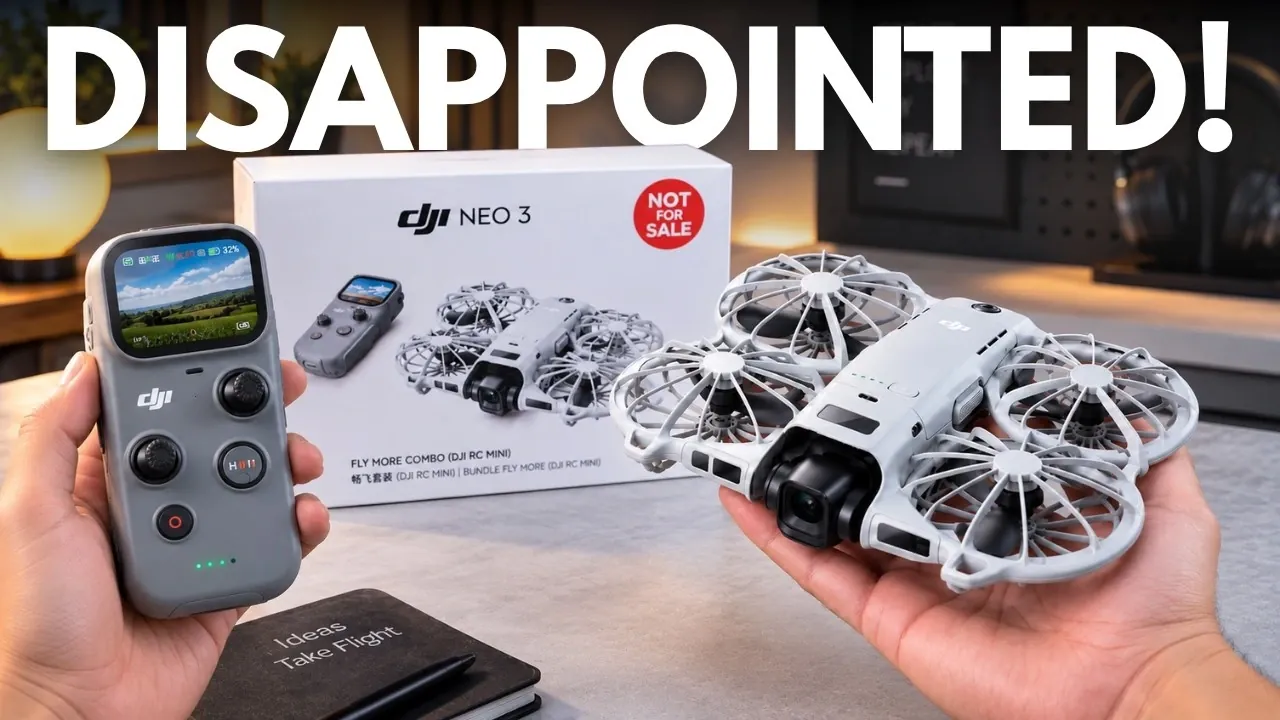
The DJI Neo 3 introduces a range of updates, including a redesigned body, enhanced obstacle sensing and native vertical video support, but its value as an upgrade remains uncertain. Tech Court highlights that while features like the compact RC Mini controller and potential camera improvements may appeal to some users, the Neo 3 must address critical concerns such as battery life, which has been a persistent issue with its predecessor. With the Neo 2 offering a real-world flight time of just 10 to 11 minutes, the Neo 3’s success hinges on delivering practical improvements in this area to meet the demands of both casual users and professionals.
In this guide, you’ll explore how the Neo 3’s rumored camera upgrades, including enhanced low-light performance and a larger sensor, could impact content creation workflows. You’ll also gain insight into the potential benefits of improved obstacle avoidance and autonomous tracking for navigating complex environments. Whether you’re considering an upgrade or simply curious about the Neo 3’s capabilities, this breakdown offers a clear look at the features that could define its place in the drone market.
Battery Life: A Critical Factor for Drone Users
TL;DR Key Takeaways :
- The DJI Neo 3 introduces key upgrades, including a redesigned body, improved obstacle sensing, a potentially enhanced camera system, native vertical video support and a compact RC Mini controller.
- Battery life is a critical focus, with the Neo 3 aiming to deliver a practical flight time of 18-20 minutes, addressing a major limitation of the Neo 2.
- Camera improvements, such as a larger sensor with better dynamic range and low-light performance, along with native vertical video support, cater to modern content creators and social media trends.
- Enhanced obstacle avoidance and autonomous tracking features aim to improve reliability in complex environments and dynamic shooting scenarios.
- The Neo 3 must deliver meaningful advancements in battery life, camera performance and usability to justify an upgrade, as the Neo 2 remains a strong competitor in the market.
Battery life is often the deciding factor for drone users and the Neo 2 has faced consistent criticism in this area. While the Neo 2 is advertised with a flight time of 19 minutes, real-world usage typically yields only 10 to 11 minutes, a limitation that has frustrated users who rely on drones for extended shoots or intricate maneuvers. Although extended batteries are available for the Neo 2, they come with additional costs and slightly compromise the drone’s compact design, which is one of its key selling points.
For the Neo 3 to be a compelling upgrade, it must deliver a practical flight time of 18 to 20 minutes in real-world conditions. This improvement would allow for longer, uninterrupted sessions, addressing a major pain point for users who need reliability during demanding shoots. Without this enhancement, the Neo 3 risks being overshadowed by its predecessor, particularly for those who have already invested in extended battery solutions. A significant improvement in battery efficiency could also make the Neo 3 more appealing to professionals who prioritize performance over portability.
Camera Upgrades: Meeting the Needs of Modern Creators
The Neo 3 is expected to bring notable advancements in camera technology, a critical area for content creators who demand high-quality visuals. Rumors suggest the inclusion of a larger sensor with enhanced dynamic range and improved low-light performance, which could elevate the Neo 3’s appeal for professional-grade photography and videography. These upgrades would cater to users who require sharp, detailed imagery for their projects, whether for commercial purposes or personal storytelling.
Another anticipated feature is native vertical video support, a response to the growing popularity of platforms like Instagram, TikTok and YouTube Shorts. This functionality would allow users to shoot directly in vertical orientation, eliminating the need for time-consuming post-production adjustments. For creators focused on social media content, this addition could significantly streamline workflows and make the Neo 3 a more versatile tool for modern storytelling. By addressing the evolving demands of content creators, the Neo 3 positions itself as a forward-thinking device that aligns with current trends in digital media.

Here are more detailed guides and articles that you may find helpful on DJI Neo 3.
- Rumoured DJI Neo 3 Drone Targets a September 2026 Launch
- Unidentified Upward Sensor Clouds the DJI Neo 3 Box Leak
- DJI Neo 3 Could Extend the Neo 2’S 19-Minute Flight Time
- A Mystery DJI Drone Prototype Was Just Spotted : Anticipated Neo 3?
Design and Features: Compactness Meets Innovation
The Neo 3 is expected to retain the compact and portable design that defines the Neo series while incorporating several new features to enhance functionality. A redesigned body with a hybrid aesthetic could offer improved aerodynamics, better durability and enhanced protection for internal components. Additionally, the rumored adoption of a “pusher prop” configuration might improve propeller efficiency, resulting in quieter operation and potentially longer flight times.
One of the standout features is the inclusion of a compact RC Mini controller, designed for portability and ease of use. This smaller controller could appeal to users who frequently travel or operate drones in diverse environments. However, these design enhancements must not come at the expense of durability or usability. For both casual and professional users, the Neo 3 must strike a balance between innovation and practicality, making sure that new features genuinely enhance the overall experience without introducing unnecessary complications.
Obstacle Avoidance and Autonomous Tracking: Enhancing Reliability
Advanced obstacle sensing and autonomous tracking are increasingly essential for modern drones and the Neo 3 is expected to deliver improvements in these areas. Enhanced obstacle avoidance, potentially including an upward-facing sensor, could make the drone more reliable in complex environments, such as dense forests or urban landscapes. This would provide users with greater confidence when navigating challenging conditions.
Improved autonomous tracking capabilities are another anticipated feature, appealing to users who rely on drones for dynamic shots, such as sports or action sequences. By offering seamless and accurate tracking, the Neo 3 could cater to a broader audience, including filmmakers and outdoor enthusiasts. However, these features must perform consistently to justify the upgrade. Any inconsistencies in obstacle sensing or tracking could undermine user confidence, particularly for those who use drones in high-stakes scenarios. Reliability in these systems will be critical to the Neo 3’s success and its ability to differentiate itself from competitors.
Challenges and Considerations for the DJI Neo 3
Despite its potential, the Neo 3 faces significant challenges in convincing users to upgrade. The Neo 2 remains a strong contender, offering a robust feature set and the availability of extended batteries that address its primary limitation. For many users, these existing capabilities are sufficient, making it difficult to justify the cost of transitioning to the Neo 3.
To succeed, the Neo 3 must deliver meaningful improvements in key areas such as battery life, camera performance and usability. While features like native vertical video support and the compact RC Mini controller add value, they are unlikely to sway users if the core issues remain unresolved. The Neo 3 must also maintain the compact, user-friendly design that has defined the Neo series, making sure that new features do not compromise the simplicity and reliability that users have come to expect.
Ultimately, the Neo 3’s ability to stand out will depend on its capacity to address the needs of its target audience. By focusing on practical enhancements and delivering a well-rounded experience, the Neo 3 could establish itself as a worthy successor in the competitive drone market. However, without significant advancements, it risks being perceived as an incremental update rather than a fantastic product.
Media Credit: Tech Court
Disclosure: Some of our articles include affiliate links. If you buy something through one of these links, Geeky Gadgets may earn an affiliate commission. Learn about our Disclosure Policy.
