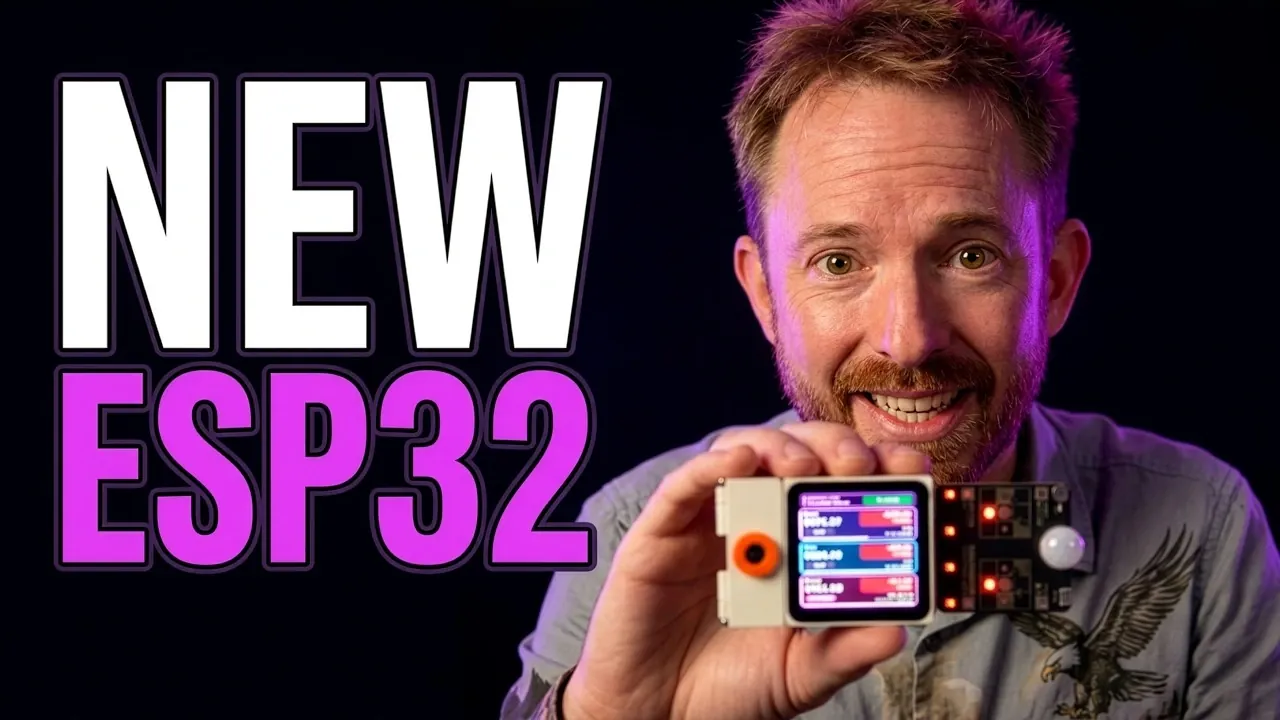
Firmware development for the ESP32 can be challenging, but Creator Magic demonstrates how Gemini 4 Argon, an AI-powered coding assistant, approaches specific tasks with efficiency. Using the ESP Mosaico, a platform built around the ESP32S31 chip, the post highlights how the AI assistant tackles activating motion sensors, managing RGB LED controls and creating dashboards for real-time data visualization. The ESP Mosaico’s features, such as Wi-Fi 6 support and modular magnetic edges for easy component expansion, provide a versatile foundation for experimenting with various applications.
Explore how Gemini 4 Argon adheres to strict development standards to maintain firmware compatibility and reduce implementation errors. Gain insight into the ESP Mosaico’s modular design and its role in scalable projects like smart home systems or portable diagnostic tools. Learn how AI assistance can improve workflows in practical scenarios, including real-time monitoring and interactive educational setups, while addressing common troubleshooting challenges.
What is the ESP Mosaico?
TL;DR Key Takeaways :
- The ESP Mosaico, powered by the ESP32S31 chip, features Wi-Fi 6, Bluetooth and a modular design with magnetic edges for seamless expansion, making it ideal for scalable and innovative projects.
- Integrated components such as a touchscreen, speaker, microphone, motion sensors and vibration motor enhance functionality, while additional modules like RGB LEDs and cameras expand its capabilities.
- Gemini 4 Argon, an AI-powered coding assistant, simplifies firmware development by making sure compatibility, allowing real-time data visualization and supporting responsive functionality.
- The device is user-friendly, featuring “chat coding” for AI-assisted development, a touchscreen for real-time monitoring and GitHub tools for testing, making it accessible to both beginners and experts.
- Real-world applications include smart home monitoring, portable diagnostic tools and interactive educational projects, showcasing its versatility and potential for innovation in various fields.
The ESP Mosaico is a highly versatile development platform built around the ESP32S31 chip, which supports Wi-Fi 6 and Bluetooth for seamless connectivity. Designed for experimentation and innovation, this platform offers a robust set of features that cater to a wide range of applications:
- 16MB of memory, allowing the execution of complex tasks and applications.
- Integrated components such as a touchscreen, speaker, microphone, vibration motor, and motion sensors for enhanced functionality.
- Magnetic edges for effortless modular expansion with additional components like RGB LEDs, light sensors, infrared blasters, and cameras.
This modular design fosters scalability, making the ESP Mosaico suitable for both small-scale projects and intricate systems. The magnetic edges allow for seamless connections between components, encouraging creativity and allowing developers to build custom solutions tailored to their needs.
How Gemini 4 Argon Enhances Firmware Development
Gemini 4 Argon, an AI-powered coding assistant, plays a pivotal role in simplifying firmware development for the ESP Mosaico. By referencing APIs and adhering to strict compatibility guidelines, the AI ensures that firmware is both reliable and efficient. Key features integrated by Gemini 4 Argon include:
- Creating dashboards for real-time data visualization, allowing developers to monitor system performance effectively.
- Activating motion sensors to enable responsive functionality and energy-efficient operation.
- Controlling RGB LEDs to provide dynamic visual feedback for various applications.
The AI assistant also avoids unsupported features, making sure that the firmware remains functional and free from compatibility issues. This capability allows developers to focus on innovation and creativity rather than spending time troubleshooting technical errors. Whether you’re a beginner or an experienced developer, Gemini 4 Argon serves as an invaluable tool for streamlining the development process.

Here is a selection of other guides from our extensive library of content you may find of interest on ESP32.
- $5 ESP32-S3 Super Mini Packs Wi-Fi and Bluetooth
- The $4 ESP32 S3 Super Mini Packs a 240 MHz Dual-Core Chip
- How an $8 ESP32 S3 Microcontroller Runs a 28.9M Parameter Local LLM
- 5 ESP32 Projects Worth Building in 2026: Such as an Apple HomeKit Controller
- $4 ESP32 Module Brings Wi-Fi and Bluetooth to IoT Projects
- Replacing Security Cameras with Three $10 ESP32S3 Wi-Fi Boards
- ESP32-S3 Super Mini Costs $5 and Packs Wi-Fi and Bluetooth
- ESP32-S3 Super Mini Brings 240 MHz Dual-Core Power For $4
- ESP32 S31 Devkit Hands-on: 320 MHz RISC-V Chip Adds Wi-Fi 6
- Build a DIY Open source Flipper Zero Using a ESP32-DIV
Getting Started with the ESP Mosaico
The ESP Mosaico is designed to be user-friendly, operating out of the box with default firmware. Its “chat coding” feature enables direct interaction with the AI assistant, allowing you to build applications even without extensive programming knowledge. Additionally, tools and simulators available on GitHub provide a comprehensive environment for testing and development.
The device’s touchscreen interface further enhances usability, allowing real-time data monitoring and interaction. Whether you’re visualizing AI trading data, controlling connected components, or experimenting with new ideas, the ESP Mosaico delivers a seamless and intuitive user experience. Its design ensures that both beginners and experts can quickly adapt to its features and capabilities.
Real-World Applications
The ESP Mosaico’s versatility is evident in its wide range of practical applications. For instance, in a real-world demonstration, the device was used to monitor AI trading data. RGB LEDs were programmed to display performance metrics, while motion sensors ensured the device remained responsive by waking it upon detecting nearby movement. The device’s portability, powered by its built-in battery, made it ideal for on-the-go monitoring.
This example highlights the ESP Mosaico’s potential for real-time data visualization and interaction. Its ability to integrate multiple sensors and components into a cohesive system underscores its versatility for various applications, including:
- Monitoring environmental conditions in smart home systems.
- Developing portable diagnostic tools for real-time data collection and analysis.
- Creating interactive educational projects for learning and experimentation.
The combination of modular design and AI-driven coding makes the ESP Mosaico an excellent choice for developers seeking to create innovative solutions.
Overcoming Challenges
While the ESP Mosaico is designed for ease of use, some initial challenges may arise during setup. For example, entering flash mode required careful reference to documentation and assistance from the AI agent. However, once these steps were completed, tasks such as firmware flashing and Wi-Fi setup proceeded smoothly, allowing real-time data updates and full functionality.
These challenges emphasize the importance of thorough documentation and the value of AI assistance in troubleshooting and development. By using the resources provided, developers can overcome these hurdles and unlock the full potential of the ESP Mosaico.
Unlocking Future Possibilities
The ESP Mosaico offers a wealth of opportunities for future projects, thanks to its modular design and extensive sensor suite. Its open source tools and active developer community further encourage collaboration and creativity. Potential applications include:
- Building home automation systems that integrate multiple sensors and components for enhanced functionality.
- Developing portable diagnostic tools for industries such as healthcare, agriculture, or environmental monitoring.
- Creating interactive educational projects that inspire learning and experimentation in STEM fields.
Whether you’re a seasoned developer or a curious hobbyist, the ESP Mosaico provides a platform for pushing the boundaries of innovation. Its combination of advanced hardware, modular design and AI-driven coding tools makes it an ideal choice for exploring new possibilities and solving complex challenges.
Media Credit: Creator Magic
Disclosure: Some of our articles include affiliate links. If you buy something through one of these links, Geeky Gadgets may earn an affiliate commission. Learn about our Disclosure Policy.
