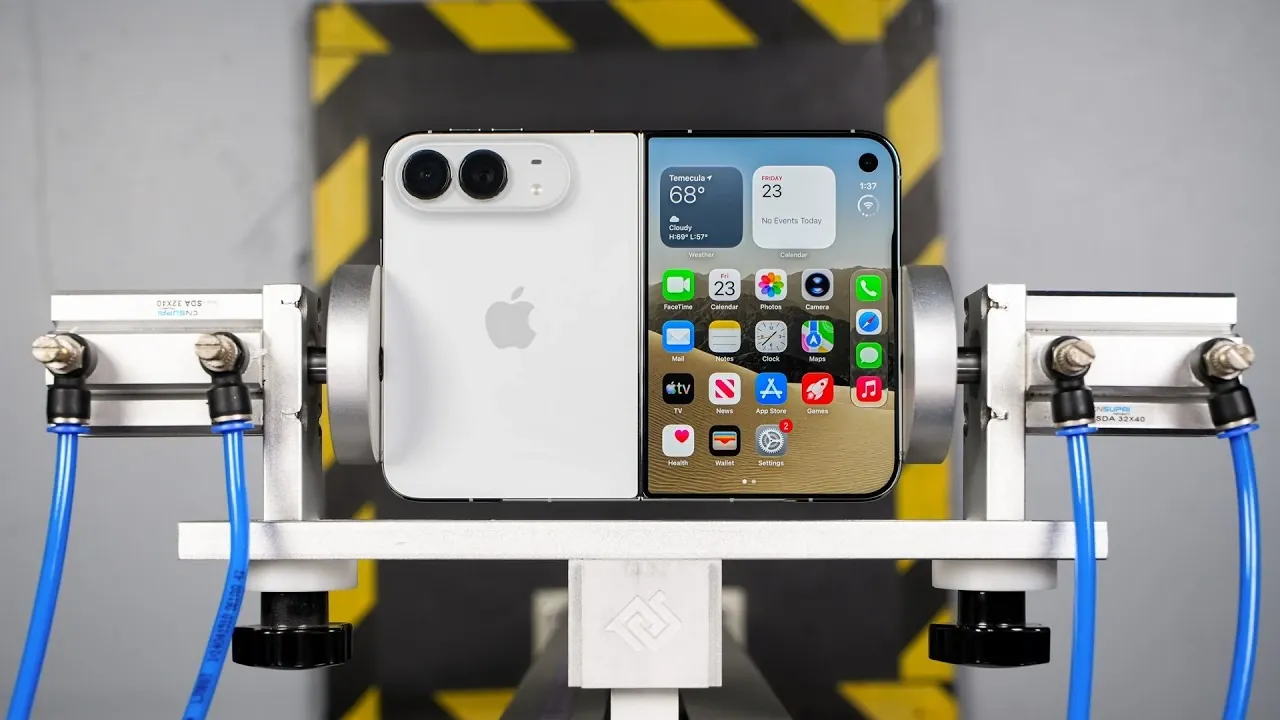
Apple’s iPhone Duo, the company’s most expensive and heaviest smartphone to date, has been subjected to extensive drop tests to evaluate its durability. With its new dual-screen design, hinge mechanism and titanium frame, the Duo introduces a unique combination of strengths and vulnerabilities. These tests compare its performance against the iPhone 18 Pro Max, focusing on both standard and device-specific scenarios to identify areas of resilience and potential weaknesses. The video below from Phone Buff tests the handset for durability in a range of drop tests.

Design and Build: Innovation Meets Practicality
The iPhone Duo represents a significant evolution in smartphone design. Its dual screens and hinge mechanism offer enhanced versatility, but they also introduce potential points of failure. The titanium frame, a first for Apple, provides superior structural strength and durability, though it contributes to the Duo being the heaviest iPhone ever. In contrast, the iPhone 18 Pro Max features an aluminum frame, which is lighter but less robust under certain conditions.
Both devices share several design elements, such as an all-glass back, inner and outer displays and pre-applied screen protectors. However, the Duo’s raised lip design offers additional protection for its inner display, a thoughtful feature that distinguishes it from its counterpart. While these design choices aim to balance functionality and durability, they also create unique challenges that require careful consideration.
Standard Drop Tests: Everyday Durability Under Scrutiny
Drop tests simulate common accidents to determine how well these devices withstand impacts. The results reveal important insights into their durability:
- Back Drops: Both the iPhone Duo and 18 Pro Max experience cracked rear glass when dropped on their backs. However, the Duo’s larger glass surface area results in more extensive damage, highlighting the trade-off between design aesthetics and durability.
- Corner Drops: Cosmetic damage is observed on both models, but the Duo’s titanium frame absorbs impacts more effectively than the aluminum frame of the 18 Pro Max, showcasing its superior material strength.
- Face Drops: The Duo’s heavier weight and glass construction lead to cracks when dropped face-first, whereas the 18 Pro Max remains intact, emphasizing differences in weight distribution and material resilience.
These findings underscore the complex interplay between weight, material choice and durability in real-world scenarios, offering valuable insights for potential buyers.
Device-Specific Drop Tests: Unique Challenges for the iPhone Duo
The iPhone Duo’s innovative design necessitates additional testing to evaluate its unique vulnerabilities. The results highlight both its strengths and areas for improvement:
- Corner Drops While Unfolded: The hinge mechanism remains intact and the inner display survives without damage, demonstrating the Duo’s structural integrity and thoughtful engineering.
- Face Drops on the Inner Display: The raised lip design and pre-applied screen protector effectively prevent cracks under controlled conditions. However, repeated impacts or extreme scenarios may compromise their effectiveness over time.
These tests reveal the Duo’s ability to withstand specific challenges but also raise questions about its long-term reliability, particularly for users who frequently expose their devices to accidental drops.
Hinge Durability: A Crucial Factor in Long-Term Performance
The hinge mechanism, central to the iPhone Duo’s dual-screen functionality, undergoes rigorous stress tests to evaluate its durability. Initial drops onto the hinge result in internal damage, causing increased resistance when unfolding and slight misalignment. Prolonged testing exacerbates these issues, leading to the following outcomes:
- Significant inner display damage, including ghost touches and partial screen failure, which compromise usability.
- Outer display functionality remains intact, showcasing some resilience in the overall design despite hinge-related vulnerabilities.
While the hinge design demonstrates promise, its susceptibility to damage under repeated stress raises concerns about its long-term reliability. This aspect is particularly critical for users who rely heavily on the dual-screen functionality.
Balancing Innovation with Practical Durability
The iPhone Duo showcases impressive durability in many scenarios, thanks to its titanium frame and protective design features. However, its hinge mechanism and inner display emerge as potential weak points, particularly under repeated stress or extreme conditions. These findings highlight the importance of protective measures, especially for users prone to accidental drops or heavy usage.
For those considering the iPhone Duo, investing in supplementary protection, such as a durable case or additional screen protectors, is a practical step to ensure the device’s longevity. While the Duo’s innovative design offers unique advantages, its durability under real-world conditions underscores the need for careful handling and proactive maintenance to maximize its lifespan.
Expand your understanding of iPhone Duo with additional resources from our extensive library of articles.
- Early iPhone Duo 2 Leaks Reveal Major Hardware Upgrades
- iPhone Duo: Key Details Apple Barely Mentioned on Stage
- Apple’s iPhone Duo 2 Just Leaked: Everything Changing With the Next Foldable
- iPhone Duo Buyer’s Guide: How to Choose Without Regrets
- iPhone Duo vs. Galaxy Z Fold 8: Did Apple Just Catch Samsung?
- iPhone Duo: 5 Features That Make It Worth the Price
Source & Image Credit: PhoneBuff
Disclosure: Some of our articles include affiliate links. If you buy something through one of these links, Geeky Gadgets may earn an affiliate commission. Learn about our Disclosure Policy.
