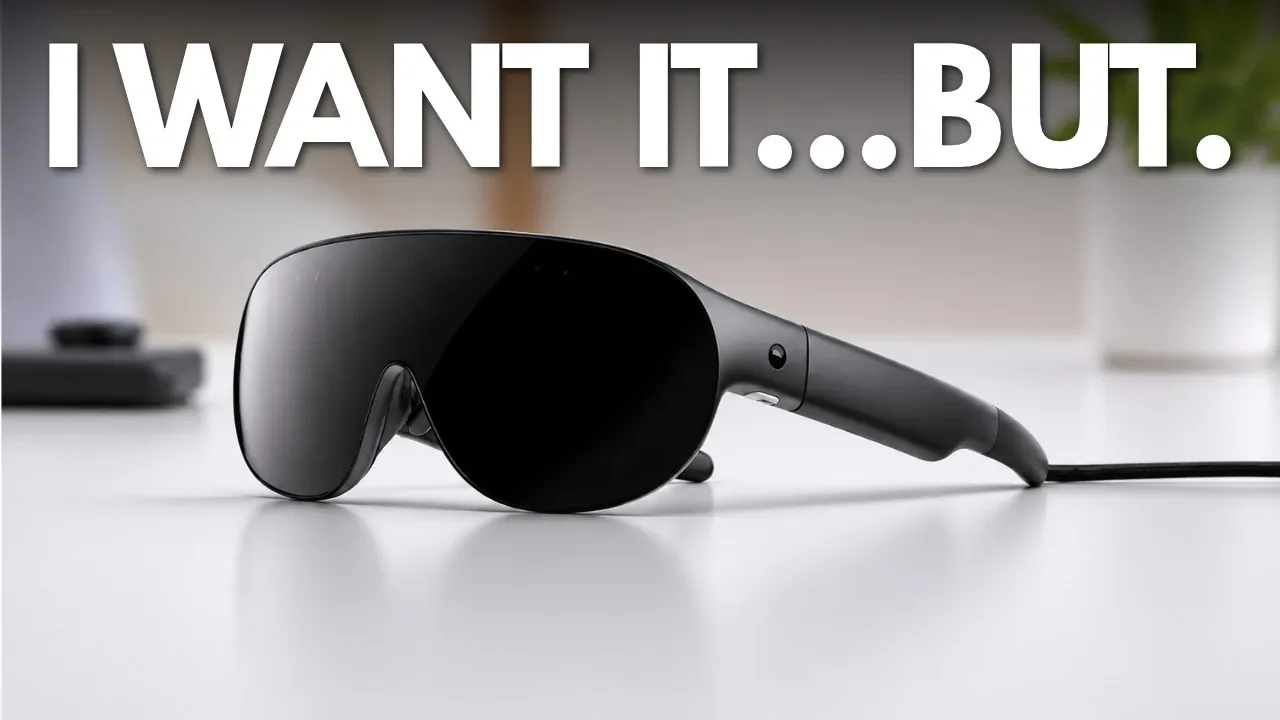
Meta’s latest VR glasses combine advanced engineering with a unique design approach. Weighing just 100 grams, the glasses achieve their lightweight build by shifting components like the Snapdragon chip, battery, and storage to an external puck connected via cable. This setup enhances comfort while supporting features such as micro OLED screens with 37 pixels per degree and Dolby Vision for improved visuals. However, a narrower 70° field of view and the absence of bundled controllers, relying instead on hand and eye tracking, may pose challenges for gaming applications, as detailed by Tech Court.
Explore how these VR glasses compare to alternatives like the Apple Vision Pro and Quest 3 in terms of design and functionality. Gain insight into productivity-oriented features, including the “Surface Keyboard” for virtual typing and multi-monitor setups, as well as their suitability for media consumption with magnetic light blockers. The breakdown also addresses privacy concerns tied to Meta’s devices, such as biometric data handling and evolving post-purchase policies.
Lightweight and Sharp
TL;DR Key Takeaways :
- The Meta VR glasses are significantly lighter than competitors, weighing just 100 grams by offloading components to a 300-gram puck, but their 70° field of view is narrower than the Quest 3’s 110°, which may limit their appeal for immersive gaming.
- Priced at $1,300, the glasses are more affordable than the Apple Vision Pro ($3,499) and offer advanced features like micro OLED screens, Dolby Vision, and productivity tools, but the Quest 3 ($499) remains a stronger choice for gaming due to its wider field of view and included controllers.
- Privacy concerns are a major obstacle, with criticism stemming from Meta’s history, including a 2025 update to its Ray-Ban smart glasses that allowed voice recordings to be stored for up to a year and reports of planned facial recognition features sparking backlash from privacy advocates and U.S. senators.
- The glasses excel in productivity and media use, featuring a “Surface Keyboard” for virtual typing, virtual monitors for portable workspaces, and magnetic light blockers for enhanced movie-watching, but they are not ideal for intensive VR gaming due to the lack of included controllers.
- Tech Court concluded that while the Meta VR glasses represent a significant hardware achievement with advanced features and competitive pricing, Meta’s controversial privacy record remains a significant barrier to consumer trust and adoption.
Weighing just 100 grams, the Meta VR glasses are far lighter than the Apple Vision Pro, which weighs between 650 and 800 grams depending on the band, and the Quest 3, which is reportedly five times heavier. This weight reduction is achieved by relocating most components, including the Snapdragon chip, 12 GB of RAM, 128 GB of storage, and the battery, to a puck connected to the glasses via a cable. The puck weighs about 300 grams and can be clipped to a belt, keeping the glasses light and comfortable.
The glasses feature micro OLED screens with a resolution of 2412×2288 per eye, offering 37 pixels per degree, an improvement over the Quest 3’s 25 pixels per degree. Dolby Vision support enhances HDR movie playback, delivering sharp text, deep blacks, and vivid colors. However, the glasses’ 70° field of view is narrower than the Quest 3’s 110°, which may limit their appeal for immersive gaming.
Battery life is rated at around three hours of video playback. While adequate for many scenarios, it may fall short for a premium device.
Productivity and Media Use Cases
The Meta VR glasses excel in productivity and media consumption. A standout feature is the “Surface Keyboard,” which projects a virtual keyboard and trackpad onto any flat surface, allowing near full-speed typing. Combined with virtual monitors, the glasses can simulate a triple-monitor setup, making them appealing for portable workspaces.
For media enthusiasts, magnetic light blockers can be attached to create a fully dark environment, enhancing the movie-watching experience. While not designed for mobility, the glasses work well as a personal cinema or a lightweight alternative to traditional VR headsets for stationary use.
The glasses run the same software as the Quest, supporting Meta’s apps, a web browser, Meta AI, 3D movies on Disney Plus, Xbox Cloud Gaming, and over 75 hand-controlled games at launch. However, they lack included controllers, relying on eye and hand tracking for navigation. Quest controllers can be connected if needed, but the glasses are not ideal for intensive VR gaming.

Below are more guides on Meta from our extensive range of articles.
- $20 Price Gap Pits XREAL Aura Against Meta VR Glasses
- Quest 3 vs New Meta VR Headset: Which One Should You Buy?
- Meta Project Phoenix is Expected to Launch in Early 2027
- Meta VR Glasses vs URXR One: $1,299 Standalone vs $899 Modular
- Meta Phoenix Quest Air VR Headset First Official Image Leaked?
- Immersive Meta VR Glasses Challenge XREAL Aura AR Vision
- MetaQuest Emulator Brings Batman VR to Non-Meta Headsets
- How Meta Muse Wonder Stacks Up Against GPT 6.1 Sol
- New Meta VR Glasses Pack an IMAX-certified Cinema and Weigh Just 100g
- Two Months with $299 Meta Smart Glasses Reveals Key Issues
Price and Competition
At $1,300, the Meta VR glasses are a more affordable option compared to the Apple Vision Pro’s $3,499 price tag. Despite the lower cost, they offer comparable features such as micro OLED screens, advanced tracking, and productivity tools. However, for immersive gaming, the Quest 3, priced at $499, remains a stronger choice due to its wider field of view and included controllers.
The Quest 3’s 110° field of view makes it better suited for gaming and other immersive applications. Its bundled controllers also provide a more complete experience out of the box compared to the Meta VR glasses.
Reports suggest Apple has paused development on new Vision Pro models following disappointing sales of the M5 refresh. Analyst Ming-Chi Kuo noted in June that future Vision Pro models are no longer part of Apple’s plans. Bloomberg also reported that Apple is shifting focus to simpler smart glasses, with rumored designs for 2027 and 2028. These claims remain unconfirmed by Apple.
Privacy Concerns: A Major Obstacle
Despite the impressive hardware, privacy concerns surrounding the Meta VR glasses are a significant issue. Criticism of Meta’s Ray-Ban smart glasses highlights these concerns, particularly a 2025 update that allowed voice recordings to be stored for up to a year by default, with no opt-out option other than disabling the voice assistant. The only indication of recording is a small LED light, which privacy advocates argue is insufficient.
In February, the New York Times reported that Meta plans to introduce facial recognition to its smart glasses. The feature, called “name tag,” could identify individuals and display information about them. An internal memo cited in the report suggested Meta viewed the current political climate as favorable for launching the glasses, anticipating privacy groups would be preoccupied with other issues. This sparked backlash from organizations like the Electronic Frontier Foundation and led three U.S. senators to question Meta about its use of biometric data.
Meta has responded to these concerns, stating that raw images of users’ eyes and hands are processed on the device and not stored on its servers. Apps only receive gaze data with user permission, and a “private processing” feature is said to handle AI requests on secure servers inaccessible to Meta. However, trust in these assurances is undermined by the company’s history of post-purchase policy changes and controversies, such as the discovery of inactive facial recognition code in the Meta AI app.
Hardware Meets Distrust
The Meta VR glasses represent a significant hardware achievement, offering a lightweight, high-resolution headset with advanced features at a competitive price. They are particularly well-suited for productivity tasks and media consumption, making them an attractive option for users seeking a portable workspace or personal cinema. However, Meta’s privacy record remains a major concern, and for many, it may outweigh the glasses’ technical merits. Whether these glasses succeed will depend as much on Meta’s ability to rebuild trust as on the quality of the product itself.
Media Credit: Tech Court
Disclosure: Some of our articles include affiliate links. If you buy something through one of these links, Geeky Gadgets may earn an affiliate commission. Learn about our Disclosure Policy.
