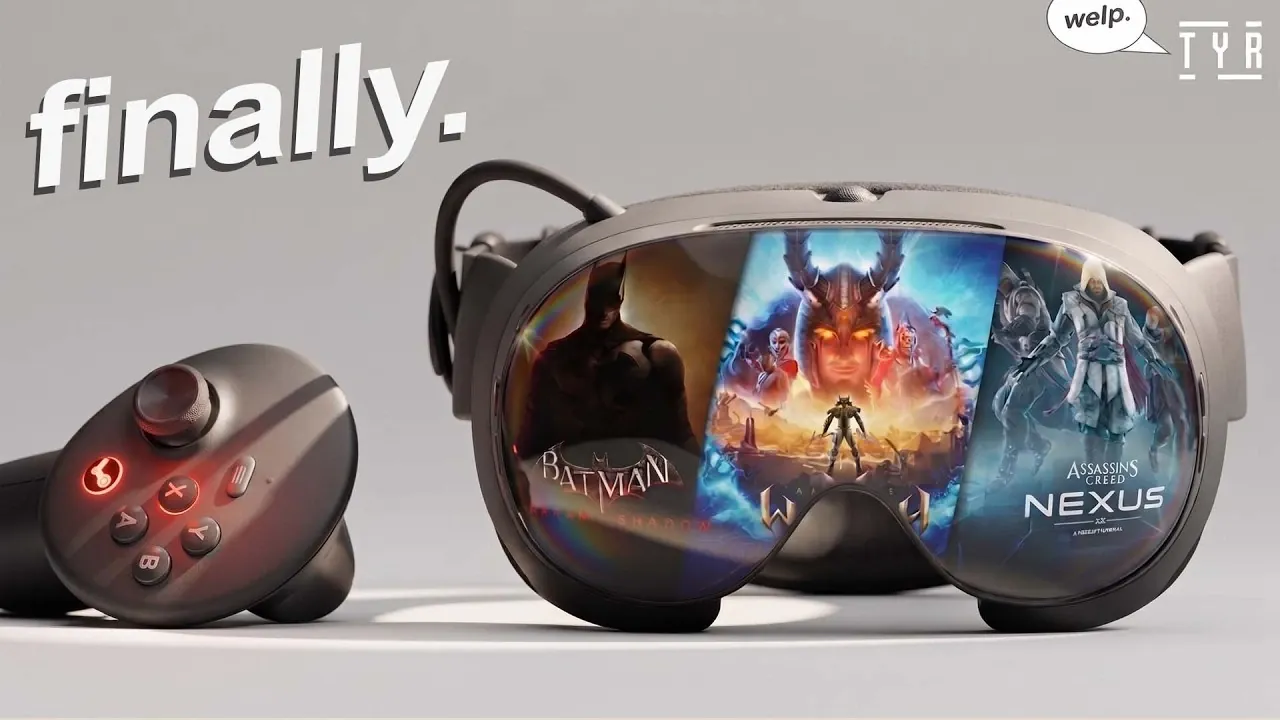
Meta has historically restricted its VR content to its own hardware, creating a closed ecosystem for exclusive games and features. Tyriel Wood highlights how the MetaQuest emulator could challenge this approach by allowing users to access Meta-exclusive titles, such as The Climb 2 and Batman, on non-Meta devices. This emulator supports resolutions of up to 4K per eye, offering a high-quality experience while potentially reshaping how VR content is accessed across platforms.
Explore the technical capabilities of Valve’s Steam Frame, which prioritizes high refresh rates and detailed visuals for smoother gameplay. Learn how Meta’s upcoming Phoenix headset incorporates micro OLED displays to improve portability and image clarity. Additionally, gain insight into Snap’s AR glasses and their role in advancing augmented reality, reflecting broader trends in mixed-reality technology.
Breaking Barriers with the MetaQuest Emulator
TL;DR Key Takeaways :
- The VR and AR industries are shifting toward greater accessibility and inclusivity, driven by innovations like the MetaQuest emulator, Valve’s Steam Frame, Meta Phoenix and Snap AR glasses.
- The MetaQuest emulator enables access to Meta-exclusive games on non-Meta hardware, promoting cross-platform compatibility and breaking down barriers in closed VR ecosystems.
- Valve’s Steam Frame headset offers advanced features like high resolution and superior lens technology but faces challenges with limited availability and distribution fairness.
- Meta Phoenix introduces a lightweight, portable VR solution with micro OLED displays and holographic capabilities, competing directly with Valve’s Steam Frame.
- Snap’s AR glasses, despite their bulky design and high price, represent a significant step in consumer AR technology, showcasing the potential for immersive augmented reality experiences.
Meta’s exclusive ecosystem has often been a source of frustration for VR enthusiasts. The MetaQuest emulator is poised to address this issue by allowing access to Meta-exclusive games, including popular titles like Batman, Assassin’s Creed, and The Climb 2, on non-Meta hardware. Supporting resolutions of up to 4K per eye, the emulator ensures a high-quality gaming experience across a variety of headsets, eliminating the need for Meta-specific devices.
For users, this innovation represents a significant step toward dismantling the barriers of closed VR systems. By promoting cross-platform compatibility, the MetaQuest emulator enables you to explore Meta’s content without being confined to its ecosystem. This tool not only enhances accessibility but also encourages competition, fostering a more dynamic and user-centric VR industry.
Valve’s Steam Frame: Advanced Technology with Limited Availability
Valve’s Steam Frame headset has generated considerable excitement within the VR community. Boasting features such as high resolution, an advanced refresh rate, and superior lens technology, the Steam Frame promises an unparalleled immersive experience. However, its availability has been a major challenge. Valve’s lottery-based purchasing system has left many potential buyers disappointed, while scalpers have exploited the limited supply to inflate prices.
For those eager to experience the Steam Frame’s innovative capabilities, this scarcity has been a significant obstacle. The situation has sparked growing calls for a more equitable distribution model. As demand for advanced VR technology continues to rise, making sure fair access to devices like the Steam Frame will be crucial in shaping the future of the industry.

Browse through more resources below from our in-depth content covering more areas on Steam Frame.
- 10 Reasons You Should Buy the Valve Steam Frame VR Headset at Launch
- Valve Confirms Steam Deck 2 with Unreal Engine 5 Support
- Steam Frame VR Unboxing Reveals PC Wireless Streaming Adapter
- Steam Frame VR Headset Costs $1,059 with 6GHz PC Streaming
- Valve’s Potential Half-Life 3 Pairing Could Skyrocket Steam Machine Demand
- Leaked Geekbench Scores Reveal the True Power of the $750 Steam Machine
- Valve Steam Frame $1,060 VR Headset Hampered by 72 Games
- Valve Hits 760,000 Yearly Steam Machine Sales Amid RAM Shortage
- Valve Revamps the Steam Machine UI with New Verification Metrics
- Steam Machine Performance Tested: FSR 3 Upscaling Smooths Demanding Gameplay
Meta Phoenix: Redefining Portability and Innovation
Meta is pushing the boundaries of VR hardware with its upcoming Meta Phoenix headset. Designed to resemble a sleek pair of glasses, the Phoenix incorporates micro OLED displays and a separate compute pack for processing power. Expected to debut at the next Meta Connect event, the device is rumored to feature holographic demos and lifelike avatars, offering a glimpse into the future of immersive experiences.
While pricing details remain uncertain, the Meta Phoenix is positioned as a direct competitor to Valve’s Steam Frame. Its lightweight design and innovative features make it an attractive option for users seeking a portable and versatile VR solution. For you, the Phoenix could represent a new standard in convenience and functionality, blending innovative technology with everyday usability.
Snap AR Glasses: Expanding the Horizons of Augmented Reality
Snap’s AR glasses mark a significant milestone in the evolution of augmented reality. Priced at over $2,000, these glasses are among the first AR devices to reach the consumer market. While their bulky design may not appeal to everyone, they offer early adopters a chance to explore the possibilities of AR technology in its current form.
For users, Snap’s glasses provide an opportunity to experience augmented reality firsthand, showcasing its potential as a complement to VR. Their introduction highlights the growing interest in AR as a tool for immersive experiences, from interactive gaming to practical applications in education and industry. As AR technology continues to evolve, devices like Snap’s glasses are likely to play a pivotal role in shaping its future.
Closed vs Open Ecosystems: A Divergence in Philosophy
The competition between Meta and Valve extends beyond hardware to their underlying ecosystems. Meta’s closed system offers polished hardware and a curated user experience but limits your ability to customize or expand functionality. In contrast, Valve’s open Linux-based platform prioritizes flexibility and customization, appealing to tech-savvy users who value control over their devices.
This divergence reflects a broader debate within the tech industry: the trade-off between the streamlined experience of closed ecosystems and the freedom offered by open systems. For users, the choice often depends on personal preferences and priorities. Whether you value the convenience of a tightly integrated system or the adaptability of an open platform, the decision shapes how you engage with immersive technology.
The Future of VR and AR: Toward Greater Accessibility
The potential decline of Meta’s exclusivity marks the beginning of a new chapter for VR and AR. Tools like the MetaQuest emulator and innovative hardware such as the Steam Frame, Meta Phoenix, and Snap AR glasses are reshaping the industry. These advancements promise to deliver greater accessibility, more choices and a richer array of immersive experiences.
For users like you, the future of VR and AR is filled with possibilities. Whether you’re drawn to the high-resolution visuals of the Steam Frame, the portability of the Meta Phoenix, or the innovative potential of Snap’s AR glasses, the landscape is becoming more inclusive and diverse. As competition intensifies and ecosystems open up, immersive technology is poised to offer something for everyone, making it an exciting time to explore this rapidly evolving field.
Media Credit: Tyriel Wood – VR Tech
Disclosure: Some of our articles include affiliate links. If you buy something through one of these links, Geeky Gadgets may earn an affiliate commission. Learn about our Disclosure Policy.
