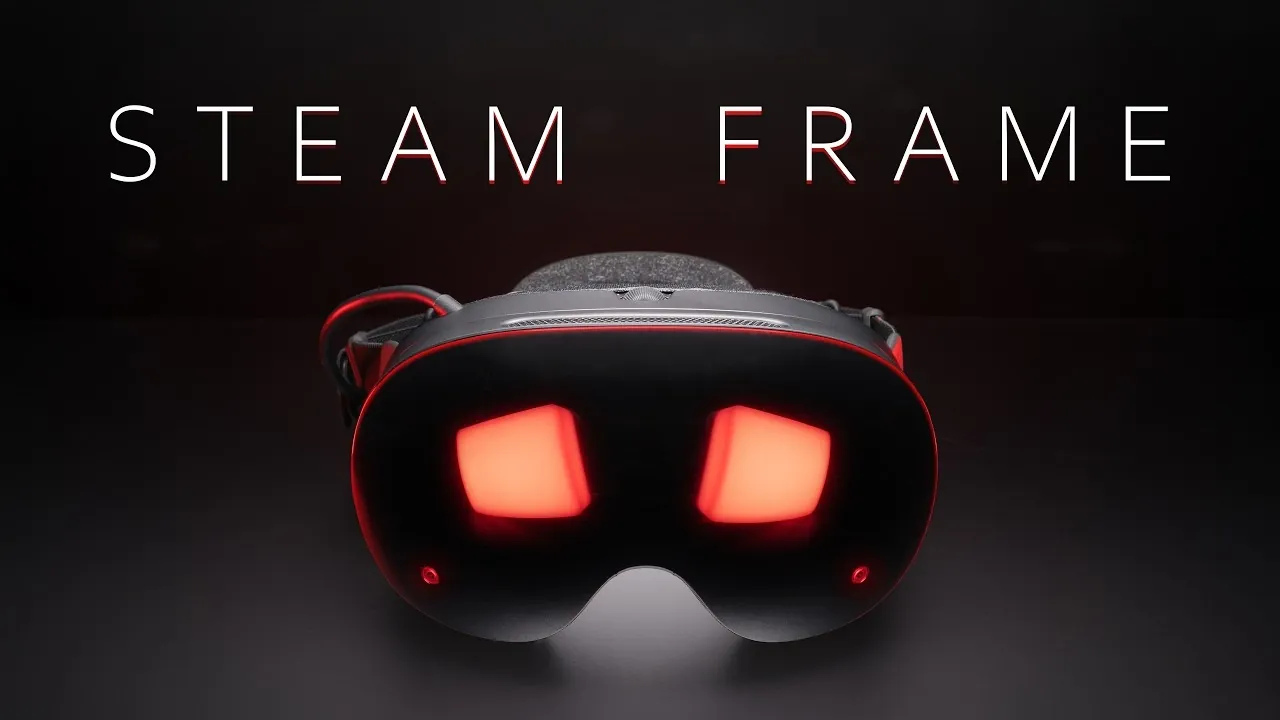
The Valve Steam Frame is a wireless virtual reality headset that combines advanced hardware with features like capacitive finger-sensing controllers and eye-tracking for foveated rendering. According to Dave2D, the headset’s lightweight build and balanced weight distribution enhance comfort, though achieving the best fit may require additional accessories such as custom padding or straps. While its wireless streaming offers low latency and stable performance, the standalone mode faces challenges due to limited native game compatibility and reliance on early-stage software like Proton and FEX.
Discover the Steam Frame’s key features, including its magnetic padding system and Snapdragon 8 Gen 3 processor, as well as its drawbacks, such as the constrained library of optimized games. Gain insight into how its display quality stacks up against competitors like the Meta Quest 3 and examine the implications of its pricing strategy, which targets a premium segment of VR users.
Hardware and Design: Balancing Comfort and Functionality
- The Valve Steam Frame offers advanced wireless VR technology with features like low-latency streaming, eye-tracking and foveated rendering, but faces challenges with limited native game compatibility.
- Its lightweight design and user comfort are highlights, but achieving an optimal fit may require additional accessories, increasing costs and complexity.
- The device’s game library is a critical weakness, with only 72 optimized titles at launch and a lack of new flagship VR games, limiting its appeal to a broader audience.
- Battery life is limited to approximately three hours, making it less suitable for extended gaming sessions without external battery packs or frequent recharging.
- Priced at $1,060, the Steam Frame targets VR enthusiasts, but its high cost, combined with software limitations, positions it as a niche product rather than a mainstream innovation.
The Steam Frame’s design prioritizes user comfort. Its lightweight construction and balanced weight distribution make it well-suited for extended use. The inclusion of magnetic and Velcro padding simplifies cleaning and maintenance, making sure the headset remains hygienic over time. However, achieving a perfect fit may require additional accessories, such as custom padding or head straps, which are sold separately. This adds to the overall cost and complexity for users seeking an optimal experience.
The controllers incorporate capacitive finger-sensing technology, allowing precise input recognition and enhancing interactivity in VR environments. While this feature is a technical highlight, the controllers lack the ergonomic refinement seen in some competing devices. This could lead to discomfort during prolonged gaming sessions, particularly for users with larger or smaller hands.
Performance: Wireless Streaming and Processing Power
The Steam Frame excels in performance, particularly in its wireless streaming capabilities. It delivers low-latency, stable connections, making sure a seamless VR experience even during graphically intensive gameplay. The integration of eye-tracking technology further enhances performance through foveated rendering, which dynamically allocates graphical resources to the user’s focal point. This improves efficiency and reduces the strain on the hardware.
In standalone mode, the device is powered by the Snapdragon 8 Gen 3 processor, offering robust performance for a wireless headset. However, the standalone experience is hindered by limited native game compatibility. The Proton and FEX software translation layers, which aim to expand compatibility, remain in early development stages. This restricts the range of games that can be played natively without relying on streaming from a PC.

Find more information on Valve Steam Frame by browsing our extensive range of articles, guides and tutorials.
- What Valve’s Steam Frame Features Reveal About the Future of Portable VR
- Steam Frame VR Unboxing Reveals PC Wireless Streaming Adapter
- 10 Reasons You Should Buy the Valve Steam Frame VR Headset at Launch
- Valve’s Potential Half-Life 3 Pairing Could Skyrocket Steam Machine Demand
- Teardown Reveals What Valve is Hiding Inside the New Steam Machine
- HDMI CEC Support Lets You Control Steam Machine via TV Remote
- Regulatory Filings Reveal June 2026 Launch for Valve’s Steam Machine
- AMD Radeon RX 9070 XT eGPU Boosts Valve Steam Machine 4K By 183%
- Valve Commits to 2026 Delivery for All Steam Machine Orders
- FSR 4.1 Pushes Crimson Desert to 70+ FPS on Steam Machine
Display and Audio: Strengths and Shortcomings
The Steam Frame features an LCD display that delivers sharp visuals, comparable to the Meta Quest 3. However, occasional screen door effects, where the grid of pixels becomes visible, can detract from the immersive experience, particularly in brightly lit or high-contrast scenes. This issue, while not unique to the Steam Frame, underscores the ongoing challenge of achieving flawless visual fidelity in VR headsets.
For mixed-reality applications, the headset includes monochrome passthrough cameras, with an optional color passthrough upgrade available for $150. While this upgrade enhances the device’s versatility, it adds to the already high cost. The audio quality, while decent, has limitations. During intensive standalone gaming sessions, the output volume may feel insufficient, potentially diminishing the sense of immersion for some users.
Game Library: A Critical Weakness
The Steam Frame comes bundled with Half-Life: Alyx, widely regarded as one of the most compelling VR titles to date. However, beyond this flagship game, the library of optimized titles is underwhelming. At launch, only 72 VR games are verified for optimal performance, with the majority being older releases. This limited selection highlights a broader issue within the VR industry: the lack of fresh, high-quality content to complement advancements in hardware.
Valve’s reluctance to release new flagship VR games further exacerbates this problem. Without a steady stream of engaging and innovative titles, even the most advanced hardware struggles to maintain long-term appeal. This disconnect between hardware and software development remains a significant barrier to the widespread adoption of VR technology.
Battery Life: A Limitation for Extended Use
Battery life is another area where the Steam Frame falls short. The device offers approximately three hours of use during wireless streaming, with even shorter durations in standalone mode. While the smaller battery contributes to the headset’s lightweight design, it limits playtime and makes the device less suitable for extended gaming sessions. For users seeking longer playtimes, external battery packs or frequent recharging become necessary, adding inconvenience to the overall experience.
Pricing and Market Position: A Premium Device for Enthusiasts
With a starting price of $1,060 for the base model, the Steam Frame is significantly more expensive than competitors like the Meta Quest 3, which starts at $600. Valve justifies the premium price by emphasizing the device’s advanced features and independence from Meta’s ecosystem. However, the high cost, combined with the limited game library, makes the Steam Frame less appealing to casual users.
This pricing strategy positions the Steam Frame as a high-end device aimed at VR enthusiasts and early adopters. While it offers a glimpse into the future of wireless VR, its appeal is limited to a niche audience willing to invest in innovative technology despite its shortcomings.
Broader Challenges in the VR Industry
The release of the Steam Frame highlights a persistent challenge within the VR industry: hardware innovation alone is insufficient to drive widespread adoption. While devices like the Steam Frame push the boundaries of what VR hardware can achieve, the lack of compelling new software limits their impact. Without a robust library of engaging and innovative games, even the most advanced headsets struggle to attract a broader audience.
Valve’s approach to VR development contrasts sharply with its success in other areas, such as the Steam Deck. The Steam Deck’s appeal lies in its accessibility, affordability and extensive library of compatible games. By comparison, the Steam Frame’s high price and limited game selection underscore missed opportunities to create a more inclusive and engaging VR ecosystem.
Final Thoughts: A Promising Yet Imperfect Vision of VR
The Valve Steam Frame delivers state-of-the-art hardware and an exceptional wireless VR experience, showcasing the potential of next-generation VR technology. However, its high price, limited game library and short battery life present significant barriers to mainstream adoption. For dedicated VR enthusiasts, the Steam Frame offers a glimpse into the future of wireless VR, with features that set it apart from competitors.
To achieve broader success, both Valve and the VR industry as a whole must address the critical need for compelling software. Without a steady stream of innovative and engaging content, even the most advanced hardware will struggle to capture the imagination of a wider audience. The Steam Frame is a step forward, but the journey toward mainstream VR adoption remains a challenging path.
Media Credit: Dave2D
Disclosure: Some of our articles include affiliate links. If you buy something through one of these links, Geeky Gadgets may earn an affiliate commission. Learn about our Disclosure Policy.
